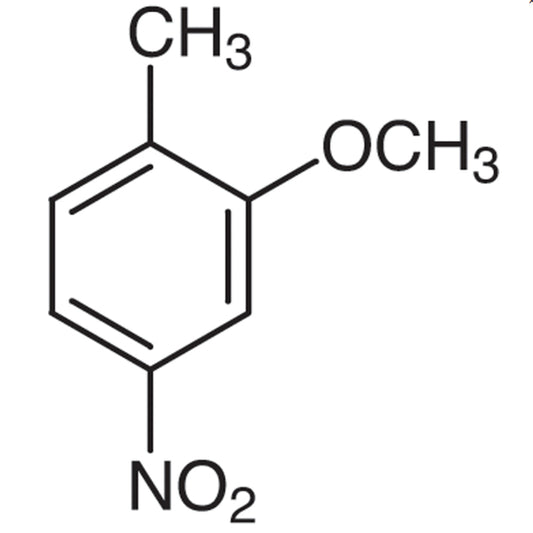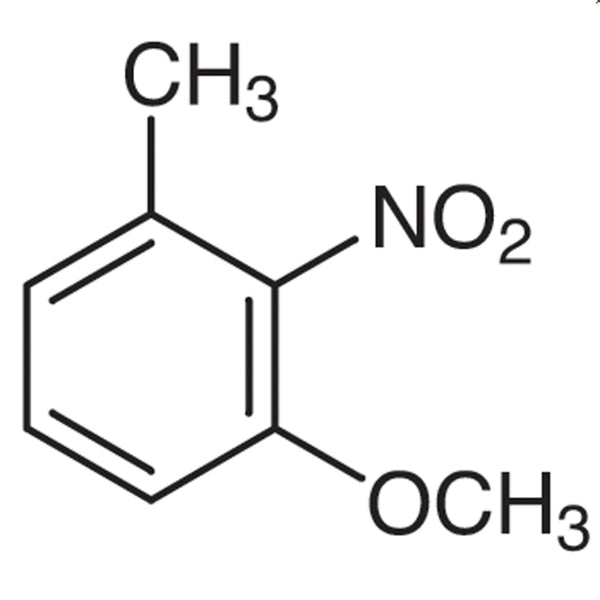
3-Methoxy-2-nitrotoluene is a chemical compound widely used as a building block in the synthesis of complex molecules. It plays a crucial role in laboratory settings by enabling the construction of more intricate molecular structures through various chemical reactions. This compound is particularly valuable in organic chemistry due to its ability to participate in substitution and electrophilic reactions, making it a versatile tool for researchers. Its presence in chemical reactions allows for the creation of a wide range of derivatives, contributing to the development of new compounds and materials.
The chemical and physical properties of 3-Methoxy-2-nitrotoluene make it a preferred choice for synthetic applications. Its stable molecular structure and moderate reactivity allow for controlled and specific chemical transformations. The compound’s ability to undergo targeted reactions under controlled conditions ensures high efficiency and reproducibility in laboratory experiments. Additionally, its relatively inert nature in non-activated environments enhances safety during handling and storage, making it suitable for use in a variety of laboratory settings.
In Indonesian laboratories, 3-Methoxy-2-nitrotoluene is commonly used in chemical research, especially in the fields of organic synthesis and analytical chemistry. It is an essential component in studies that require precise and accurate synthesis of new compounds. Its reliability and consistent performance have made it a staple in both academic and industrial research environments, supporting the development of advanced chemical products and processes.
- Synthesis of aromatic compounds requiring nitro and methoxy group substitutions due to its functional group versatility and reactivity.
- Electrophilic reactions aimed at creating specific molecular structures through controlled substitution mechanisms.
- Organic synthesis research where precise molecular building blocks are essential for compound development.
- Analytical chemistry applications for the preparation of reference standards and reaction intermediates.
- Custom chemical synthesis projects requiring stable and reactive starting materials for complex molecule formation.
| Brand | TCI |
|---|---|
| CAS number | 5345-42-6 |
| Molecular formula | — |
| Purity | — |
| Category | Chemistry > Building Blocks > Non-Heterocyclic Building Blocks |
| Pack sizes | Available in standard laboratory quantities |
| Physical form | Solid |
| Storage | Store in a cool, dry place away from direct sunlight |
3-Methoxy-2-nitrotoluene should be stored in a cool, dry environment to maintain its stability and prevent degradation. It is recommended to use airtight containers to minimize exposure to moisture and air, which can affect its chemical integrity. Due to its moderate reactivity, it should be handled in a well-ventilated laboratory setting to ensure safety. Avoid contact with incompatible substances such as strong oxidizers or acids. Always use appropriate personal protective equipment, including gloves and safety goggles, when handling this compound. Proper labeling and storage conditions are essential to maintain the compound’s effectiveness and ensure safe laboratory practices.
—
Produk Terkait
-
2-Methoxy-4-nitrotoluene TCI M1681
Regular price From Rp 1.140.300,00Regular price -
2-Methoxy-6-nitrotoluene TCI M1416
Regular price From Rp 1.115.100,00Regular price -
5-Methoxy-2-nitrotoluene TCI M1369
Regular price Rp 1.696.800,00Regular price -
4-Methoxy-3-nitrotoluene TCI M1205
Regular price Rp 477.750,00Regular price -
2-Iodo-3-nitrotoluene TCI I0799
Regular price From Rp 2.650.200,00Regular price -
2-Bromo-3-nitrotoluene TCI B3712
Regular price Rp 1.565.550,00Regular price -
2-Bromo-6-nitrotoluene TCI B1878
Regular price From Rp 1.008.000,00Regular price -
2-Bromo-5-nitrotoluene TCI B1853
Regular price From Rp 848.400,00Regular price