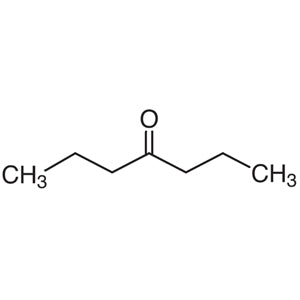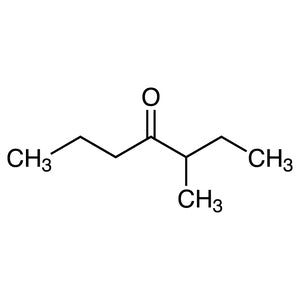
3-Methyl-4-heptanone is an organic compound widely used as a foundational building block in the synthesis of complex molecules. It plays a critical role in organic chemistry laboratories, where it is employed to construct compounds with specific functional groups and molecular structures. This compound is particularly valuable in the development of heterocyclic and aromatic compounds, making it an essential tool for researchers aiming to create molecules with tailored properties. Its versatility allows it to be incorporated into various synthetic pathways, supporting both academic and industrial research efforts.
The chemical properties of 3-Methyl-4-heptanone make it a preferred choice for laboratory use. It exhibits stability under a range of conditions and can undergo substitution, oxidation, and reduction reactions, which enhances its applicability in diverse chemical processes. Its relatively high boiling and melting points provide practical advantages in experimental procedures, enabling precise control during heating and cooling steps. These characteristics ensure that it remains a reliable and adaptable reagent in a wide array of chemical applications.
In Indonesian laboratories, 3-Methyl-4-heptanone is commonly used in scientific research across multiple disciplines. It is frequently found in pharmaceutical, organic chemistry, and materials science laboratories, where it contributes to the development of new compounds and materials. Its role in these settings underscores its importance as a fundamental reagent in both basic and applied research. The compound’s availability and reliability make it a key component in the toolkit of Indonesian researchers working in these fields.
- Organic synthesis is a primary application where 3-Methyl-4-heptanone is used to build complex molecules with specific functional groups and molecular structures.
- Pharmaceutical research benefits from its use in the development of new drug compounds, as it can be modified to create various derivatives with desired biological activities.
- Materials science applications rely on its chemical versatility to synthesize polymers and other advanced materials with tailored properties.
- Analytical chemistry uses it as a standard reference compound for chromatographic and spectroscopic analyses.
- Environmental studies incorporate it in the investigation of chemical behavior and degradation processes in different environments.
| Brand | TCI |
|---|---|
| CAS number | 15726-15-5 |
| Molecular formula | — |
| Purity | — |
| Category | Chemistry > Building Blocks > Non-Heterocyclic Building Blocks |
| Pack sizes | Available in various quantities as per supplier specifications |
| Physical form | Liquid |
| Storage | Store in a cool, dry place away from direct sunlight and incompatible materials |
3-Methyl-4-heptanone should be stored in a cool, dry environment, away from direct sunlight and sources of heat. It is recommended to keep it in a tightly sealed container to prevent evaporation and contamination. The compound should be stored in a well-ventilated area to minimize exposure to vapors. It is important to avoid contact with incompatible substances such as strong oxidizing agents. Proper personal protective equipment, including gloves and safety goggles, should be worn when handling the compound to ensure laboratory safety. Regular monitoring of storage conditions is advised to maintain the integrity of the material.
—
Produk Terkait
-
6-Methyl-2-heptanone TCI M0700
Regular price From Rp 2.704.800,00Regular price -
2-Methyl-4-heptanone TCI M0694
Regular price Rp 4.399.500,00Regular price -
2-Methyl-3-heptanone TCI M0693
Regular price Rp 4.213.650,00Regular price -
5-Methyl-3-heptanone TCI M0335
Regular price From Rp 505.050,00Regular price -
4-Heptanone TCI H0039
Regular price From Rp 689.850,00Regular price -
3-Heptanone TCI H0038
Regular price Rp 795.900,00Regular price -
2-Heptanone TCI H0037
Regular price From Rp 530.250,00Regular price -
2,6-Dimethyl-4-heptanone TCI D0733
Regular price From Rp 452.550,00Regular price