


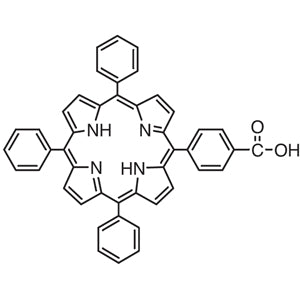
5-(4-Methoxycarbonylphenyl)-10,15,20-triphenylporphyrin is a complex organic compound belonging to the porphyrin family, widely used in chemical research. This compound features a porphyrin core with three phenyl groups attached at positions 10, 15, and 20, along with a methoxycarbonylphenyl group at position 5. Its unique structure makes it a valuable tool in laboratory settings, particularly in catalytic and inorganic chemistry applications. The compound is known for its ability to coordinate with transition metals, which is crucial for its role in various chemical reactions.
One of the key properties that make this compound a preferred choice is its stability under controlled laboratory conditions. Its molecular structure allows for strong interactions with metal ions, making it an effective nitrogen-donor ligand. This characteristic is especially important in catalytic processes where metal coordination is essential. Additionally, the compound exhibits good solubility in organic solvents, which facilitates its use in a wide range of experimental setups. These properties contribute to its popularity in both academic and industrial research environments.
In Indonesian laboratories, this compound is commonly used in research related to catalysis, organic synthesis, and inorganic chemistry. Its ability to act as a ligand in metal complexes makes it a key component in studies involving oxidation and reduction reactions. Researchers in Indonesia often utilize this compound in projects aimed at developing new catalysts and exploring the potential of metal-porphyrin complexes in various applications, including medical and material sciences.
TCI brochures (PDF)
- Ligands 2025-12-01 · p. 15
Related TCI products
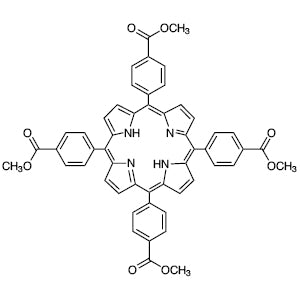
- TCI T3918 22112-83-0 5,10,15,20-Tetrakis(4-methoxycarbonylphenyl)porphyrin
- TCI C1630 95051-10-8 5-(4-Carboxyphenyl)-10,15,20-triphenylporphyrin
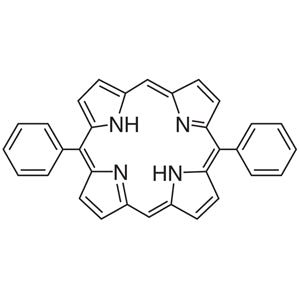
- TCI D2860 22112-89-6 5,15-Diphenylporphyrin
- TCI P1364 210769-64-5 Pentamethylene Bis[4-(10,15,20-triphenylporphyrin-5-yl)benzoate]dizinc(II) [Reagent for application of the exciton chirality method]
- TCI T1359 917-23-7 Tetraphenylporphyrin (Chlorin free)
- TCI O0234 2683-82-1 2,3,7,8,12,13,17,18-Octaethylporphyrin
- Catalytic Reactions: This compound is ideal for catalytic applications due to its ability to coordinate with transition metals, enhancing reaction efficiency and selectivity in oxidation and reduction processes.
- Organic Synthesis: Its stable molecular structure and solubility in organic solvents make it suitable for use in complex organic synthesis, where precise control over reaction conditions is essential.
- Metal Complex Formation: The compound’s nitrogen-donor properties allow it to form stable metal complexes, which are crucial in studying the behavior of transition metals in various chemical environments.
- Analytical Chemistry: Its unique spectral properties make it useful in analytical techniques such as spectroscopy, aiding in the identification and characterization of metal complexes.
- Environmental Research: The compound’s stability and reactivity make it a valuable tool in studying environmental processes involving metal ion interactions and redox reactions.
| Brand | TCI |
|---|---|
| CAS number | 119730-06-2 |
| Molecular formula | — |
| Purity | — |
| Category | Chemistry > Catalysis and Inorganic Chemistry > Nitrogen-Donor Ligands [Catalysis] |
| Pack sizes | Available in various quantities as per standard laboratory supply |
| Physical form | Solid powder |
| Storage | Store in a cool, dry place away from light |
This compound should be stored in a cool, dry environment, away from direct light to maintain its stability and prevent degradation. It is recommended to use airtight containers made of glass or polyethylene to avoid contamination and moisture exposure. Due to its chemical nature, it is important to handle it with appropriate personal protective equipment, such as gloves and safety goggles, to ensure laboratory safety. The compound is not flammable but should be kept away from strong oxidizing agents to prevent unwanted reactions. Regular monitoring of storage conditions is advised to ensure the compound remains in optimal condition for use in research applications. Proper labeling of containers is essential for safe handling and to prevent accidental exposure.
—
Product Categories
Produk Terkait
-
5,10,15,20-Tetrakis(4-methoxycarbonylphenyl)porphyrin TCI T3918
Regular price Rp 1.192.800,00Regular priceRp 849.450,00Sale price Rp 1.192.800,00 -
5-(4-Carboxyphenyl)-10,15,20-triphenylporphyrin TCI C1630
Regular price Rp 16.614.150,00Regular priceRp 11.634.000,00Sale price Rp 16.614.150,00 -
5,15-Diphenylporphyrin TCI D2860
Regular price Rp 7.048.650,00Regular priceRp 4.944.450,00Sale price Rp 7.048.650,00 -
PentamethyleneBis[4-(10,15,20-triphenylporphyrin-5-yl)benzoate]dizinc(II)[Reagentforapplicationoftheexcitonchiralitymethod] TCI P1364
Regular price From Rp 2.702.700,00Regular priceRp 1.905.750,00Sale price From Rp 2.702.700,00 -
Tetraphenylporphyrin(Chlorinfree) TCI T1359
Regular price Rp 5.114.550,00Regular priceRp 3.592.050,00Sale price Rp 5.114.550,00 -
2,3,7,8,12,13,17,18-Octaethylporphyrin TCI O0234
Regular price From Rp 4.108.650,00Regular priceRp 2.888.550,00Sale price From Rp 4.108.650,00 -
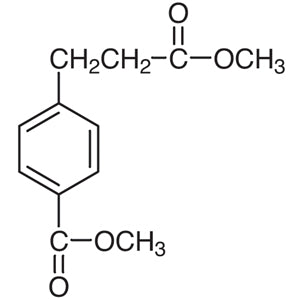
Methyl3-(4-Methoxycarbonylphenyl)propionate TCI C1029
Regular price From Rp 2.306.850,00Regular priceRp 1.612.800,00Sale price From Rp 2.306.850,00 -
TCPP[=Tetrakis(4-carboxyphenyl)porphyrin][Ultra-highsensitivespectrophotometricreagentforCu,Cd][ForthesimultaneousdeterminationofmetalsbyHPLC] TCI A5015
Regular price From Rp 955.500,00Regular priceRp 683.550,00Sale price From Rp 955.500,00



![210769-64-5 Pentamethylene Bis[4-(10,15,20-triphenylporphyrin-5-yl)benzoate]dizinc(II) [Reagent for application of the exciton chirality method] - AMI Scientific](http://amiscientific.com/cdn/shop/files/TCI2510P1364.jpg?v=1769143302&width=533)


![TCI A5015 14609-54-2 TCPP [=Tetrakis(4-carboxyphenyl)porphyrin] [Ultra-high sensitive spectrophotometric reagent for Cu, Cd] [For the simultaneous determination of metals by HPLC]](http://amiscientific.com/cdn/shop/files/TCI2510A5015_a6d96560-9a87-49e8-a74b-d696f3069055.jpg?v=1792658524&width=533)
![14609-54-2 TCPP [=Tetrakis(4-carboxyphenyl)porphyrin] [Ultra-high sensitive spectrophotometric reagent for Cu, Cd] [For the simultaneous determination of metals by HPLC] - AMI Scientific](http://amiscientific.com/cdn/shop/files/TCI2510A5015.jpg?v=1767084835&width=533)