TCI O0234 2683-82-1 2,3,7,8,12,13,17,18-Octaethylporphyrin is a chemical compound widely used in scientific and industrial applications. It belongs to the category of nitrogen-donor ligands, which are essential in catalysis and complex chemical reactions. This compound plays a crucial role in laboratory settings, particularly in the synthesis of organic compounds and the study of molecular structures. Its unique properties make it a valuable tool for researchers seeking high-quality chemical materials.
The compound's stability and controlled reactivity are key factors that make it a preferred choice in laboratory environments. Its complex porphyrin structure allows it to bind with metals, enabling it to act as a catalyst in redox reactions. Additionally, its ability to absorb light and its thermal and chemical stability contribute to its versatility. These characteristics ensure that it can be used reliably across a range of experimental conditions.
In Indonesian laboratories, 2,3,7,8,12,13,17,18-Octaethylporphyrin is commonly used in organic chemistry research, catalysis studies, and investigations into complex chemical materials. It is a staple in academic and research institutions, supporting both teaching and advanced scientific inquiry. Its reliability and performance make it a trusted component in various chemical processes.
TCI brochures (PDF)
- Ligands 2025-12-01 · p. 15
Related TCI products
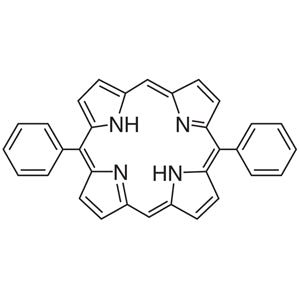
- TCI D2860 22112-89-6 5,15-Diphenylporphyrin
- TCI T1359 917-23-7 Tetraphenylporphyrin (Chlorin free)
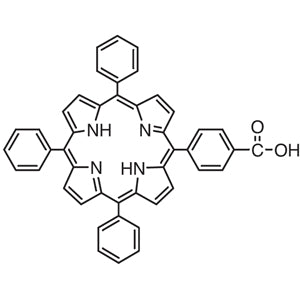
- TCI C1630 95051-10-8 5-(4-Carboxyphenyl)-10,15,20-triphenylporphyrin
- TCI M1338 119730-06-2 5-(4-Methoxycarbonylphenyl)-10,15,20-triphenylporphyrin
- TCI T2222 16834-13-2 5,10,15,20-Tetra(4-pyridyl)porphyrin
- TCI T1832 74684-34-7 5,10,15,20-Tetrakis(3,5-dimethoxyphenyl)porphyrin
- Organic synthesis applications benefit from this compound's ability to act as a metal-binding ligand, enhancing reaction efficiency and selectivity in complex chemical processes.
- Catalytic reactions are supported by its redox properties, making it ideal for use in oxidation and reduction processes within laboratory settings.
- Molecular structure studies utilize its unique porphyrin framework, allowing researchers to analyze and manipulate complex molecular architectures.
- Photoreactive experiments take advantage of its light-absorbing capabilities, enabling applications in photochemistry and optoelectronic research.
- Industrial chemical research relies on its stability and reactivity, supporting the development of new materials and chemical processes.
| Brand | TCI |
|---|---|
| CAS number | 2683-82-1 |
| Molecular formula | — |
| Purity | — |
| Category | Chemistry > Catalysis and Inorganic Chemistry > Nitrogen-Donor Ligands [Catalysis] |
| Pack sizes | — |
| Physical form | — |
| Storage | Store in a cool, dry place away from light |
This compound should be stored in a cool, dry place, away from direct light to maintain its stability and reactivity. It is recommended to use airtight containers to prevent contamination and moisture exposure. Due to its chemical nature, it should be handled with appropriate personal protective equipment, such as gloves and safety goggles, to ensure laboratory safety. Proper ventilation is also essential when working with this material to minimize inhalation risks. Regular inspection of storage conditions is advised to ensure the compound remains in optimal condition for use in research and development activities.
—
Product Categories
Produk Terkait
-
5,15-Diphenylporphyrin TCI D2860
Regular price Rp 6.996.150,00Regular price -
Tetraphenylporphyrin(Chlorinfree) TCI T1359
Regular price Rp 5.062.050,00Regular price -
5-(4-Carboxyphenyl)-10,15,20-triphenylporphyrin TCI C1630
Regular price Rp 16.561.650,00Regular price -
5-(4-Methoxycarbonylphenyl)-10,15,20-triphenylporphyrin TCI M1338
Regular price From Rp 3.207.750,00Regular price -
5,10,15,20-Tetra(4-pyridyl)porphyrin TCI T2222
Regular price From Rp 4.213.650,00Regular price -
5,10,15,20-Tetrakis(3,5-dimethoxyphenyl)porphyrin TCI T1832
Regular price Rp 1.724.100,00Regular price -
5,10,15,20-Tetrakis(4-hydroxyphenyl)porphyrin TCI T1497
Regular price Rp 1.829.100,00Regular price -
5,10,15,20-Tetrakis(4-carboxymethyloxyphenyl)porphyrin TCI T1495
Regular price Rp 3.763.200,00Regular price