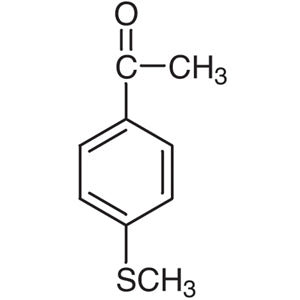
4'-(Methylthio)acetophenone is a chemical compound widely used in organic reactions as a building block or intermediate. It serves as a versatile reagent in synthetic chemistry, enabling the construction of more complex molecules through various reaction pathways. Its structural features, including a phenyl ring connected to an acetyl group and a methylthio group, make it a valuable tool in the synthesis of pharmaceuticals, agrochemicals, and other organic compounds. In laboratory settings, it plays a crucial role in both academic and industrial research, supporting the development of new materials and chemical processes.
The compound is favored for its stable chemical structure and favorable reactivity, which allow it to participate in a wide range of reactions, including substitution and coupling reactions. Its solubility in organic solvents such as ethyl acetate and chloroform enhances its usability in various synthetic protocols. Additionally, its relatively high boiling and melting points facilitate efficient purification and isolation processes, making it ideal for applications requiring precise temperature control. These properties contribute to its reliability and effectiveness in laboratory environments.
In Indonesian laboratories, 4'-(Methylthio)acetophenone is commonly used in organic chemistry research, particularly in academic institutions and research centers. Its availability and consistent quality make it a preferred choice for chemists working on complex syntheses and material development. The compound supports a variety of experimental approaches, ensuring that researchers have a reliable and effective reagent for their work.
Related TCI products
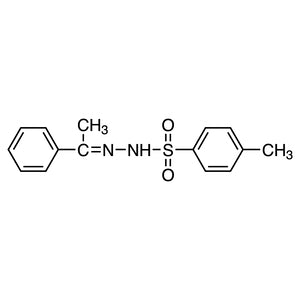
- TCI T0908 31378-03-7 2-(p-Toluenesulfonyl)acetophenone
- TCI B1389 2651-15-2 N-[Bis(methylthio)methylene]-p-toluenesulfonamide
- TCI M2321 1352947-63-7 1-Methyl-3-[6-(methylthio)hexyl]imidazolium p-Toluenesulfonate
- TCI A2174 4545-21-5 Acetophenone p-Toluenesulfonylhydrazone
- TCI A0807 613-91-2 Acetophenone Oxime
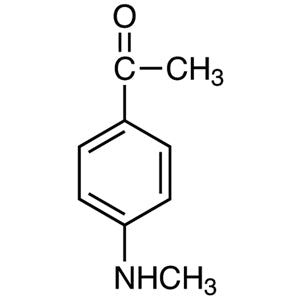
- TCI M2958 17687-47-7 4'-(Methylamino)acetophenone
- Organic synthesis is a key application where 4'-(Methylthio)acetophenone is used to build complex molecules through substitution and coupling reactions.
- Pharmaceutical research benefits from its role as an intermediate in the development of new drug compounds and therapeutic agents.
- Agrochemical development utilizes the compound in the synthesis of pesticides and herbicides, contributing to crop protection strategies.
- Material science applications involve its use in creating novel polymers and functional materials with specific chemical properties.
- Analytical chemistry experiments employ the compound as a standard or reagent for testing reaction mechanisms and synthetic pathways.
| Brand | TCI |
|---|---|
| CAS number | 1778-09-2 |
| Molecular formula | — |
| Purity | — |
| Category | Chemistry > Building Blocks > Non-Heterocyclic Building Blocks |
| Pack sizes | Available in various quantities as per supplier specifications |
| Physical form | Solid or liquid, depending on the specific product variant |
| Storage | Store in a cool, dry place away from direct sunlight and moisture |
4'-(Methylthio)acetophenone should be stored in a cool, dry environment to maintain its chemical stability and prevent degradation. It is recommended to use airtight containers to protect the compound from moisture and air exposure, which can affect its reactivity and purity. In laboratory settings, it should be handled with appropriate personal protective equipment, such as gloves and safety goggles, to ensure safety during use. The compound is generally non-hazardous under normal conditions but should be kept away from incompatible substances to avoid unwanted reactions. Proper labeling and storage practices help maintain a safe and efficient laboratory environment.
—
Produk Terkait
-
2-(p-Toluenesulfonyl)acetophenone TCI T0908
Regular price Rp 4.056.150,00Regular price -
N-[Bis(methylthio)methylene]-p-toluenesulfonamide TCI B1389
Regular price Rp 2.068.500,00Regular price -
1-Methyl-3-[6-(methylthio)hexyl]imidazoliump-Toluenesulfonate TCI M2321
Regular price From Rp 2.545.200,00Regular price -
Acetophenonep-Toluenesulfonylhydrazone TCI A2174
Regular price Rp 1.378.650,00Regular price -
AcetophenoneOxime TCI A0807
Regular price Rp 2.597.700,00Regular price -
4'-(Methylamino)acetophenone TCI M2958
Regular price Rp 2.094.750,00Regular price -
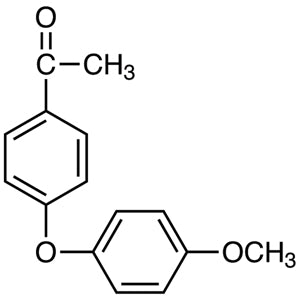
4'-(4-Methoxyphenoxy)acetophenone TCI M2740
Regular price Rp 1.087.800,00Regular price -
2'-Hydroxy-4',6'-dimethoxy-2-(4-methoxyphenyl)acetophenone TCI H1578
Regular price From Rp 1.776.600,00Regular price

![2651-15-2 N-[Bis(methylthio)methylene]-p-toluenesulfonamide - AMI Scientific](http://amiscientific.com/cdn/shop/files/TCI2510B1389.jpg?v=1767087151&width=533)
![1352947-63-7 1-Methyl-3-[6-(methylthio)hexyl]imidazolium p-Toluenesulfonate - AMI Scientific](http://amiscientific.com/cdn/shop/files/TCI2510M2321.jpg?v=1767126452&width=533)