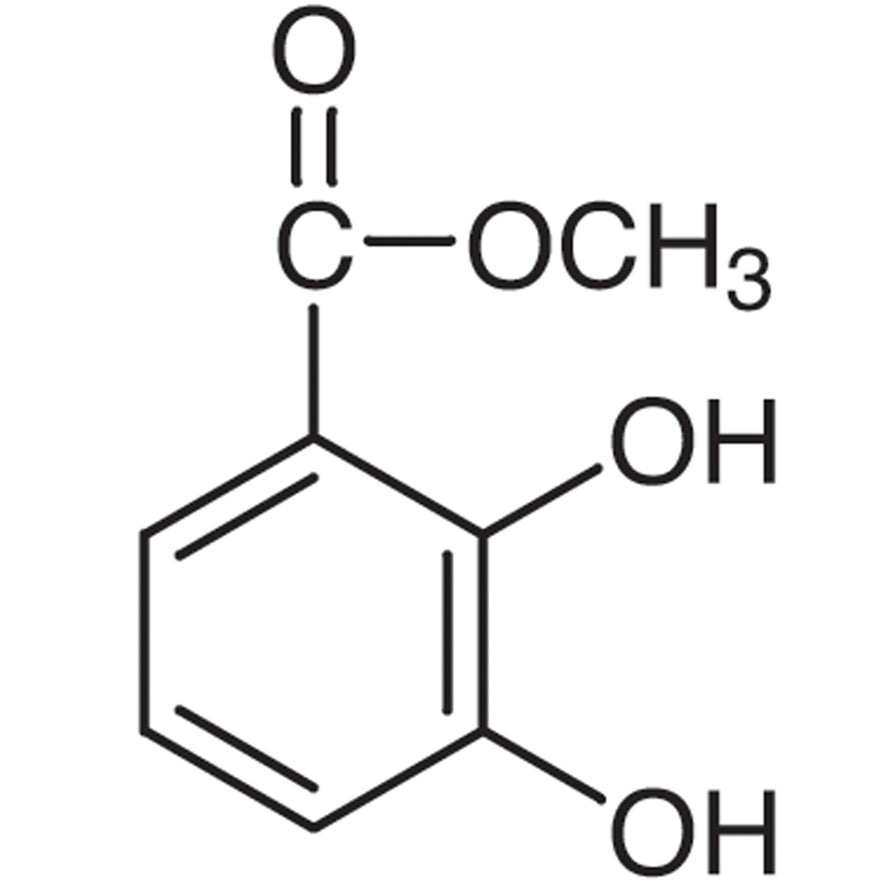
Methyl 2,3-Dihydroxybenzoate from TCI is the methyl ester of 2,3-dihydroxybenzoic acid, an aromatic building block that carries a catechol group in the ortho position directly adjacent to the ester function. This structural arrangement makes it a widely sought intermediate in organic synthesis, particularly for research involving metal binding, naturally occurring iron-binding compounds, and molecules with antioxidant properties. In the laboratory, the compound serves as an efficient starting point because the substitution pattern of two adjacent hydroxyl groups is quite difficult to construct from scratch through ordinary aromatic substitution reactions.
The most prominent characteristic of this compound is the ability of its catechol group to form strong complexes with metal ions, especially ferric iron, through bidentate coordination. This property makes it a key material in the synthesis of artificial siderophores as well as chelating ligands. In addition, the pair of phenolic hydroxyl groups provides free-radical scavenging capability, which makes the compound attractive for antioxidant research. The methyl ester group acts as a temporary protecting group for the carboxylic acid function, so reactions can first be directed toward the hydroxyl groups and the ester released at a later stage.
In Indonesian laboratories, this building block is typically used in university research groups and institutional synthesis facilities working on coordination chemistry, natural product analogues, and antioxidant screening. It is generally ordered in small research quantities for multi-step synthetic routes rather than bulk production, and is commonly held in a shared reagent store alongside other phenolic and aromatic intermediates so that several projects can draw on the same stock across a semester or research cycle.
Related TCI products
- Synthetic siderophore preparation: the adjacent catechol hydroxyls coordinate ferric iron in a bidentate fashion, reproducing the iron-binding motif that natural microbial siderophores rely on.
- Chelating ligand synthesis: the pre-installed 2,3-dihydroxy pattern removes the need to build adjacent hydroxyl substitution from scratch, shortening routes to multidentate metal-binding ligands.
- Antioxidant research: the phenolic hydroxyl pair donates hydrogen atoms to scavenge free radicals, making the compound a useful scaffold for structure-activity studies on antioxidant behaviour.
- Coordination chemistry studies: the defined catechol-ester architecture gives a reproducible platform for investigating metal complex formation, binding stoichiometry, and the stability of resulting coordination compounds.
- Multi-step organic synthesis: the methyl ester temporarily masks the carboxylic acid, allowing selective transformations at the hydroxyl positions before the acid function is regenerated downstream.
| Brand | TCI (Tokyo Chemical Industry) |
|---|---|
| CAS number | 2411-83-8 |
| Molecular formula | — |
| Purity | — |
| Category | Chemistry > Building Blocks > Non-Heterocyclic Building Blocks |
| Pack sizes | available in standard research pack sizes; please refer to the current TCI catalogue listing for this item |
| Physical form | — |
| Storage | store according to the conditions stated on the manufacturer's label and safety data sheet |
- Catalogue number: M1737
- Chemical name: Methyl 2,3-Dihydroxybenzoate
Store the container tightly closed in a cool, dry, well-ventilated area away from direct sunlight and sources of heat or ignition, following the storage conditions specified on the manufacturer's label and safety data sheet. Because phenolic compounds can be sensitive to air and light, keep the material in its original tightly sealed container, or in an amber glass bottle with a chemically resistant closure if transferred. Handle in a fume hood using gloves, safety goggles, and a laboratory coat, and avoid generating dust or inhaling vapours. Weigh out only the quantity required, reseal the container promptly after use, and keep it separated from strong oxidising agents. Dispose of residues and contaminated materials in accordance with applicable institutional and local chemical waste regulations.
—
Produk Terkait
-
Methyl2,5-Dihydroxybenzoate TCI M2006
Regular price From Rp 1.246.350,00Regular price -
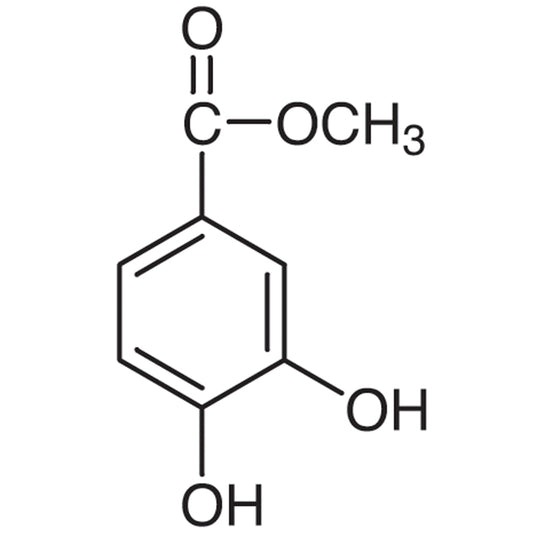
Methyl3,4-Dihydroxybenzoate TCI M1943
Regular price From Rp 1.167.600,00Regular price -
Methyl2,4-Dihydroxybenzoate TCI M1796
Regular price From Rp 557.550,00Regular price -
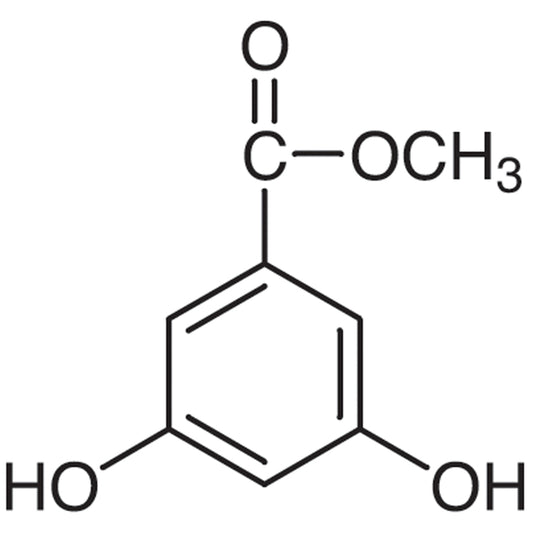
Methyl3,5-Dihydroxybenzoate TCI D2215
Regular price Rp 2.121.000,00Regular price -
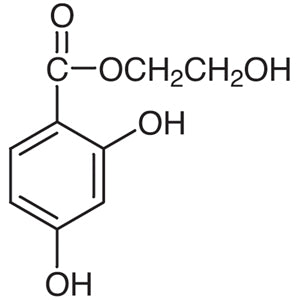
2,4-Dihydroxybenzoate TCI D2007
Regular price Rp 3.472.350,00Regular price -
Methyl2,6-Dihydroxybenzoate TCI D1461
Regular price From Rp 1.829.100,00Regular price -
Ethyl3,4-Dihydroxybenzoate TCI D0571
Regular price From Rp 689.850,00Regular price -
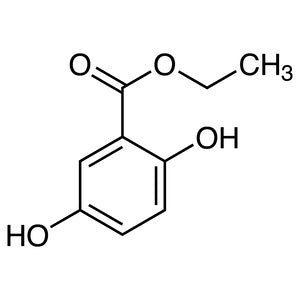
Ethyl2,5-Dihydroxybenzoate TCI E1559
Regular price Rp 1.829.100,00Regular price