


TCI M1850 5-Methyl-2-thiopheneboronic Acid is an organoboron reagent that combines a methylated thiophene ring with a boronic acid group at the second position. As is common for aryl and heteroaryl boronic acids, this material may contain varying amounts of the cyclic anhydride known as a boroxine, formed through intermolecular loss of water, and this is openly stated in the product name itself. Its role in the laboratory is clear and well defined: it serves as the nucleophilic partner in the Suzuki–Miyaura cross-coupling reaction, one of the most dependable methods available for joining two aromatic fragments together.
The advantage that makes this reagent a preferred choice is the balance it strikes between reactivity and ease of handling. Boronic acids are relatively non-toxic and are stable toward air and water when compared with other organometallic reagents such as organolithium or Grignard compounds, yet they remain reactive enough to transfer the thienyl group to the palladium centre during the transmetalation step. The electron-rich thiophene ring contributes valuable electronic character to conjugated materials, while the methyl group at the fifth position improves solubility in organic solvents and simultaneously blocks that position so that the direction of coupling is more readily controlled.
In Indonesian laboratories, this reagent is typically found in synthetic organic chemistry groups at universities and research institutes, as well as in laboratories developing conjugated and functional materials. It is used on the bench scale for building blocks in medicinal chemistry programmes, for preparing thiophene-containing intermediates, and in graduate research projects where Suzuki–Miyaura coupling forms the central step of a synthetic route.
TCI brochures (PDF)
- Thiophenes 2026-06-29 · p. 2
- Suzuki-Miyaura Cross Coupling Reaction 2025-12-01 · p. 13
- Boron Compounds 2025-10-07 · p. 13
Related TCI products
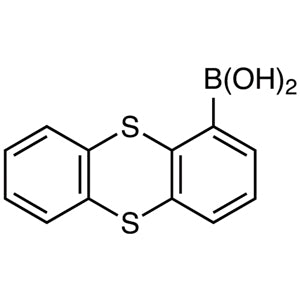
- TCI T3706 108847-76-3 1-Thianthrenylboronic Acid (contains varying amounts of Anhydride)
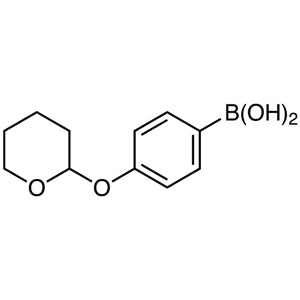
- TCI T3325 182281-01-2 4-(Tetrahydro-2H-pyran-2-yloxy)phenylboronic Acid (contains varying amounts of Anhydride)
- TCI T2621 160032-40-6 Thieno[3,2-b]thiophene-2-boronic Acid (contains varying amounts of Anhydride)
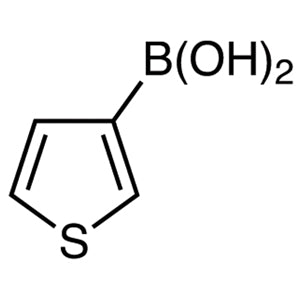
- TCI T1975 6165-69-1 3-Thiopheneboronic Acid (contains varying amounts of Anhydride)
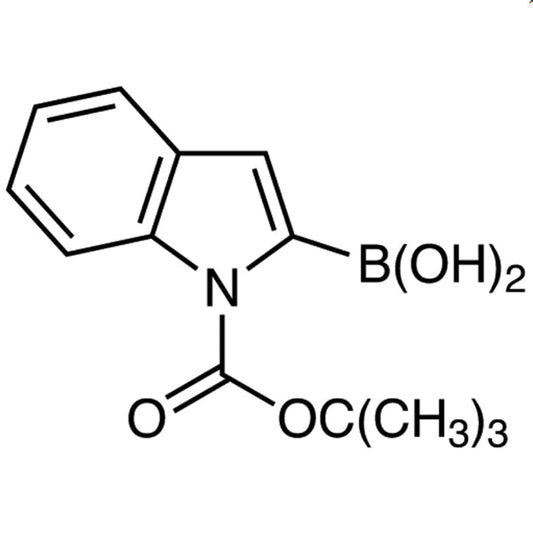
- TCI B5145 213318-44-6 1-(tert-Butoxycarbonyl)indole-2-boronic Acid (contains varying amounts of Anhydride)
- TCI B4774 113893-08-6 Benzo[b]thiophene-3-boronic Acid (contains varying amounts of Anhydride)
- Suzuki–Miyaura cross-coupling — the reagent acts as the nucleophilic boron partner that transfers its thienyl group to the palladium centre during transmetalation, making it directly suited to joining aromatic fragments.
- Synthesis of conjugated materials — the electron-rich thiophene ring contributes useful electronic character to extended conjugated systems, which is precisely why thiophene boronic acids are selected for these constructions.
- Preparation of biaryl and heterobiaryl intermediates — coupling a thiophene unit to another aromatic fragment is a reliable route to mixed aromatic scaffolds required in multi-step synthetic work.
- Regiocontrolled coupling work — the methyl group occupying the fifth position closes off that site, so the direction of coupling is more controlled and the outcome of the reaction is more predictable.
- Bench-scale medicinal chemistry building-block synthesis — the relatively low toxicity and stability toward air and water make it far more practical to handle routinely than organolithium or Grignard alternatives.
| Brand | TCI |
|---|---|
| CAS number | 162607-20-7 |
| Molecular formula | — |
| Purity | — |
| Category | Chemistry > Organometallic Reagents > Organoboron [Organometallic Reagents] |
| Pack sizes | please refer to the packaging options listed on this product page |
| Physical form | — |
| Storage | store in a cool, dry place in a tightly closed container |
- Product code: M1850
- Composition note: contains varying amounts of the cyclic anhydride (boroxine)
Store the reagent in a cool, dry location in its original tightly closed container, kept away from moisture, since boronic acids undergo intermolecular loss of water to form the corresponding boroxine anhydride. Containers should be well sealed and clearly labelled, and the material should be returned to storage promptly after weighing. Handle in a fume hood using standard laboratory personal protective equipment, including safety goggles, a laboratory coat, and suitable gloves. Avoid raising dust when transferring the solid, and keep the material separated from incompatible substances. Always consult the manufacturer's Safety Data Sheet before use, and follow your institution's chemical waste procedures for disposal of residues.
—
Produk Terkait
-
1-ThianthrenylboronicAcid(containsvaryingamountsofAnhydride) TCI T3706
Regular price From Rp 610.050,00Regular price -
4-(Tetrahydro-2H-pyran-2-yloxy)phenylboronicAcid(containsvaryingamountsofAnhydride) TCI T3325
Regular price From Rp 1.776.600,00Regular price -
Thieno[3,2-b]thiophene-2-boronicAcid(containsvaryingamountsofAnhydride) TCI T2621
Regular price Rp 5.830.650,00Regular price -
3-ThiopheneboronicAcid(containsvaryingamountsofAnhydride) TCI T1975
Regular price From Rp 823.200,00Regular price -
1-(tert-Butoxycarbonyl)indole-2-boronicAcid(containsvaryingamountsofAnhydride) TCI B5145
Regular price Rp 2.411.850,00Regular price -
Benzo[b]thiophene-3-boronicAcid(containsvaryingamountsofAnhydride) TCI B4774
Regular price From Rp 1.220.100,00Regular price -
1,4-Benzodioxane-6-boronicAcid(containsvaryingamountsofAnhydride) TCI B4181
Regular price Rp 3.551.100,00Regular price -
1-(tert-Butoxycarbonyl)-2-pyrroleboronicAcid(containsvaryingamountsofAnhydride) TCI B4063
Regular price From Rp 1.644.300,00Regular price

![160032-40-6 Thieno[3,2-b]thiophene-2-boronic Acid (contains varying amounts of Anhydride) - AMI Scientific](http://amiscientific.com/cdn/shop/files/TCI2510T2621.jpg?v=1768206488&width=533)

![113893-08-6 Benzo[b]thiophene-3-boronic Acid (contains varying amounts of Anhydride) - AMI Scientific](http://amiscientific.com/cdn/shop/files/TCI2510B4774_65b85fee-ce4d-45b9-ad87-4962d8f3452c.jpg?v=1767853515&width=533)

