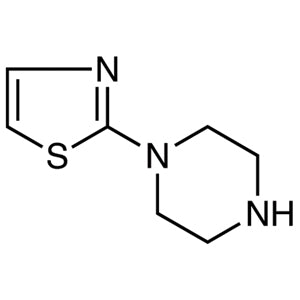
1-(3-Methoxyphenyl)piperazine is a chemical compound widely used as a building block in the synthesis of heterocyclic compounds. It plays a crucial role in organic chemistry laboratories, where it serves as a versatile intermediate for constructing complex molecular structures. This compound is particularly valuable in the development of pharmaceuticals and industrial chemicals due to its ability to participate in various chemical reactions. Its molecular structure consists of a piperazine ring linked to a methoxyphenyl group, making it a key component in the design of new chemical entities.
The compound is known for its chemical stability under specific conditions, yet it remains reactive towards a range of reagents, which makes it ideal for substitution and coupling reactions. Its solubility in organic solvents such as ethyl acetate and acetone further enhances its usability in synthetic processes. These properties contribute to its popularity among researchers seeking high-quality starting materials for their experiments. The unique characteristics of 1-(3-Methoxyphenyl)piperazine make it a preferred choice for those working on complex chemical syntheses.
In Indonesian laboratories, this compound is frequently used in organic chemistry research, especially in the development of new drugs and chemical compounds. Its availability and reliability make it a go-to material for scientists engaged in synthetic chemistry. Researchers in Indonesia rely on its consistent performance and compatibility with various reaction conditions to achieve their experimental goals.
Related TCI products
- TCI M3643 5464-78-8 1-(2-Methoxyphenyl)piperazine Hydrochloride
- TCI M1920 74852-62-3 1-(4-Aminophenyl)-4-(4-methoxyphenyl)piperazine
- TCI M0883 35386-24-4 1-(2-Methoxyphenyl)piperazine
- TCI A0304 140-31-8 N-(2-Aminoethyl)piperazine
- TCI T3404 39512-51-1 1-(o-Tolyl)piperazine
- TCI T3273 42270-37-1 1-(2-Thiazolyl)piperazine
- Organic synthesis applications benefit from this compound's reactivity and structural versatility, enabling the construction of complex molecules.
- Pharmaceutical research utilizes it as a building block for developing new drug candidates with tailored molecular structures.
- Industrial chemical production incorporates it in the synthesis of specialty chemicals requiring precise molecular design.
- Analytical chemistry laboratories use it as a standard reference material for testing and calibration purposes.
- Academic research projects employ it to explore new synthetic pathways and reaction mechanisms in heterocyclic chemistry.
| Brand | TCI |
|---|---|
| CAS number | 16015-71-7 |
| Molecular formula | — |
| Purity | — |
| Category | Chemistry > Building Blocks > Heterocyclic Building Blocks |
| Pack sizes | Available in various quantities as per supplier specifications |
| Physical form | Solid powder |
| Storage | Store in a cool, dry place away from light and moisture |
This compound should be stored in a cool, dry environment, away from direct light and moisture to maintain its chemical stability. It is recommended to use airtight containers made of glass or polyethylene to prevent contamination and degradation. Due to its reactivity, it should be handled in a well-ventilated area, and appropriate personal protective equipment, such as gloves and safety goggles, should be worn. It is not advisable to store it near incompatible substances like strong oxidizers or acids. Regular monitoring of storage conditions ensures the compound remains suitable for use in laboratory applications. Proper handling and storage practices help preserve its chemical integrity and ensure safe usage in research settings.
—
Produk Terkait
-
1-(2-Methoxyphenyl)piperazineHydrochloride TCI M3643
Regular price From Rp 848.400,00Regular price -
1-(4-Aminophenyl)-4-(4-methoxyphenyl)piperazine TCI M1920
Regular price From Rp 1.378.650,00Regular price -
1-(2-Methoxyphenyl)piperazine TCI M0883
Regular price From Rp 477.750,00Regular price -
N-(2-Aminoethyl)piperazine TCI A0304
Regular price From Rp 505.050,00Regular price -
1-(o-Tolyl)piperazine TCI T3404
Regular price From Rp 1.670.550,00Regular price -
1-(2-Thiazolyl)piperazine TCI T3273
Regular price Rp 1.326.150,00Regular price -
1-(p-Tolyl)piperazine TCI T2956
Regular price From Rp 1.298.850,00Regular price -
1-(Tetrahydro-2-furoyl)piperazine TCI T2617
Regular price From Rp 769.650,00Regular price