1-(4-Aminophenyl)-4-(4-methoxyphenyl)piperazine is a compound that combines a six-membered piperazine ring with two different aryl groups on its two nitrogen atoms: one aniline ring carrying a free amino group, and one anisole ring bearing a methoxy substituent. Piperazine is among the most frequently encountered scaffolds in drug molecules because of its ability to adjust solubility, basicity, and molecular geometry. With the double arylation pattern already installed, this compound serves as an advanced building block that removes several arylation and purification steps from a synthetic route design.
What makes this material a preferred choice is the presence of the free aromatic amino group, which acts as a highly versatile reaction point. This aniline group is ready to be acylated into amides, sulfonylated into sulfonamides, reacted with isocyanates to form ureas, or diazotised to produce azo compounds and other derivatives. Meanwhile, the methoxy group on the opposing ring is electron-donating, giving the molecule an electronic balance and influencing the solubility and spectroscopic properties of its derivatives. The piperazine nitrogen contributes weak basic character that is useful for salt formation and solubility control.
In Indonesian laboratories, this building block is typically used in university and institutional research settings where medicinal chemistry, organic synthesis, and heterocyclic compound development are carried out. Working from a pre-arylated intermediate allows research groups to reach target derivatives with fewer steps, which matters where reagent lead times and synthetic capacity are limiting. It is generally handled as a catalogue research chemical in small-scale exploratory synthesis rather than in production work.
Related TCI products
- TCI M3643 5464-78-8 1-(2-Methoxyphenyl)piperazine Hydrochloride
- TCI M2135 16015-71-7 1-(3-Methoxyphenyl)piperazine
- TCI M0883 35386-24-4 1-(2-Methoxyphenyl)piperazine
- TCI B2169 2425-95-8 2,5-Bis(4-aminophenyl)-1,3,4-oxadiazole
- TCI B1066 1679-98-7 2,5-Bis(4-diethylaminophenyl)-1,3,4-oxadiazole
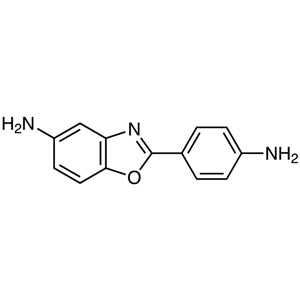
- TCI A3300 13676-47-6 2-(4-Aminophenyl)benzoxazol-5-amine
- Medicinal chemistry scaffold development: the piperazine core is one of the most common motifs in drug molecules, and this pre-arylated form lets chemists explore analogue series without rebuilding the double arylation pattern each time.
- Amide and sulfonamide library synthesis: the free aromatic amino group is directly available for acylation and sulfonylation, making it a convenient anchor point for generating structurally related derivative sets.
- Urea derivative preparation: the aniline nitrogen reacts readily with isocyanates to form urea linkages, a transformation widely used to extend molecular frameworks in structure-activity relationship studies.
- Azo compound and dye chemistry: the free aromatic amine can be diazotised and coupled, opening a route to azo derivatives and other colour-bearing compounds from a heterocyclic starting material.
- Salt formation and solubility studies: the weakly basic piperazine nitrogen allows preparation of salt forms, which researchers use to adjust solubility behaviour and handling properties of downstream derivatives.
| Brand | TCI |
|---|---|
| CAS number | 74852-62-3 |
| Molecular formula | — |
| Purity | — |
| Category | Chemistry > Building Blocks > Heterocyclic Building Blocks |
| Pack sizes | available in standard TCI research-scale catalogue packs; please confirm the current pack option when ordering |
| Physical form | — |
| Storage | keep in a tightly closed original container, protected from light and moisture, according to the manufacturer's label |
- Catalogue code: M1920
Store the container tightly closed in a cool, dry, well-ventilated area, away from light, moisture, and incompatible materials, following the storage condition stated on the manufacturer's label. Keep the material in its original supplier container or in an equivalent chemically resistant, well-sealed vessel that is clearly labelled with the compound name and CAS number. Handle in a fume hood using gloves, safety glasses, and a laboratory coat, and avoid generating dust or inhaling any airborne particles. As with all aromatic amines, minimise skin contact, wash hands after handling, and consult the manufacturer's safety data sheet before use. Dispose of residues and contaminated materials through the laboratory's chemical waste procedure.
—
Produk Terkait
-
1-(2-Methoxyphenyl)piperazineHydrochloride TCI M3643
Regular price From Rp 848.400,00Regular price -
1-(3-Methoxyphenyl)piperazine TCI M2135
Regular price From Rp 1.115.100,00Regular price -
1-(2-Methoxyphenyl)piperazine TCI M0883
Regular price From Rp 477.750,00Regular price -
2,5-Bis(4-aminophenyl)-1,3,4-oxadiazole TCI B2169
Regular price From Rp 1.115.100,00Regular price -
2,5-Bis(4-diethylaminophenyl)-1,3,4-oxadiazole TCI B1066
Regular price Rp 1.378.650,00Regular price -
2-(4-Aminophenyl)benzoxazol-5-amine TCI A3300
Regular price From Rp 2.332.050,00Regular price -
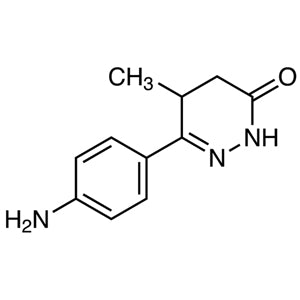
6-(4-Aminophenyl)-4,5-dihydro-5-methyl-3(2H)-pyridazinone TCI A2919
Regular price Rp 1.670.550,00Regular price -
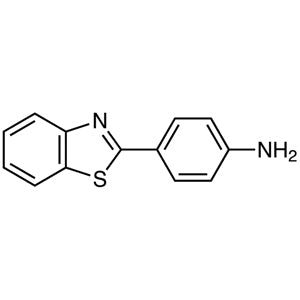
2-(4-Aminophenyl)benzothiazole TCI A2672
Regular price Rp 1.298.850,00Regular price