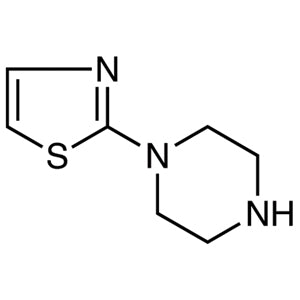
1-(2-Methoxyphenyl)piperazine Hydrochloride is a chemical compound widely used in organic synthesis reactions. It serves as a key building block in the development of complex molecules, playing a vital role in both pharmaceutical and food chemistry industries. This compound is particularly valuable for its ability to participate in substitution reactions and other synthetic pathways, enabling the creation of diverse chemical structures. Its versatility makes it an essential tool for researchers working on drug development and functional material synthesis.
The compound's complex molecular structure and high reactivity make it a preferred choice in laboratory settings. It exhibits good solubility in organic solvents such as ethyl acetate and acetone, which facilitates purification and evaporation processes. These characteristics are crucial for maintaining efficiency in synthetic procedures. Additionally, its chemical stability under controlled conditions allows for consistent results in experimental applications, further enhancing its appeal among chemists.
In Indonesian laboratories, 1-(2-Methoxyphenyl)piperazine Hydrochloride is commonly used in research related to organic chemistry. It is favored by students and researchers for its role in synthesizing new compounds and exploring chemical reactivity. Its availability in the local market and ease of use contribute to its popularity in a wide range of chemical experiments and academic studies.
Related TCI products
- TCI M2135 16015-71-7 1-(3-Methoxyphenyl)piperazine
- TCI M1920 74852-62-3 1-(4-Aminophenyl)-4-(4-methoxyphenyl)piperazine
- TCI M0883 35386-24-4 1-(2-Methoxyphenyl)piperazine
- TCI A0304 140-31-8 N-(2-Aminoethyl)piperazine
- TCI T3404 39512-51-1 1-(o-Tolyl)piperazine
- TCI T3273 42270-37-1 1-(2-Thiazolyl)piperazine
- Organic synthesis: This compound is ideal for creating complex organic molecules due to its reactivity and structural versatility.
- Pharmaceutical research: It is used as a building block in the development of new drugs and therapeutic agents.
- Food chemistry applications: It serves as an additive in food-related chemical processes, contributing to flavor and stability.
- Academic research: It is widely used in university laboratories for teaching and experimental studies in organic chemistry.
- Material science investigations: Its chemical properties make it suitable for synthesizing functional materials and polymers.
| Brand | TCI |
|---|---|
| CAS number | 5464-78-8 |
| Molecular formula | — |
| Purity | — |
| Category | Chemistry > Building Blocks > Heterocyclic Building Blocks |
| Pack sizes | Available in various quantities as per standard laboratory supply options |
| Physical form | Solid powder |
| Storage | Store in a cool, dry place away from moisture and direct sunlight |
This compound should be stored in a cool, dry environment to maintain its chemical integrity. It is recommended to keep it in a sealed container to prevent exposure to moisture and air. Due to its reactivity, it should be handled with care, using appropriate personal protective equipment such as gloves and safety goggles. Avoid contact with incompatible substances and ensure proper ventilation in the laboratory. Regular inspection of storage conditions is advised to ensure the compound remains stable and usable for research purposes.
—
Produk Terkait
-
1-(3-Methoxyphenyl)piperazine TCI M2135
Regular price From Rp 1.115.100,00Regular price -
1-(4-Aminophenyl)-4-(4-methoxyphenyl)piperazine TCI M1920
Regular price From Rp 1.378.650,00Regular price -
1-(2-Methoxyphenyl)piperazine TCI M0883
Regular price From Rp 477.750,00Regular price -
N-(2-Aminoethyl)piperazine TCI A0304
Regular price From Rp 505.050,00Regular price -
1-(o-Tolyl)piperazine TCI T3404
Regular price From Rp 1.670.550,00Regular price -
1-(2-Thiazolyl)piperazine TCI T3273
Regular price Rp 1.326.150,00Regular price -
1-(p-Tolyl)piperazine TCI T2956
Regular price From Rp 1.298.850,00Regular price -
1-(Tetrahydro-2-furoyl)piperazine TCI T2617
Regular price From Rp 769.650,00Regular price