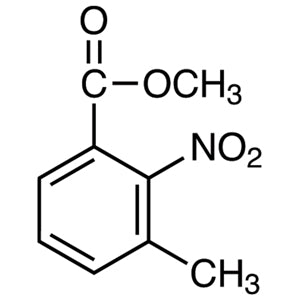
Methyl 3-Methyl-2-nitrobenzoate is a chemical compound widely used in organic reactions for the synthesis of complex molecules. As a key building block in chemical research, it plays a vital role in the development of new compounds across various scientific disciplines. Its versatility makes it an essential reagent for chemists working in both academic and industrial settings. This compound is particularly valuable in the preparation of aromatic compounds and their derivatives, where it serves as a reliable intermediate in electrophilic substitution reactions. Its structural stability and predictable reactivity contribute to its widespread use in laboratory environments.
The compound is known for its favorable solubility in common organic solvents such as ethyl acetate and acetone, which simplifies purification and reaction processes. Its consistent chemical properties ensure reliable results in experimental procedures, making it a preferred choice for both educational and research purposes. The ability to maintain stable performance under controlled conditions further enhances its utility in laboratory applications. These characteristics make Methyl 3-Methyl-2-nitrobenzoate a go-to reagent for chemists seeking precision and reproducibility in their work.
In Indonesian laboratories, this compound is commonly used in both teaching and research settings. It is frequently incorporated into undergraduate and graduate courses to demonstrate fundamental organic chemistry principles. Additionally, it is employed in research projects aimed at developing new pharmaceuticals and specialty chemicals. The availability of this compound supports the continuous advancement of chemical knowledge and innovation in the region.
- Organic synthesis applications benefit from its role as a versatile building block for creating complex molecular structures.
- Pharmaceutical research utilizes it for the development of new drug compounds through controlled chemical reactions.
- Educational institutions use it to teach students about electrophilic substitution and functional group transformations.
- Industrial chemical processes incorporate it as a key intermediate in the production of aromatic derivatives.
- Research laboratories apply it in the synthesis of specialty chemicals requiring precise reactivity and stability.
| Brand | TCI |
|---|---|
| CAS number | 5471-82-9 |
| Molecular formula | — |
| Purity | — |
| Category | Chemistry > Building Blocks > Non-Heterocyclic Building Blocks |
| Pack sizes | Available in various quantities as per standard laboratory supply formats |
| Physical form | Solid |
| Storage | Store in a cool, dry place away from direct sunlight and moisture |
Methyl 3-Methyl-2-nitrobenzoate should be stored in a cool, dry environment to maintain its chemical integrity. It is recommended to keep it in a tightly sealed container to prevent exposure to moisture and air. The compound should be stored away from direct sunlight and sources of heat to avoid degradation. In laboratory settings, it is important to handle the material with appropriate personal protective equipment, such as gloves and safety goggles, to ensure safety during use. Proper ventilation should be maintained when working with this compound to minimize inhalation risks. Regular monitoring of storage conditions helps ensure the compound remains stable and suitable for use in chemical experiments.
—
Produk Terkait
-
Ethyl5-Bromo-2-chlorobenzoate TCI B2255
Regular price From Rp 928.200,00Regular price -
Methyl2-Bromo-5-nitrobenzoate TCI B1916
Regular price From Rp 610.050,00Regular price -
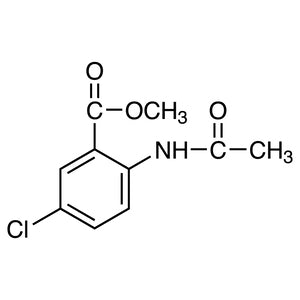
Methyl2-Acetamido-5-chlorobenzoate TCI A1609
Regular price Rp 769.650,00Regular price -
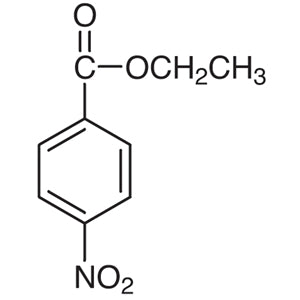
Ethyl4-Nitrobenzoate TCI N0485
Regular price Rp 743.400,00Regular price -
Methyl4-Nitrobenzoate TCI N0159
Regular price Rp 1.298.850,00Regular price -
Methyl2-Nitrobenzoate TCI N0158
Regular price Rp 1.115.100,00Regular price -
Methyl3-Nitrobenzoate TCI N0157
Regular price Rp 980.700,00Regular price -
Methyl4-Hydroxy-3-nitrobenzoate TCI M3649
Regular price From Rp 848.400,00Regular price