


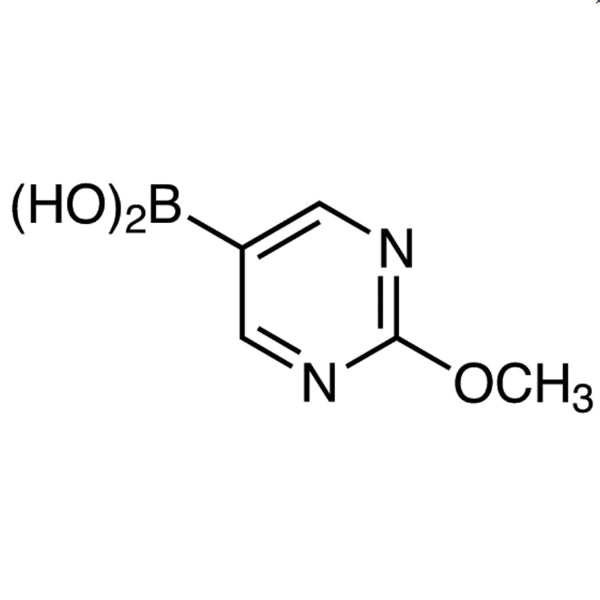

2-Methoxy-5-pyrimidylboronic Acid is a chemical compound widely used in organic reactions, particularly in the synthesis of heterocyclic compounds and coupling reactions. This reagent plays a crucial role in modern synthetic chemistry due to its ability to form carbon-carbon bonds under catalytic conditions. Its unique molecular structure makes it a valuable tool for researchers aiming to create complex organic molecules with high precision. The compound is commonly used in catalytic systems involving transition metals such as palladium and nickel, which are essential in various synthetic pathways.
The compound's reactivity, especially toward heavy metals, makes it a preferred choice for applications requiring high efficiency and selectivity. Its ability to participate in reactions like Suzuki and Kumada cross-coupling has made it a staple in synthetic laboratories. The presence of varying amounts of anhydride further influences its reactivity, necessitating careful handling and controlled reaction conditions. This reagent is particularly favored for its reliability and consistent performance in a wide range of chemical processes.
In Indonesian laboratories, 2-Methoxy-5-pyrimidylboronic Acid is commonly used in organic chemistry research, especially in academic and research institutions. Its availability and proven effectiveness make it a go-to reagent for chemists working on complex molecule synthesis. The compound is essential for projects involving heterocyclic synthesis and molecular modification, contributing significantly to the advancement of chemical research in the region.
TCI brochures (PDF)
- Suzuki-Miyaura Cross Coupling Reaction 2025-12-01 · p. 13
- Boron Compounds 2025-10-07 · p. 13
Related TCI products
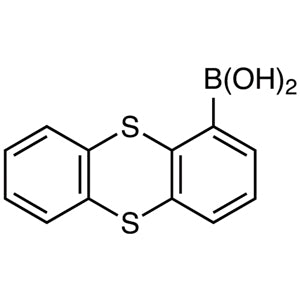
- TCI T3706 108847-76-3 1-Thianthrenylboronic Acid (contains varying amounts of Anhydride)
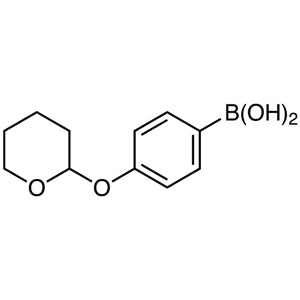
- TCI T3325 182281-01-2 4-(Tetrahydro-2H-pyran-2-yloxy)phenylboronic Acid (contains varying amounts of Anhydride)
- TCI T2621 160032-40-6 Thieno[3,2-b]thiophene-2-boronic Acid (contains varying amounts of Anhydride)
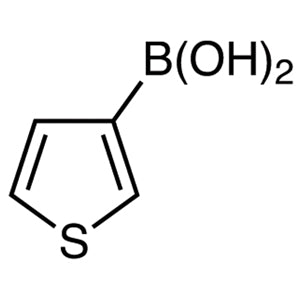
- TCI T1975 6165-69-1 3-Thiopheneboronic Acid (contains varying amounts of Anhydride)
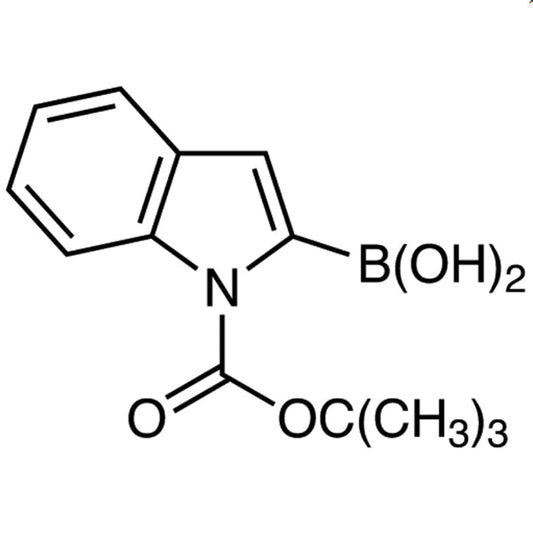
- TCI B5145 213318-44-6 1-(tert-Butoxycarbonyl)indole-2-boronic Acid (contains varying amounts of Anhydride)
- TCI B4774 113893-08-6 Benzo[b]thiophene-3-boronic Acid (contains varying amounts of Anhydride)
- Organic synthesis of heterocyclic compounds due to its ability to form carbon-carbon bonds under catalytic conditions.
- Catalytic coupling reactions such as Suzuki and Kumada for creating complex organic structures with high precision.
- Research in molecular modification and functional group introduction in advanced chemical processes.
- Development of pharmaceutical and agrochemical compounds through selective cross-coupling reactions.
- Support for academic and industrial research in the production of novel chemical entities with specific properties.
| Brand | TCI |
|---|---|
| CAS number | 628692-15-9 |
| Molecular formula | — |
| Purity | — |
| Category | Chemistry > Organometallic Reagents > Organoboron [Organometallic Reagents] |
| Pack sizes | 15 g |
| Physical form | Solid |
| Storage | Store in a cool, dry place away from moisture and direct sunlight |
This compound should be stored in a cool, dry environment to maintain its stability and reactivity. It is recommended to keep it in a sealed container to prevent exposure to moisture and air, which may affect its performance. Due to its reactivity, it should be handled with care in a well-ventilated area, using appropriate personal protective equipment. Avoid contact with incompatible materials such as strong oxidizing agents. The compound is best stored in a desiccator or airtight container to ensure long-term usability and safety in laboratory settings. Always follow standard laboratory safety protocols when working with this reagent.
—
Produk Terkait
-
1-ThianthrenylboronicAcid(containsvaryingamountsofAnhydride) TCI T3706
Regular price From Rp 610.050,00Regular price -
4-(Tetrahydro-2H-pyran-2-yloxy)phenylboronicAcid(containsvaryingamountsofAnhydride) TCI T3325
Regular price From Rp 1.776.600,00Regular price -
Thieno[3,2-b]thiophene-2-boronicAcid(containsvaryingamountsofAnhydride) TCI T2621
Regular price Rp 5.830.650,00Regular price -
3-ThiopheneboronicAcid(containsvaryingamountsofAnhydride) TCI T1975
Regular price From Rp 823.200,00Regular price -
1-(tert-Butoxycarbonyl)indole-2-boronicAcid(containsvaryingamountsofAnhydride) TCI B5145
Regular price Rp 2.411.850,00Regular price -
Benzo[b]thiophene-3-boronicAcid(containsvaryingamountsofAnhydride) TCI B4774
Regular price From Rp 1.220.100,00Regular price -
1,4-Benzodioxane-6-boronicAcid(containsvaryingamountsofAnhydride) TCI B4181
Regular price Rp 3.551.100,00Regular price -
1-(tert-Butoxycarbonyl)-2-pyrroleboronicAcid(containsvaryingamountsofAnhydride) TCI B4063
Regular price From Rp 1.644.300,00Regular price

![160032-40-6 Thieno[3,2-b]thiophene-2-boronic Acid (contains varying amounts of Anhydride) - AMI Scientific](http://amiscientific.com/cdn/shop/files/TCI2510T2621.jpg?v=1768206488&width=533)

![113893-08-6 Benzo[b]thiophene-3-boronic Acid (contains varying amounts of Anhydride) - AMI Scientific](http://amiscientific.com/cdn/shop/files/TCI2510B4774_65b85fee-ce4d-45b9-ad87-4962d8f3452c.jpg?v=1767853515&width=533)

