Manganese(III) Tetraphenylporphyrin Chloride is a specialized chemical compound used in catalytic reactions and C-H activation studies within laboratory settings. As a complex porphyrin derivative, it plays a crucial role in facilitating chemical transformations that require the activation of carbon-hydrogen bonds. Its unique electronic properties and structural symmetry make it an essential tool for researchers exploring advanced catalytic mechanisms. This compound is particularly valuable in both organic and inorganic chemistry due to its ability to interact with a wide range of substrates and transition metals.
The compound's high reactivity and ability to form stable complexes with transition metals make it a preferred choice for catalytic applications. Its porphyrin structure allows for tunable redox properties, enhancing its utility in various synthetic processes. Additionally, its sensitivity to oxidation and UV light necessitates careful handling, but this also contributes to its effectiveness in controlled experimental environments. These properties make it a versatile reagent in modern laboratory research, especially in studies involving heterogeneous and homogeneous catalysis.
In Indonesian laboratories, Manganese(III) Tetraphenylporphyrin Chloride is commonly used in pure chemistry research, catalytic studies, and C-H activation experiments. Many research institutions and universities in Indonesia rely on this compound for experimental work aimed at advancing chemical synthesis and catalytic processes. Its application is widespread in both academic and industrial research settings, supporting a wide range of scientific inquiries.
TCI brochures (PDF)
- Magnetic Metal Complexes 2024-12-16 · p. 1
- C-H Bond Activation Reaction 2025-06-20 · p. 8
- Transition Metal Catalysts 2026-04-10 · p. 7
Related TCI products
- TCI I0937 16456-81-8 Iron(III) Tetraphenylporphyrin Chloride
- TCI M3581 13446-03-2 Manganese(II) Bromide
- TCI M3448 1313-13-9 Manganese(IV) Oxide
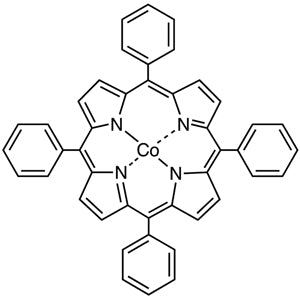
- TCI C3579 14172-90-8 Cobalt(II) Tetraphenylporphyrin
- TCI M2095 13446-34-9 Manganese(II) Chloride Tetrahydrate
- TCI C2987 14172-91-9 Copper(II) Tetraphenylporphyrin
- C-H Activation Studies: This compound is ideal for C-H activation due to its ability to facilitate bond-breaking processes in hydrocarbon substrates.
- Organic Catalysis: Its unique electronic structure allows it to act as a catalyst in various organic reactions, enhancing reaction efficiency and selectivity.
- Inorganic Chemistry Research: The compound's interaction with transition metals makes it suitable for studying inorganic catalytic systems and redox reactions.
- Heterogeneous Catalysis: Its capacity to form complexes with metal surfaces makes it a valuable reagent in heterogeneous catalytic processes.
- Synthetic Chemistry Experiments: Researchers use it to develop new synthetic pathways, particularly in reactions requiring precise control over reaction conditions.
| Brand | TCI |
|---|---|
| CAS number | 32195-55-4 |
| Molecular formula | — |
| Purity | — |
| Category | Chemistry > Catalysis and Inorganic Chemistry > C-H Activation [Catalysis] |
| Pack sizes | — |
| Physical form | — |
| Storage | Store in a cool, dark place away from light and oxidizing agents |
Manganese(III) Tetraphenylporphyrin Chloride should be stored in a cool, dark environment to prevent degradation due to UV exposure and oxidation. It is recommended to use airtight containers to minimize contact with air and moisture. Due to its sensitivity, it should be handled in a fume hood to ensure proper ventilation and reduce exposure risk. Avoid storing near strong oxidizing agents to prevent unwanted reactions. Proper labeling and secure storage are essential to maintain safety and prevent contamination. Always follow standard laboratory safety protocols when working with this compound.
—
Product Categories
Produk Terkait
-
Iron(III)TetraphenylporphyrinChloride TCI I0937
Regular price From Rp 1.934.100,00Regular priceRp 1.368.150,00Sale price From Rp 1.934.100,00 -
Manganese(II)Bromide TCI M3581
Regular price From Rp 2.782.500,00Regular priceRp 1.945.650,00Sale price From Rp 2.782.500,00 -
Manganese(IV)Oxide TCI M3448
Regular price From Rp 530.250,00Regular priceRp 370.650,00Sale price From Rp 530.250,00 -
Cobalt(II)Tetraphenylporphyrin TCI C3579
Regular price Rp 2.702.700,00Regular priceRp 1.905.750,00Sale price Rp 2.702.700,00 -
Manganese(II)ChlorideTetrahydrate TCI M2095
Regular price From Rp 505.050,00Regular priceRp 352.800,00Sale price From Rp 505.050,00 -
Copper(II)Tetraphenylporphyrin TCI C2987
Regular price Rp 5.141.850,00Regular priceRp 3.610.950,00Sale price Rp 5.141.850,00 -
Tris(2,4-pentanedionato)manganese(III) TCI M0043
Regular price From Rp 1.353.450,00Regular priceRp 946.050,00Sale price From Rp 1.353.450,00 -
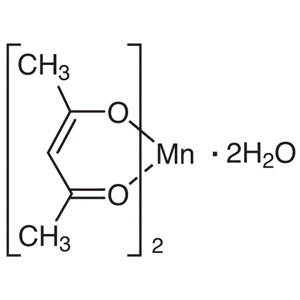
Bis(2,4-pentanedionato)manganese(II)Dihydrate TCI M0042
Regular price Rp 1.378.650,00Regular priceRp 963.900,00Sale price Rp 1.378.650,00