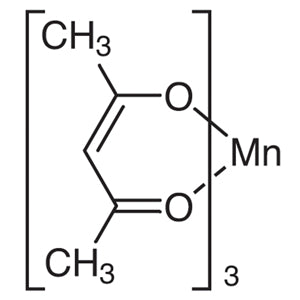
Tris(2,4-pentanedionato)manganese(III) is a metal complex compound widely used in chemical reactions, particularly in catalytic processes. This material plays a crucial role in laboratory settings by acting as a catalyst in oxidation and reduction reactions. Its ability to accelerate chemical reactions without significant degradation makes it a valuable tool for researchers. It is especially useful in non-precious metal catalysis, where cost-effective and efficient alternatives to noble metals are sought. The compound is commonly used in both academic and industrial research environments to enhance reaction efficiency and reduce the need for more expensive catalysts.
One of the key properties that make Tris(2,4-pentanedionato)manganese(III) a preferred choice is its stability under various experimental conditions. It can form complexes with a wide range of ligands, providing flexibility in its application. This versatility allows it to be adapted to different reaction systems, making it suitable for a broad spectrum of chemical processes. Additionally, its chemical structure enables precise control over reaction pathways, which is essential for achieving consistent and reproducible results in laboratory experiments.
In Indonesian laboratories, Tris(2,4-pentanedionato)manganese(III) is frequently utilized in inorganic chemistry and catalysis research. It is a common component in studies aimed at developing sustainable and cost-effective catalytic systems. Many research institutions and universities in Indonesia rely on this compound for its reliability and performance in various chemical applications, contributing to advancements in both academic and applied research.
TCI brochures (PDF)
- Magnetic Metal Complexes 2024-12-16 · p. 1
- Transition Metal Catalysts 2026-04-10 · p. 7
Related TCI products
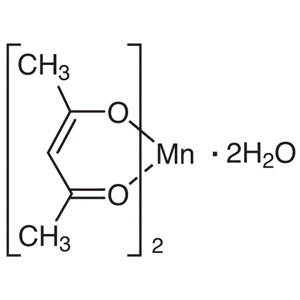
- TCI M0042 22033-51-8 Bis(2,4-pentanedionato)manganese(II) Dihydrate
- TCI H0557 19648-86-3 Bis(hexafluoroacetylacetonato)manganese(II)
- TCI B2681 14024-48-7 Bis(2,4-pentanedionato)cobalt(II)
- TCI N0096 120156-44-7 Bis(2,4-pentanedionato)nickel(II) Hydrate
- TCI I0079 14024-18-1 Tris(2,4-pentanedionato)iron(III)
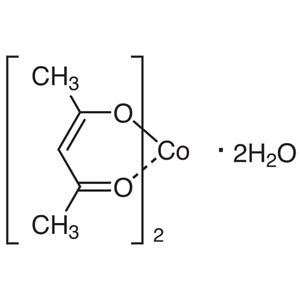
- TCI C0373 123334-29-2 Bis(2,4-pentanedionato)cobalt(II) Dihydrate
- Inorganic chemistry research benefits from this compound due to its ability to form stable complexes with various ligands, enhancing reaction control and efficiency.
- Oxidation and reduction reactions are effectively catalyzed by this material, making it ideal for synthetic organic chemistry applications.
- Non-precious metal catalysis projects often use this compound as a cost-effective alternative to noble metal catalysts, supporting green chemistry initiatives.
- Catalytic studies in academic settings rely on its stability and reactivity to investigate reaction mechanisms and optimize experimental conditions.
- Industrial research applications leverage its performance in chemical processes that require high efficiency and minimal degradation over time.
| Brand | TCI |
|---|---|
| CAS number | 14284-89-0 |
| Molecular formula | — |
| Purity | — |
| Category | Chemistry > Catalysis and Inorganic Chemistry > Non-Precious Metal Catalysis |
| Pack sizes | Available in various quantities as per standard laboratory supply |
| Physical form | Solid |
| Storage | Store in a cool, dry place away from moisture and direct sunlight |
This compound should be stored in a cool, dry environment to maintain its stability and prevent degradation. It is recommended to use airtight containers to protect it from moisture and air exposure. Proper labeling of storage containers is essential for safe handling and easy identification. Laboratory personnel should wear appropriate personal protective equipment, such as gloves and safety goggles, when handling this material. It should be kept away from incompatible substances to avoid any potential chemical reactions. Regular inspection of storage conditions ensures that the material remains in optimal condition for use in experiments.
—
Product Categories
Produk Terkait
-
Bis(2,4-pentanedionato)manganese(II)Dihydrate TCI M0042
Regular price Rp 1.378.650,00Regular priceRp 963.900,00Sale price Rp 1.378.650,00 -
Bis(hexafluoroacetylacetonato)manganese(II) TCI H0557
Regular price From Rp 1.326.150,00Regular priceRp 942.900,00Sale price From Rp 1.326.150,00 -
Bis(2,4-pentanedionato)cobalt(II) TCI B2681
Regular price Rp 1.696.800,00Regular priceRp 1.186.500,00Sale price Rp 1.696.800,00 -
Bis(2,4-pentanedionato)nickel(II)Hydrate TCI N0096
Regular price From Rp 2.041.200,00Regular priceRp 1.426.950,00Sale price From Rp 2.041.200,00 -
Tris(2,4-pentanedionato)iron(III) TCI I0079
Regular price From Rp 743.400,00Regular priceRp 519.750,00Sale price From Rp 743.400,00 -
Bis(2,4-pentanedionato)cobalt(II)Dihydrate TCI C0373
Regular price From Rp 2.041.200,00Regular priceRp 1.426.950,00Sale price From Rp 2.041.200,00 -
Bis(2,4-pentanedionato)vanadium(IV)Oxide TCI V0016
Regular price Rp 2.199.750,00Regular priceRp 1.538.250,00Sale price Rp 2.199.750,00 -
Bis(trifluoro-2,4-pentanedionato)cobalt(II) TCI T0746
Regular price From Rp 2.597.700,00Regular priceRp 1.832.250,00Sale price From Rp 2.597.700,00