Tris(2,4-pentanedionato)iron(III) is a metal complex compound widely used in chemical reactions, particularly in catalysis and inorganic chemistry. It functions as a catalyst in C-H activation processes, which are essential for the synthesis of complex organic compounds. In laboratory settings, this compound is valued for its ability to accelerate chemical reactions without altering the fundamental structure of the substrate. Its role in promoting efficient and selective chemical transformations makes it a critical reagent in modern synthetic chemistry.
The compound is known for its chemical stability and high reactivity, which contribute to its effectiveness in various experimental conditions. Its complex structure allows for strong interactions with substrates, enhancing the efficiency of reactions. Additionally, it exhibits resistance to certain temperature and chemical conditions, making it suitable for use in diverse laboratory environments. These properties make it a reliable and versatile choice for researchers working in catalysis and inorganic chemistry.
In Indonesian laboratories, Tris(2,4-pentanedionato)iron(III) is commonly used in chemical research, especially in institutions focused on advanced synthetic methods. Its application spans across multiple research areas, including the development of new catalysts and the optimization of reaction conditions. The compound’s consistent performance and compatibility with various experimental setups have made it a preferred material among scientists and researchers in the region.
TCI brochures (PDF)
- Tridentate Phosphine Ligand for Catalytic C-H Methylation 2023-06-16 · p. 1
- Hydrosilane for Alkene Hydrogenation and Quaternary Carbon Construction through C–C Bond Formation 2025-09-30 · p. 1
- Magnetic Metal Complexes 2024-12-16 · p. 1
- Oxidizing Agents 2025-06-11 · p. 9
- C-H Bond Activation Reaction 2025-06-20 · p. 8
- Transition Metal Catalysts 2026-04-10 · p. 7
Related TCI products
- TCI N0096 120156-44-7 Bis(2,4-pentanedionato)nickel(II) Hydrate
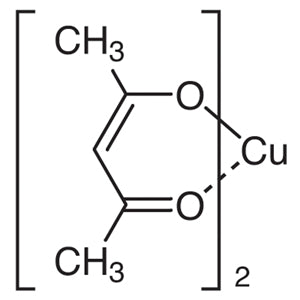
- TCI C0384 13395-16-9 Bis(2,4-pentanedionato)copper(II)
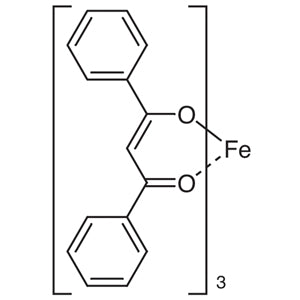
- TCI T1686 14405-49-3 Tris(dibenzoylmethanato) Iron(III)
- TCI B2681 14024-48-7 Bis(2,4-pentanedionato)cobalt(II)
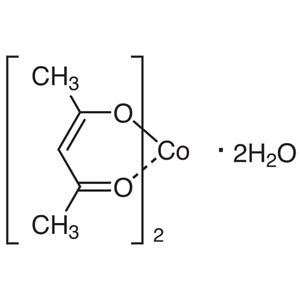
- TCI C0373 123334-29-2 Bis(2,4-pentanedionato)cobalt(II) Dihydrate
- TCI T0746 16092-38-9 Bis(trifluoro-2,4-pentanedionato)cobalt(II)
- C-H Activation Reactions: This compound is ideal for C-H activation due to its ability to facilitate selective bond breaking in organic substrates.
- Catalytic Synthesis of Organic Compounds: It is frequently used in the synthesis of complex organic molecules where high catalytic efficiency is required.
- Inorganic Chemistry Research: Its role in inorganic chemistry makes it suitable for studies involving metal-based catalysts and coordination chemistry.
- Reaction Optimization Studies: The compound’s stability and reactivity make it useful in experiments aimed at optimizing reaction conditions and yields.
- Advanced Catalytic Systems Development: It is employed in the design of new catalytic systems that require high activity and selectivity in chemical transformations.
| Brand | TCI |
|---|---|
| CAS number | 14024-18-1 |
| Molecular formula | — |
| Purity | — |
| Category | Chemistry > Catalysis and Inorganic Chemistry > C-H Activation [Catalysis] |
| Pack sizes | Available in various quantities as per standard laboratory requirements |
| Physical form | Solid powder |
| Storage | Store in a cool, dry place away from moisture and direct sunlight |
This compound should be stored in a cool, dry environment to maintain its chemical stability. It is recommended to use airtight containers to prevent exposure to moisture and air, which could affect its reactivity. Proper labeling of storage containers is essential for safety and identification. Laboratory personnel should handle the compound with care, using appropriate personal protective equipment such as gloves and safety goggles. It is important to ensure that the compound is kept away from incompatible substances to avoid any potential chemical reactions. Regular inspection of storage conditions ensures the material remains in optimal condition for use in experiments.
References cited in the TCI brochure
- Rui Shang. Iron-Catalyzed Ortho C–H Methylation of Aromatics Bearing a Simple Carbonyl Group with Methylaluminum and Tridentate Phosphine Ligand Journal of the American Chemical Society, 2016. doi:10.1021/jacs.6b06908
- Xu-cheng Gan. Iron-Catalyzed Hydrobenzylation: Stereoselective Synthesis of (−)-Eugenial C Journal of the American Chemical Society, 2023. doi:10.1021/jacs.3c05428
- Nathan Dao. Metal-Hydride C–C Cross-Coupling of Alkenes Through a Double Outer-Sphere Mechanism The Journal of Organic Chemistry, 2024. doi:10.1021/acs.joc.4c00260
- Xu-cheng Gan. Carbon quaternization of redox active esters and olefins by decarboxylative coupling Science, 2024. doi:10.1126/science.adn5619
Product Categories
- Catalysis and Inorganic ChemistryC-H Activation [Catalysis]Iron Compounds [C-H Activation]
- Catalysis and Inorganic ChemistryNon-Precious Metal Catalysis [Catalysis]
- Catalysis and Inorganic ChemistryOxidation [Catalysis]Metal Catalysts for Oxidation
- Catalysis and Inorganic ChemistryTransition Elements [Catalysis and Inorganic Chemistry]Iron [Catalysis and Inorganic Chemistry]
- Catalysis and Inorganic ChemistryCross-coupling Reaction using Transition Metal Catalysts [C-C Bond Formation]Iron Catalysts [Cross-coupling Reaction using Transition Metal Catalysts]
- Synthetic ReagentsC-C Bond Formation [Synthetic Reagents]Cross-coupling Reaction using Transition Metal Catalysts [C-C Bond Formation]
- Synthetic ReagentsC-X(Non-Halogen) Bond Formation [Synthetic Reagents]C-H Bond Activation Reaction [Synthetic Reagents]
Produk Terkait
-
Bis(2,4-pentanedionato)nickel(II)Hydrate TCI N0096
Regular price From Rp 2.041.200,00Regular priceRp 1.426.950,00Sale price From Rp 2.041.200,00 -
Bis(2,4-pentanedionato)copper(II) TCI C0384
Regular price From Rp 637.350,00Regular priceRp 445.200,00Sale price From Rp 637.350,00 -
Tris(dibenzoylmethanato)Iron(III) TCI T1686
Regular price From Rp 2.837.100,00Regular priceRp 1.983.450,00Sale price From Rp 2.837.100,00 -
Bis(2,4-pentanedionato)cobalt(II) TCI B2681
Regular price Rp 1.696.800,00Regular priceRp 1.186.500,00Sale price Rp 1.696.800,00 -
Bis(2,4-pentanedionato)cobalt(II)Dihydrate TCI C0373
Regular price From Rp 2.041.200,00Regular priceRp 1.426.950,00Sale price From Rp 2.041.200,00 -
Bis(trifluoro-2,4-pentanedionato)cobalt(II) TCI T0746
Regular price From Rp 2.597.700,00Regular priceRp 1.832.250,00Sale price From Rp 2.597.700,00 -
Iron(II)Bromide TCI F1338
Regular price From Rp 1.936.200,00Regular priceRp 1.353.450,00Sale price From Rp 1.936.200,00 -
Bis(2,4-pentanedionato)vanadium(IV)Oxide TCI V0016
Regular price Rp 2.199.750,00Regular priceRp 1.538.250,00Sale price Rp 2.199.750,00