Bis(trifluoro-2,4-pentanedionato)cobalt(II) is a chemical compound widely used in catalytic reactions and transition metal reactivity studies. This compound plays a crucial role in laboratory settings, particularly in the field of C-H activation, where it serves as an efficient catalyst for breaking carbon-hydrogen bonds. Its unique structure, featuring a cobalt(II) ion coordinated with two trifluoro-2,4-pentanedionate ligands, enables strong interactions with substrates, enhancing reaction efficiency. This compound is essential for advancing research in both organic and inorganic chemistry, offering stability and performance under various reaction conditions.
The compound's preference in laboratory applications stems from its chemical stability and catalytic efficiency. Its ability to maintain structural integrity during reactions makes it a reliable choice for complex chemical processes. Additionally, its high selectivity ensures that it promotes desired reactions without significant side reactions. These properties make it a favored material for researchers aiming to achieve precise and reproducible results. The compound's effectiveness in a wide range of experimental conditions further solidifies its importance in modern chemical research.
In Indonesian laboratories, this compound is commonly used in academic and industrial research settings. It is particularly relevant for studies involving transition metal catalysis and C-H activation. Due to its reliability and performance, it is often selected for experiments requiring high catalytic activity and specificity. Its use supports the development of new chemical methodologies and contributes to the advancement of scientific knowledge in the region.
TCI brochures (PDF)
- Magnetic Metal Complexes 2024-12-16 · p. 1
- Oxidizing Agents 2025-06-11 · p. 9
- C-H Bond Activation Reaction 2025-06-20 · p. 6
- Transition Metal Catalysts 2026-04-10 · p. 10
Related TCI products
- TCI B2681 14024-48-7 Bis(2,4-pentanedionato)cobalt(II)
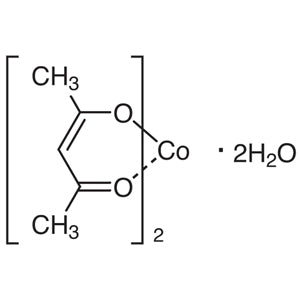
- TCI C0373 123334-29-2 Bis(2,4-pentanedionato)cobalt(II) Dihydrate
- TCI H0553 19648-83-0 Bis(hexafluoroacetylacetonato)cobalt(II)
- TCI I0079 14024-18-1 Tris(2,4-pentanedionato)iron(III)
- TCI V0016 3153-26-2 Bis(2,4-pentanedionato)vanadium(IV) Oxide
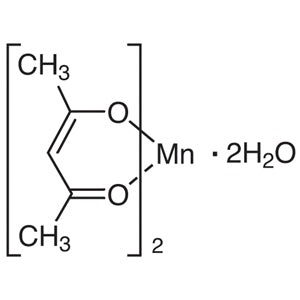
- TCI M0042 22033-51-8 Bis(2,4-pentanedionato)manganese(II) Dihydrate
- C-H Activation Reactions: This compound is ideal for activating carbon-hydrogen bonds, enabling selective and efficient transformations in organic synthesis.
- Transition Metal Catalysis Studies: Its unique coordination structure makes it a valuable tool for investigating the behavior of transition metals in catalytic processes.
- Organic Chemistry Research: It is frequently used in experiments aimed at exploring new reaction pathways and mechanisms in organic chemistry.
- Inorganic Chemistry Investigations: The compound's stability and reactivity make it suitable for studying the properties and behavior of inorganic complexes.
- Catalytic Efficiency Testing: Its consistent performance under various conditions allows researchers to evaluate the effectiveness of different catalytic systems.
| Brand | TCI |
|---|---|
| CAS number | 16092-38-9 |
| Molecular formula | — |
| Purity | — |
| Category | Chemistry > Catalysis and Inorganic Chemistry > C-H Activation [Catalysis] |
| Pack sizes | Available in various quantities as per supplier specifications |
| Physical form | Solid |
| Storage | Store in a cool, dry place away from moisture and light |
This compound should be stored in a cool, dry environment to maintain its chemical stability. It is recommended to keep it in a sealed container to prevent exposure to moisture and air. Due to its chemical nature, it should be handled with appropriate personal protective equipment, such as gloves and safety goggles. Avoid direct contact with skin and inhalation of vapors. Ensure proper ventilation in the laboratory when working with this material. It is important to follow standard laboratory safety protocols to minimize any potential risks associated with its use.
—
Product Categories
- Catalysis and Inorganic ChemistryC-H Activation [Catalysis]Cobalt Compounds [C-H Activation]
- Catalysis and Inorganic ChemistryOxidation [Catalysis]Metal Catalysts for Oxidation
- Catalysis and Inorganic ChemistryTransition Elements [Catalysis and Inorganic Chemistry]Cobalt [Catalysis and Inorganic Chemistry]
Produk Terkait
-
Bis(2,4-pentanedionato)cobalt(II) TCI B2681
Regular price Rp 1.696.800,00Regular priceRp 1.186.500,00Sale price Rp 1.696.800,00 -
Bis(2,4-pentanedionato)cobalt(II)Dihydrate TCI C0373
Regular price From Rp 2.041.200,00Regular priceRp 1.426.950,00Sale price From Rp 2.041.200,00 -
Bis(hexafluoroacetylacetonato)cobalt(II) TCI H0553
Regular price Rp 4.266.150,00Regular priceRp 2.998.800,00Sale price Rp 4.266.150,00 -
Tris(2,4-pentanedionato)iron(III) TCI I0079
Regular price From Rp 743.400,00Regular priceRp 519.750,00Sale price From Rp 743.400,00 -
Bis(2,4-pentanedionato)vanadium(IV)Oxide TCI V0016
Regular price Rp 2.199.750,00Regular priceRp 1.538.250,00Sale price Rp 2.199.750,00 -
Bis(2,4-pentanedionato)manganese(II)Dihydrate TCI M0042
Regular price Rp 1.378.650,00Regular priceRp 963.900,00Sale price Rp 1.378.650,00 -
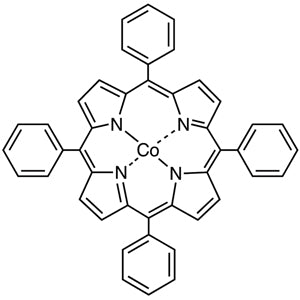
Cobalt(II)Tetraphenylporphyrin TCI C3579
Regular price Rp 2.702.700,00Regular priceRp 1.905.750,00Sale price Rp 2.702.700,00 -
Dichloro(dimethylglyoxime)(dimethylglyoximato)cobalt(III) TCI D5924
Regular price From Rp 1.881.600,00Regular priceRp 1.331.400,00Sale price From Rp 1.881.600,00