Bis(hexafluoroacetylacetonato)manganese(II) is a chemical compound widely used in laboratory settings, particularly in catalysis and inorganic chemistry. This compound is a complex of manganese(II) ions coordinated by two hexafluoroacetylacetonato ligands. Its unique structure makes it an effective catalyst for various organic and inorganic reactions. In the laboratory, it plays a crucial role in facilitating chemical transformations with high efficiency and selectivity. Due to its stability and controlled reactivity, it is a reliable choice for researchers seeking a safe and effective catalytic agent.
The compound is known for its chemical stability and solubility in organic solvents, which are key factors in its popularity among chemists. It dissolves well in solvents such as ethyl acetate and chloroform, making it easy to handle and incorporate into reaction mixtures. Its stability under normal laboratory conditions ensures that it remains effective over time, reducing the need for frequent replenishment. Additionally, it is non-toxic and does not contain harmful substances in significant quantities, making it a safer option for use in both educational and research environments.
In Indonesian laboratories, Bis(hexafluoroacetylacetonato)manganese(II) is commonly used in academic and research institutions. It is particularly favored in studies related to catalytic processes, where its ability to enhance reaction rates without being consumed is highly beneficial. Its widespread application in chemical research underscores its importance as a reliable and versatile reagent in the Indonesian scientific community.
TCI brochures (PDF)
- Transition Metal Catalysts 2026-04-10 · p. 7
Related TCI products
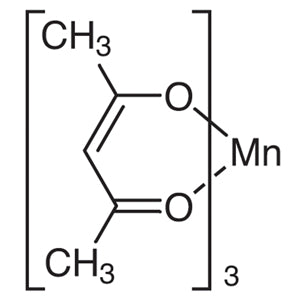
- TCI M0043 14284-89-0 Tris(2,4-pentanedionato)manganese(III)
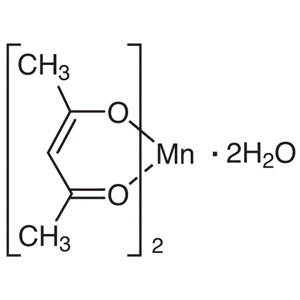
- TCI M0042 22033-51-8 Bis(2,4-pentanedionato)manganese(II) Dihydrate
- TCI H0555 17786-67-3 Tris(hexafluoroacetylacetonato)iron(III)
- TCI H0554 14781-45-4 Bis(hexafluoroacetylacetonato)copper(II)
- TCI H0553 19648-83-0 Bis(hexafluoroacetylacetonato)cobalt(II)
- TCI M2621 32195-55-4 Manganese(III) Tetraphenylporphyrin Chloride
- Catalytic reactions in organic synthesis where efficient and stable catalysts are required.
- Inorganic chemistry experiments involving transition metal complexes and coordination chemistry.
- Research in transition elements and their role in catalytic mechanisms and reactivity.
- Preparation of metal-based compounds for further chemical transformations and functionalization.
- Educational demonstrations in chemistry courses focusing on coordination compounds and catalysis.
| Brand | TCI |
|---|---|
| CAS number | 19648-86-3 |
| Molecular formula | — |
| Purity | — |
| Category | Chemistry > Catalysis and Inorganic Chemistry > Transition Elements |
| Pack sizes | Available in various quantities as per standard laboratory supply |
| Physical form | Solid or powder, depending on packaging |
| Storage | Store in a cool, dry place away from moisture and direct sunlight |
This compound should be stored in a cool, dry environment to maintain its stability and effectiveness. It is recommended to keep it in a sealed container to prevent exposure to moisture and air, which may affect its chemical properties. Suitable containers include glass or plastic vessels with tight-fitting lids to minimize contamination and degradation. In laboratory settings, it is important to handle the compound with care, using appropriate personal protective equipment such as gloves and safety goggles. Due to its non-toxic nature, it poses minimal risk, but standard laboratory safety protocols should still be followed to ensure safe handling and use.
—
Produk Terkait
-
Tris(2,4-pentanedionato)manganese(III) TCI M0043
Regular price From Rp 1.353.450,00Regular price -
Bis(2,4-pentanedionato)manganese(II)Dihydrate TCI M0042
Regular price Rp 1.378.650,00Regular price -
Tris(hexafluoroacetylacetonato)iron(III) TCI H0555
Regular price Rp 6.360.900,00Regular price -
Bis(hexafluoroacetylacetonato)copper(II) TCI H0554
Regular price From Rp 1.167.600,00Regular price -
Bis(hexafluoroacetylacetonato)cobalt(II) TCI H0553
Regular price Rp 4.213.650,00Regular price -
Manganese(III)TetraphenylporphyrinChloride TCI M2621
Regular price Rp 4.133.850,00Regular price -
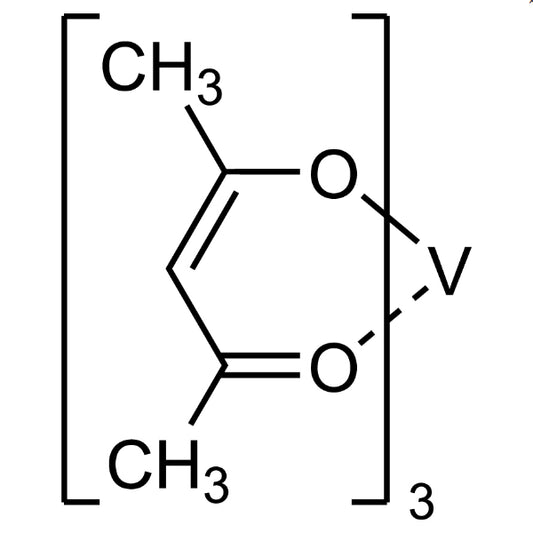
Vanadium(III)Acetylacetonate TCI T4380
Regular price From Rp 1.220.100,00Regular price -
Tris(2,2,6,6-tetramethyl-3,5-heptanedionato)manganese(III) TCI T4217
Regular price Rp 2.068.500,00Regular price