TCI H0555 Tris(hexafluoroacetylacetonato)iron(III) is an octahedral iron(III) complex in which three hexafluoroacetylacetonate ligands bind the metal centre in a bidentate fashion through their oxygen atoms. Because the iron sits in the +3 oxidation state, three anionic ligands are required to neutralise the charge, giving a neutral molecule that dissolves readily in organic solvents. In the laboratory this material serves as a catalyst and pre-catalyst for C–H bond activation reactions, oxidations, and iron-mediated radical transformations, and it has become an attractive alternative because iron is an abundant, comparatively inexpensive, and more benign metal than the noble metals it can replace.
The property that makes this complex a preferred choice is the influence of the eighteen fluorine atoms distributed across its three ligands, which withdraw electron density from the iron centre and markedly increase its Lewis acidity. As a consequence, the complex activates substrates and oxidants more readily than conventional Fe(acac)₃. The fluorinated ligand set also confers thermal stability, good solubility in organic solvents and in supercritical carbon dioxide, and sufficient volatility for vapour-phase applications. The iron(III) centre, with its accessible Fe(III)/Fe(II) redox couple, further allows the compound to act as a mediator in single-electron processes.
In Indonesian laboratories, this reagent is typically requested by university research groups, national research institutes, and industrial R&D units working on catalysis and synthetic methodology. It is generally used at small scale on the bench for reaction screening and method development, where an earth-abundant metal catalyst is preferred over a precious-metal system. Because it belongs to the C–H activation and inorganic chemistry segment of the catalogue, it is usually ordered together with other complementary catalysts, ligands, and oxidants for a single project.
TCI brochures (PDF)
- C-H Bond Activation Reaction 2025-06-20 · p. 8
- Transition Metal Catalysts 2026-04-10 · p. 7
Related TCI products
- TCI H0554 14781-45-4 Bis(hexafluoroacetylacetonato)copper(II)
- TCI H0553 19648-83-0 Bis(hexafluoroacetylacetonato)cobalt(II)
- TCI I0079 14024-18-1 Tris(2,4-pentanedionato)iron(III)
- TCI H0557 19648-86-3 Bis(hexafluoroacetylacetonato)manganese(II)
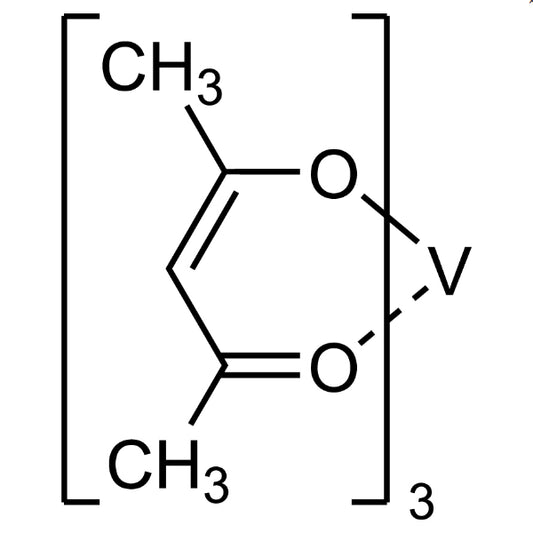
- TCI T4380 13476-99-8 Vanadium(III) Acetylacetonate
- TCI I0937 16456-81-8 Iron(III) Tetraphenylporphyrin Chloride
- C–H bond activation catalysis: the strongly Lewis acidic, electron-poor iron centre activates substrates more readily than conventional Fe(acac)₃, making it suitable for functionalising otherwise unreactive C–H positions.
- Oxidation reactions: the accessible Fe(III)/Fe(II) redox couple lets the complex engage oxidants efficiently, so it serves as a catalyst or pre-catalyst in oxidative transformations run on the bench.
- Iron-mediated radical transformations: as a single-electron mediator, the iron(III) centre initiates and sustains radical processes where a cheap, abundant metal is preferred over noble-metal systems.
- Supercritical carbon dioxide chemistry: the fluorinated ligand shell gives good solubility in supercritical CO₂, allowing the complex to be carried into reaction or extraction systems using that medium.
- Vapour-phase applications: adequate volatility combined with thermal stability from the eighteen fluorine atoms allows the neutral complex to be transported in the gas phase for deposition-type work.
| Brand | TCI |
|---|---|
| CAS number | 17786-67-3 |
| Molecular formula | — |
| Purity | — |
| Category | Chemistry > Catalysis and Inorganic Chemistry > C-H Activation [Catalysis] |
| Pack sizes | available in the catalogue pack sizes offered by TCI for this item; please confirm the size required when ordering |
| Physical form | — |
| Storage | store in a cool, dry place, tightly closed and protected from moisture |
- Product code: H0555
Store the container tightly closed in a cool, dry, well-ventilated area, away from moisture, strong oxidising agents, and direct sunlight. Keep the material in its original tightly sealed bottle or in a comparable chemically resistant container with a secure closure; because the fluorinated complex is volatile enough for vapour-phase use, containers should never be left open on the bench. Handle it in a fume hood while wearing safety goggles, a laboratory coat, and suitable chemical-resistant gloves. Avoid raising dust, avoid inhalation and skin or eye contact, and transfer the solid with clean, dry utensils to prevent contamination. Always consult the manufacturer's Safety Data Sheet before use and follow institutional procedures for chemical waste disposal.
—
Product Categories
Produk Terkait
-
Bis(hexafluoroacetylacetonato)copper(II) TCI H0554
Regular price From Rp 1.167.600,00Regular price -
Bis(hexafluoroacetylacetonato)cobalt(II) TCI H0553
Regular price Rp 4.213.650,00Regular price -
Tris(2,4-pentanedionato)iron(III) TCI I0079
Regular price From Rp 743.400,00Regular price -
Bis(hexafluoroacetylacetonato)manganese(II) TCI H0557
Regular price From Rp 1.273.650,00Regular price -
Vanadium(III)Acetylacetonate TCI T4380
Regular price From Rp 1.220.100,00Regular price -
Iron(III)TetraphenylporphyrinChloride TCI I0937
Regular price From Rp 1.881.600,00Regular price -
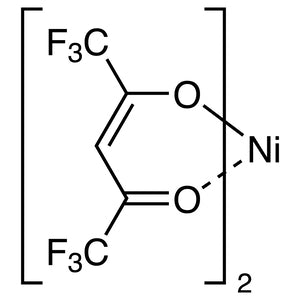
Bis(hexafluoroacetylacetonato)nickel(II) TCI H0558
Regular price From Rp 1.829.100,00Regular price -
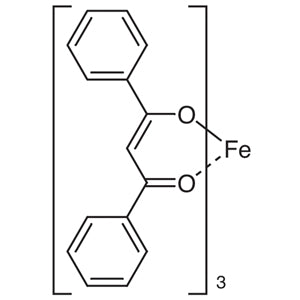
Tris(dibenzoylmethanato)Iron(III) TCI T1686
Regular price From Rp 2.837.100,00Regular price