

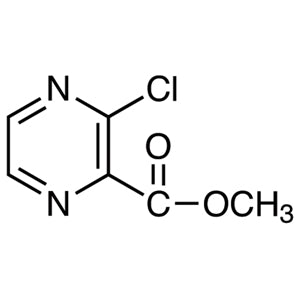
Methyl 3-Chloropyrazine-2-carboxylate is a chemical compound widely used in organic synthesis reactions, particularly in the formation of heterocyclic compounds. This compound features a pyrazine core with a chloro group and a carboxylate group, making it a versatile building block for the development of new compounds with diverse biological activities. Its unique structure enables it to participate in various chemical reactions, such as substitution and condensation, which are essential in creating compounds with specific functional properties. In the laboratory, it serves as a key reagent for the synthesis of pharmaceuticals, cosmetics, and industrial chemicals.
The compound’s chemical and physical properties make it a preferred choice for researchers seeking a stable yet flexible starting material. Its ability to undergo multiple reaction pathways allows for the synthesis of a wide range of derivatives, enhancing its utility in both academic and industrial settings. The compound is available in solid form, which facilitates easy handling and integration into laboratory processes. Its reactivity and structural complexity make it an essential component in the toolkit of organic chemists and researchers.
In Indonesian laboratories, Methyl 3-Chloropyrazine-2-carboxylate is commonly used in organic chemistry, pharmaceutical, and chemical research. It is a staple in research institutions and universities, where it supports the development of new compounds with potential applications in medicine, agriculture, and materials science. Its availability and reliability make it a go-to material for researchers aiming to explore new synthetic routes and functional molecules.
Related TCI products
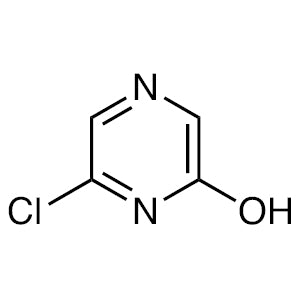
- TCI C3378 4925-61-5 6-Chloropyrazin-2-ol
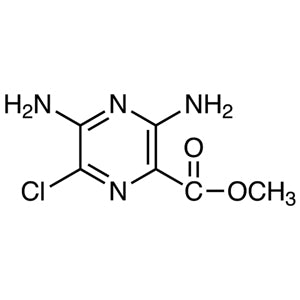
- TCI M2322 1458-01-1 Methyl 3,5-Diamino-6-chloropyrazine-2-carboxylate
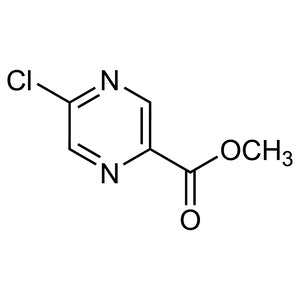
- TCI M2126 33332-25-1 Methyl 5-Chloropyrazine-2-carboxylate
- TCI B5501 147804-30-6 tert-Butyl 1-Oxa-6-azaspiro[2.5]octane-6-carboxylate
- TCI B5385 114214-49-2 tert-Butyl 6-Oxa-3-azabicyclo[3.1.0]hexane-3-carboxylate
- TCI B5248 122684-34-8 tert-Butyl 3-Carbamoylpyrrolidine-1-carboxylate
- Organic synthesis is a primary application, as this compound is used to create complex heterocyclic structures essential in pharmaceutical development.
- Pharmaceutical research benefits from its role in synthesizing compounds with potential therapeutic properties, supporting drug discovery efforts.
- Cosmetic formulation utilizes its chemical versatility to develop new ingredients for skincare and personal care products.
- Industrial chemical production incorporates it as a building block for the creation of specialty chemicals and intermediates.
- Academic research in chemistry and biochemistry relies on it for exploring new synthetic methodologies and molecular structures.
| Brand | TCI |
|---|---|
| CAS number | 27825-21-4 |
| Molecular formula | — |
| Purity | — |
| Category | Chemistry > Building Blocks > Heterocyclic Building Blocks |
| Pack sizes | Available in various sizes as per supplier specifications |
| Physical form | Solid |
| Storage | Store in a cool, dry place away from light and moisture |
This compound should be stored in a cool, dry environment, away from direct light and moisture to maintain its stability and prevent degradation. It is recommended to use airtight containers made of glass or polyethylene to avoid contamination and ensure long-term preservation. Due to its reactivity, it should be handled with care in a well-ventilated area, and appropriate personal protective equipment should be worn when working with it. Proper labeling and storage conditions are essential to ensure safety and maintain the integrity of the compound during handling and use in laboratory settings.
—
Produk Terkait
-
6-Chloropyrazin-2-ol TCI C3378
Regular price From Rp 928.200,00Regular price -
Methyl3,5-Diamino-6-chloropyrazine-2-carboxylate TCI M2322
Regular price From Rp 1.115.100,00Regular price -
Methyl5-Chloropyrazine-2-carboxylate TCI M2126
Regular price From Rp 1.538.250,00Regular price -
tert-Butyl1-Oxa-6-azaspiro[2.5]octane-6-carboxylate TCI B5501
Regular price From Rp 3.021.900,00Regular price -
tert-Butyl6-Oxa-3-azabicyclo[3.1.0]hexane-3-carboxylate TCI B5385
Regular price From Rp 689.850,00Regular price -
tert-Butyl3-Carbamoylpyrrolidine-1-carboxylate TCI B5248
Regular price From Rp 1.060.500,00Regular price -
tert-Butyl2,6-Diazaspiro[3.3]heptane-2-carboxylate TCI B5032
Regular price Rp 3.232.950,00Regular price -
tert-Butyl4-[4-(4,4,5,5-Tetramethyl-1,3,2-dioxaborolan-2-yl)pyrazol-1-yl]piperidine-1-carboxylate TCI B5002
Regular price From Rp 1.696.800,00Regular price
![147804-30-6 tert-Butyl 1-Oxa-6-azaspiro[2.5]octane-6-carboxylate - AMI Scientific](http://amiscientific.com/cdn/shop/files/TCI2510B5501_08674994-ba62-46fc-acd1-54c812460ed8.jpg?v=1767862194&width=533)
![114214-49-2 tert-Butyl 6-Oxa-3-azabicyclo[3.1.0]hexane-3-carboxylate - AMI Scientific](http://amiscientific.com/cdn/shop/files/TCI2510B5385_5494a0f2-ca27-4c7c-b2aa-345805a88f08.jpg?v=1767861794&width=533)

![1041026-70-3 tert-Butyl 2,6-Diazaspiro[3.3]heptane-2-carboxylate - AMI Scientific](http://amiscientific.com/cdn/shop/files/TCI2510B5032.jpg?v=1767091949&width=533)
![877399-74-1 tert-Butyl 4-[4-(4,4,5,5-Tetramethyl-1,3,2-dioxaborolan-2-yl)pyrazol-1-yl]piperidine-1-carboxylate - AMI Scientific](http://amiscientific.com/cdn/shop/files/TCI2510B5002_79e00c7c-6778-4604-beae-188e01d7ad50.jpg?v=1767854889&width=533)