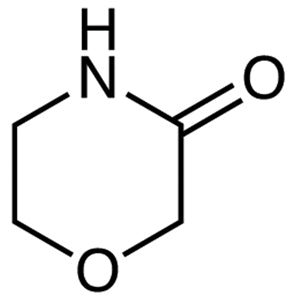
3-Morpholinone is a chemical compound widely used in the synthesis of heterocyclic compounds. It serves as a key building block in organic chemistry, particularly in the development of pharmaceuticals and functional organic materials. Its core structure is based on morpholine, modified with a carbonyl group, making it a versatile reagent for various chemical transformations. In the laboratory, it plays a crucial role in creating compounds with biological activity, including antitumor, antidepressant, and anti-inflammatory properties. Its chemical stability and reactivity make it a valuable tool in synthetic pathways.
The compound is known for its excellent solubility in organic solvents, which facilitates its use in a wide range of experimental conditions. Its ability to participate in nucleophilic reactions, substitution reactions, and heterocyclic ring synthesis makes it a preferred choice for chemists. Additionally, its predictable chemical behavior and compatibility with various reagents allow for reliable and reproducible results in laboratory settings. These properties contribute to its widespread application in both academic and industrial research.
In Indonesian laboratories, 3-Morpholinone is commonly used in organic chemistry, pharmaceutical research, and industrial chemical development. It is essential in the creation of new compounds with potential medical and industrial applications. Its role in the synthesis of bioactive molecules makes it a key component in the advancement of drug discovery and chemical innovation within the region.
Related TCI products
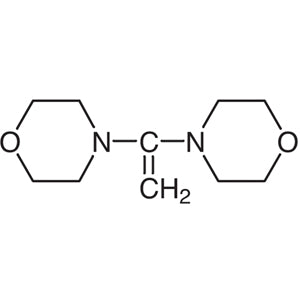
- TCI B1180 14212-87-4 1,1-Bis(morpholino)ethylene
- TCI E0784 20120-24-5 Ethyl 3-(Morpholino)propionate
- TCI B6410 1468-28-6 Morpholino(phenyl)methanone
- TCI D4814 6601-22-5 2,4-Dichloro-6-morpholino-1,3,5-triazine
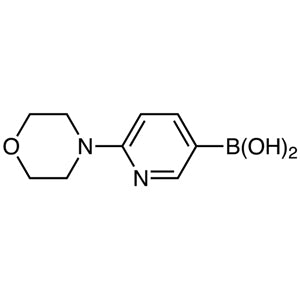
- TCI M2967 904326-93-8 6-(Morpholino)pyridine-3-boronic Acid (contains varying amounts of Anhydride)
- TCI T2748 4441-12-7 Trimorpholinophosphine Oxide
- Synthesis of antitumor compounds using heterocyclic structures benefits from 3-Morpholinone’s reactivity and structural versatility.
- Development of anti-inflammatory drugs relies on its ability to participate in complex organic reactions and form stable intermediates.
- Pharmaceutical research utilizes its role in creating bioactive molecules with therapeutic potential for various diseases.
- Industrial chemical synthesis leverages its solubility and compatibility with different reagents for efficient production processes.
- Organic chemistry experiments benefit from its predictable chemical behavior and use in ring formation and functional group modification.
| Brand | TCI |
|---|---|
| CAS number | 109-11-5 |
| Molecular formula | — |
| Purity | — |
| Category | Chemistry > Building Blocks > Heterocyclic Building Blocks |
| Pack sizes | Available in various quantities as per supplier specifications |
| Physical form | Solid or crystalline, depending on the batch |
| Storage | Store in a cool, dry place away from light and moisture |
3-Morpholinone should be stored in a cool, dry place away from direct light and moisture to maintain its chemical stability. It is recommended to use airtight containers to prevent exposure to air and humidity. Due to its reactivity, it should be handled in a well-ventilated laboratory environment to minimize inhalation risks. Avoid contact with incompatible substances such as strong acids or bases. Always wear appropriate personal protective equipment, including gloves and safety goggles, when handling this compound. Proper storage and handling ensure the compound remains effective and safe for use in laboratory applications.
—
Produk Terkait
-
1,1-Bis(morpholino)ethylene TCI B1180
Regular price Rp 4.399.500,00Regular price -
Ethyl3-(Morpholino)propionate TCI E0784
Regular price From Rp 980.700,00Regular price -
Morpholino(phenyl)methanone TCI B6410
Regular price From Rp 1.644.300,00Regular price -
2,4-Dichloro-6-morpholino-1,3,5-triazine TCI D4814
Regular price From Rp 689.850,00Regular price -
6-(Morpholino)pyridine-3-boronicAcid(containsvaryingamountsofAnhydride) TCI M2967
Regular price Rp 2.332.050,00Regular price -
TrimorpholinophosphineOxide TCI T2748
Regular price From Rp 955.500,00Regular price -
ThiomorpholinoaceticAcid1',1'-DioxideMonohydrate TCI T2050
Regular price From Rp 1.776.600,00Regular price -
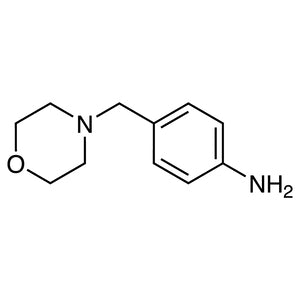
4-(Morpholinomethyl)aniline TCI A3736
Regular price From Rp 955.500,00Regular price