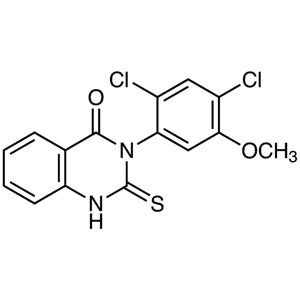
TCI M3108 Mdivi-1 is a bioactive small molecule widely recognised as an inhibitor of mitochondrial division, and it is used extensively in research on apoptosis and organelle dynamics. The compound acts by interfering with the DRP1-mediated mitochondrial fission process, so that mitochondrial networks inside the cell tend to remain elongated rather than fragmented. Its role in the laboratory is that of a chemical tool used to test how much mitochondrial fragmentation contributes to cell death pathways, cytochrome c release, and cellular responses to oxidative stress or ischaemia-reperfusion injury.
The principal reason researchers select Mdivi-1 is its ability to produce a rapid effect that can be observed directly through fluorescence microscopy, because a change in mitochondrial morphology is a clear visual readout that requires no complex downstream processing. The compound is supplied as a solid that is stable under dry storage conditions and dissolves readily in DMSO, allowing high-concentration stock solutions to be prepared conveniently. This combination of a straightforward readout, storage stability, and easy solubilisation makes it a practical choice for laboratories that need a dependable pharmacological probe for mitochondrial dynamics.
The 10 mg and 50 mg pack sizes are designed for laboratory-scale research needs, where the working concentrations employed generally fall within the micromolar range, so that a single small pack can support many experimental runs. This suits the typical pattern of work in Indonesian laboratories, including university cell biology groups and research institutes, where a compact pack covers repeated cell culture experiments without leaving large quantities of unused material in storage.
- Apoptosis pathway research: the compound blocks DRP1-mediated fission, allowing investigators to determine how strongly mitochondrial fragmentation contributes to the execution of programmed cell death.
- Cytochrome c release studies: by keeping mitochondrial networks elongated, Mdivi-1 lets researchers separate the contribution of fission events from downstream cytochrome c release during cell death signalling.
- Oxidative stress experiments: researchers apply it to cultured cells to examine whether the mitochondrial fragmentation seen under oxidative challenge is a cause or a consequence of injury.
- Ischaemia-reperfusion injury models: the inhibitor is used to test how much mitochondrial division contributes to cellular damage arising during reperfusion, a central question in this field.
- Fluorescence microscopy of organelle dynamics: mitochondrial morphology changes quickly and visibly after treatment, giving a clear and directly observable imaging readout for live-cell work.
| Brand | TCI |
|---|---|
| CAS number | 338967-87-6 |
| Molecular formula | — |
| Purity | — |
| Category | Life Science > Cell Biology > Apoptosis |
| Pack sizes | 10 mg and 50 mg |
| Physical form | solid |
| Storage | stable under dry storage conditions; soluble in DMSO for preparation of high-concentration stock solutions |
Store the material in a dry condition, since the compound is stable when kept dry and protected from moisture. Keep it in its original tightly closed container, or transfer it to a clean, well-sealed vial that is clearly labelled with the compound name and CAS number. Stock solutions prepared in DMSO should be held in sealed, chemically compatible vials and dispensed in small aliquots to limit repeated opening. Handle the solid in a fume hood or a suitable ventilated enclosure, wear gloves, a laboratory coat, and eye protection, and avoid generating dust when weighing. As with any bioactive research chemical, restrict use to trained laboratory personnel, keep it away from food and drink, and follow institutional procedures for chemical waste disposal.
—
Produk Terkait
-
TCI B5774 5,10-Bis(4,4,5,5-tetramethyl-1,3,2-dioxaborolan-2-yl)naphtho[1,2-c:5,6-c']bis([1,2,5]oxadiazole)
Regular price Rp 10.255.350,00Regular price -
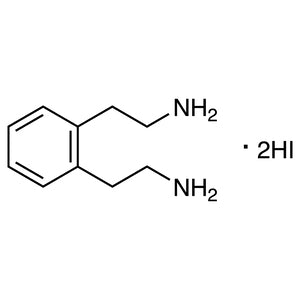
Dihydroiodide TCI B6569
Regular price From Rp 1.936.200,00Regular price -
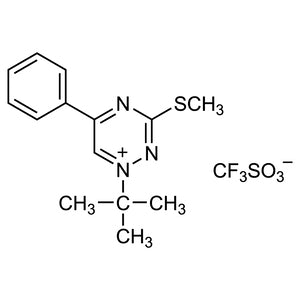
Trifluoromethanesulfonate TCI B7003
Regular price From Rp 1.936.200,00Regular price
![5,10-Bis(4,4,5,5-tetramethyl-1,3,2-dioxaborolan-2-yl)naphtho[1,2-c:5,6-c']bis([1,2,5]oxadiazole) - TCI B5774 - AMI Scientific](http://amiscientific.com/cdn/shop/files/TCI2510B5774.jpg?v=1769180228&width=533)