


TCI M3128 4-(Morpholinomethyl)phenylboronic Acid, bearing CAS number 279262-23-6 and supplied in a form that contains varying amounts of anhydride, is an organoboron reagent carrying a morpholinomethyl group at the para position of the aromatic ring. In the laboratory, this compound functions as a coupling partner in palladium-catalysed carbon–carbon bond formation, while at the same time serving as a carrier of a cyclic amine group that increases the polarity and solubility of the resulting product. The combination of these two functions within a single reagent is highly valued by medicinal chemists who need to improve the physicochemical properties of candidate molecules without adding extra synthetic steps.
The most prominent characteristic of this material is the morpholine group, a weakly basic amine ring that is widely recognised for improving the aqueous solubility and pharmacokinetic profile of derivative compounds. At the same time, the boronic acid group provides the well-established Suzuki–Miyaura coupling reactivity that synthetic chemists rely upon. It should be understood that aryl boronic acids naturally undergo a dehydration equilibrium to form boroxines, so the statement that the product contains varying amounts of anhydride is a normal property of this compound class rather than an indicator of poor quality. The advantage of this reagent therefore lies in the way a single building block delivers both a reliable coupling handle and a solubilising motif.
In Indonesian laboratories, reagents of this type are typically found in university and institutional research groups working on organic synthesis, medicinal chemistry, and the preparation of biologically active molecules. They are used at the bench scale for constructing biaryl frameworks, for preparing intermediates required in structure–activity relationship studies, and for supporting postgraduate research projects. Because the material is a specialist building block rather than a bulk chemical, it is usually ordered against a defined synthetic plan and drawn upon in small portions across a series of trial reactions.
TCI brochures (PDF)
- Suzuki-Miyaura Cross Coupling Reaction 2025-12-01 · p. 8
Related TCI products
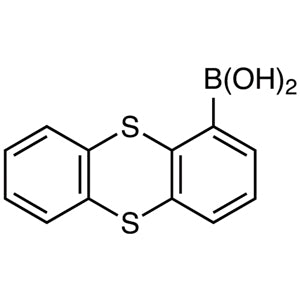
- TCI T3706 108847-76-3 1-Thianthrenylboronic Acid (contains varying amounts of Anhydride)
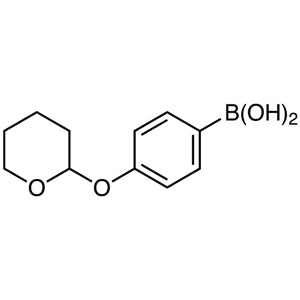
- TCI T3325 182281-01-2 4-(Tetrahydro-2H-pyran-2-yloxy)phenylboronic Acid (contains varying amounts of Anhydride)
- TCI T2621 160032-40-6 Thieno[3,2-b]thiophene-2-boronic Acid (contains varying amounts of Anhydride)
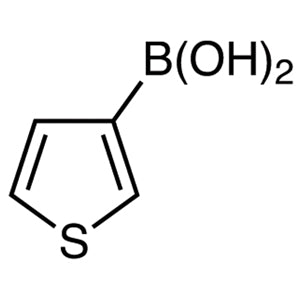
- TCI T1975 6165-69-1 3-Thiopheneboronic Acid (contains varying amounts of Anhydride)
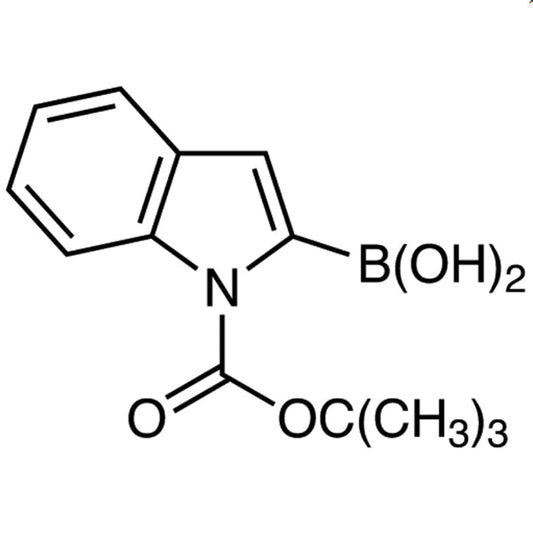
- TCI B5145 213318-44-6 1-(tert-Butoxycarbonyl)indole-2-boronic Acid (contains varying amounts of Anhydride)
- TCI B4774 113893-08-6 Benzo[b]thiophene-3-boronic Acid (contains varying amounts of Anhydride)
- Suzuki–Miyaura cross-coupling: the boronic acid group transfers the aryl unit to an organohalide partner under palladium catalysis, making it a direct route to biaryl structures.
- Medicinal chemistry building block: the morpholine ring is introduced together with the aryl unit, letting chemists improve polarity and solubility without adding a separate functionalisation step.
- Structure–activity relationship studies: the reagent allows a morpholinomethylphenyl fragment to be installed on several scaffolds, so researchers can compare how the same substituent affects different molecular series.
- Synthesis of biologically active intermediates: the weakly basic amine ring is a recognised motif for tuning pharmacokinetic behaviour, supporting the preparation of candidate compounds in discovery-stage research.
- Academic and postgraduate organic synthesis research: the reagent supports bench-scale carbon–carbon bond formation experiments in university laboratories investigating aromatic coupling methodology.
| Brand | TCI |
|---|---|
| CAS number | 279262-23-6 |
| Molecular formula | — |
| Purity | — |
| Category | Chemistry > Organometallic Reagents > Organoboron [Organometallic Reagents] |
| Pack sizes | available in the catalogue pack sizes offered by TCI for this article number |
| Physical form | — |
| Storage | keep in a tightly closed container under the conditions stated on the manufacturer's label |
- Composition note: supplied containing varying amounts of the corresponding anhydride (boroxine), which is characteristic of aryl boronic acids
Store the reagent in its original tightly closed container, kept sealed to limit exposure to atmospheric moisture, since aryl boronic acids readily undergo dehydration to the corresponding anhydride. Glass containers with well-fitting closures are appropriate, and the material should be kept in a dry, well-ventilated chemical store away from strong oxidising agents. Handle the solid in a fume hood using safety glasses, gloves, and a laboratory coat, avoiding dust formation and inhalation. Weigh out only the quantity required and reclose the container promptly to preserve the remainder. Always consult the manufacturer's safety data sheet before use and dispose of residues through the laboratory's chemical waste route.
—
Produk Terkait
-
1-ThianthrenylboronicAcid(containsvaryingamountsofAnhydride) TCI T3706
Regular price From Rp 610.050,00Regular price -
4-(Tetrahydro-2H-pyran-2-yloxy)phenylboronicAcid(containsvaryingamountsofAnhydride) TCI T3325
Regular price From Rp 1.776.600,00Regular price -
Thieno[3,2-b]thiophene-2-boronicAcid(containsvaryingamountsofAnhydride) TCI T2621
Regular price Rp 5.830.650,00Regular price -
3-ThiopheneboronicAcid(containsvaryingamountsofAnhydride) TCI T1975
Regular price From Rp 823.200,00Regular price -
1-(tert-Butoxycarbonyl)indole-2-boronicAcid(containsvaryingamountsofAnhydride) TCI B5145
Regular price Rp 2.411.850,00Regular price -
Benzo[b]thiophene-3-boronicAcid(containsvaryingamountsofAnhydride) TCI B4774
Regular price From Rp 1.220.100,00Regular price -
1,4-Benzodioxane-6-boronicAcid(containsvaryingamountsofAnhydride) TCI B4181
Regular price Rp 3.551.100,00Regular price -
1-(tert-Butoxycarbonyl)-2-pyrroleboronicAcid(containsvaryingamountsofAnhydride) TCI B4063
Regular price From Rp 1.644.300,00Regular price

![160032-40-6 Thieno[3,2-b]thiophene-2-boronic Acid (contains varying amounts of Anhydride) - AMI Scientific](http://amiscientific.com/cdn/shop/files/TCI2510T2621.jpg?v=1768206488&width=533)

![113893-08-6 Benzo[b]thiophene-3-boronic Acid (contains varying amounts of Anhydride) - AMI Scientific](http://amiscientific.com/cdn/shop/files/TCI2510B4774_65b85fee-ce4d-45b9-ad87-4962d8f3452c.jpg?v=1767853515&width=533)

