

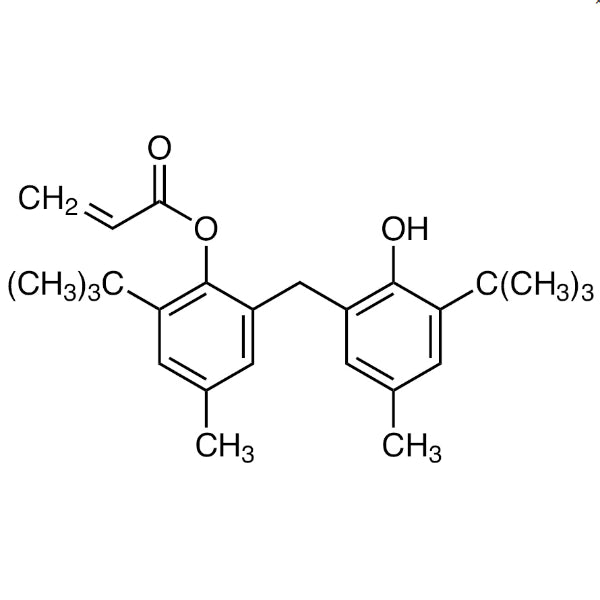
TCI M3302, with the CAS number 61167-58-6, is a specialized chemical compound used in materials science and polymer chemistry. This compound is classified as a polymer additive, specifically designed to act as a foam inhibitor or anti-foaming agent. In laboratory settings, it plays a crucial role in improving the quality of polymerization reactions by reducing foam formation, which can interfere with the consistency and stability of final products. Its application is particularly important in the production of polymers that require high stability and uniformity.
The unique molecular structure of TCI M3302 allows it to interact effectively with a wide range of polymers, enhancing their mechanical and thermal properties. Its chemical stability ensures that it does not degrade easily, providing consistent results in experimental processes. Additionally, its low volatility and good solubility make it suitable for various chemical reactions and polymerization processes. These properties make it a reliable and versatile choice for laboratory use.
In Indonesian laboratories, TCI M3302 is widely used in material and polymer research. It is particularly relevant for studies involving polymer synthesis, where foam control is essential. Its ability to improve the performance of polymers makes it a valuable tool for researchers working on advanced materials and chemical processes. Its stability and effectiveness contribute to the reliability of experimental outcomes in both academic and industrial settings.
- Polymerization reactions benefit from TCI M3302 as it prevents foam formation, ensuring smooth and consistent polymer development.
- Foam inhibition in industrial polymer manufacturing is enhanced by this additive, leading to improved product quality and stability.
- Material science research utilizes TCI M3302 to study polymer behavior, particularly in applications requiring high thermal and mechanical performance.
- Anti-foaming applications in chemical synthesis help maintain reaction efficiency and product purity by minimizing unwanted foam.
- Stability testing of polymer formulations uses TCI M3302 to assess how additives affect the long-term performance of materials.
| Brand | TCI |
|---|---|
| CAS number | 61167-58-6 |
| Molecular formula | — |
| Purity | — |
| Category | Materials Science > Polymer/Macromolecule Reagents > Polymer Additives |
| Pack sizes | Available in various quantities as per supplier specifications |
| Physical form | Liquid |
| Storage | Store in a cool, dry place away from direct sunlight |
TCI M3302 should be stored in a cool, dry environment, away from direct sunlight and sources of heat. It is recommended to use airtight containers to prevent exposure to moisture and air, which could affect its stability. As a liquid, it should be kept in properly sealed containers to avoid evaporation. In laboratory settings, it is important to handle the compound with care, using appropriate personal protective equipment such as gloves and safety goggles. Due to its chemical stability, it does not require special refrigeration, but it should be stored in a well-ventilated area to ensure safe handling and prevent any potential hazards. Always follow standard laboratory safety protocols when working with this compound.
—
Produk Terkait
-
2,4,8,10-Tetraoxaspiro[5.5]undecane-3,9-diylbis(2-methylpropane-2,1-diyl)Bis[3-[3-(tert-butyl)-4-hydroxy-5-methylphenyl]propanoate] TCI T3804
Regular price From Rp 823.200,00Regular price -
TriethyleneGlycolBis[3-(3-tert-butyl-4-hydroxy-5-methylphenyl)propionate] TCI T3277
Regular price From Rp 1.008.000,00Regular price -
2-(2-Hydroxy-5-methylphenyl)benzotriazole TCI H0560
Regular price From Rp 664.650,00Regular price -
2-[1-(2-Hydroxy-3,5-di-tert-pentylphenyl)ethyl]-4,6-di-tert-pentylphenylAcrylate TCI H1781
Regular price Rp 1.140.300,00Regular price -
1,3,5-Tris[4-(tert-butyl)-3-hydroxy-2,6-dimethylbenzyl]-1,3,5-triazinane-2,4,6-trione TCI T2974
Regular price From Rp 4.081.350,00Regular price -
MethacrylicAnhydride[stabilizedwith1,1,3-Tris(3-tert-butyl-4-hydroxy-6-methylphenyl)butane] TCI M3139
Regular price From Rp 1.193.850,00Regular price -
4-Hydroxy-3-methoxy-alpha-methylbenzylAlcohol TCI H1386
Regular price From Rp 2.466.450,00Regular price -
HydroxypropylAcrylate(mixtureof2-Hydroxypropyland2-Hydroxy-1-methylethylAcrylate)(stabilizedwithMEHQ) TCI A0744
Regular price From Rp 477.750,00Regular price
![90498-90-1 2,4,8,10-Tetraoxaspiro[5.5]undecane-3,9-diylbis(2-methylpropane-2,1-diyl) Bis[3-[3-(tert-butyl)-4-hydroxy-5-methylphenyl]propanoate] - AMI Scientific](http://amiscientific.com/cdn/shop/files/TCI2510T3804.jpg?v=1768819808&width=533)
![36443-68-2 Triethylene Glycol Bis[3-(3-tert-butyl-4-hydroxy-5-methylphenyl)propionate] - AMI Scientific](http://amiscientific.com/cdn/shop/files/TCI2510T3277.jpg?v=1769143710&width=533)

![123968-25-2 2-[1-(2-Hydroxy-3,5-di-tert-pentylphenyl)ethyl]-4,6-di-tert-pentylphenyl Acrylate - AMI Scientific](http://amiscientific.com/cdn/shop/files/TCI2510H1781.jpg?v=1769180916&width=533)
![40601-76-1 1,3,5-Tris[4-(tert-butyl)-3-hydroxy-2,6-dimethylbenzyl]-1,3,5-triazinane-2,4,6-trione - AMI Scientific](http://amiscientific.com/cdn/shop/files/TCI2510T2974.jpg?v=1768819713&width=533)
![760-93-0 Methacrylic Anhydride [stabilized with 1,1,3-Tris(3-tert-butyl-4-hydroxy-6-methylphenyl)butane] - AMI Scientific](http://amiscientific.com/cdn/shop/files/TCI2510M3139.jpg?v=1767127793&width=533)

