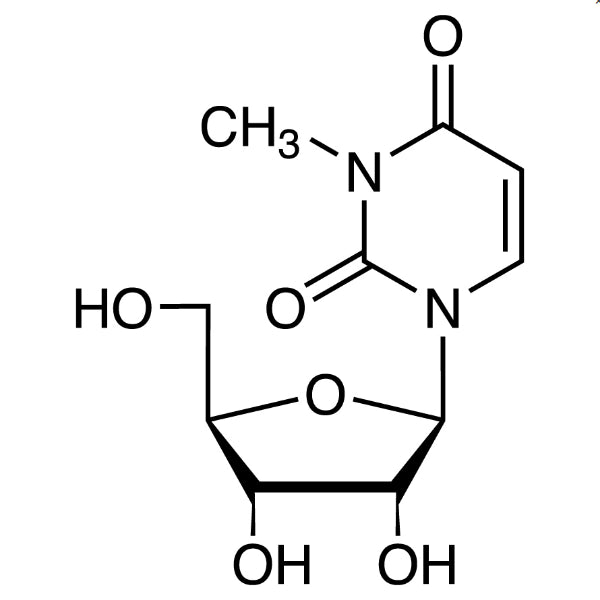
3-Methyluridine is a chemical compound classified under nucleosides, playing a crucial role in life science research. It is widely used in the synthesis of biological compounds, including studies related to DNA, RNA, and related molecules. In laboratory settings, 3-Methyluridine is essential for modifying or enriching nucleotide structures, enabling advancements in drug development, diagnostics, and biotechnology. Its importance lies in its ability to support complex biochemical processes that require precise molecular interactions.
The stability of 3-Methyluridine and its capacity to form phosphate bonds make it a preferred choice in laboratory applications. These properties ensure accuracy and consistency in experiments, which are vital for reliable scientific outcomes. Additionally, its ability to interact with specific enzymes and proteins enhances its utility in biochemical and pharmacological research. This makes it an indispensable tool for researchers aiming to explore molecular mechanisms and develop new therapeutic strategies.
In Indonesian laboratories, 3-Methyluridine is commonly used in biomedical research, including vaccine development, drug testing, and disease mechanism studies. Its availability and reliability have made it a popular choice among researchers and research institutions in the country. The compound supports a wide range of experimental needs, contributing to the advancement of scientific knowledge and innovation in the region.
- Drug development research utilizes 3-Methyluridine to synthesize nucleotide-based compounds that may serve as therapeutic agents.
- Biomedical studies benefit from 3-Methyluridine's ability to interact with enzymes and proteins, aiding in understanding molecular interactions.
- Diagnostic applications leverage the compound's stability and phosphate bonding properties for accurate nucleotide-based assays.
- Vaccine research incorporates 3-Methyluridine in the synthesis of nucleic acid-based vaccines, enhancing their structural integrity.
- Molecular biology experiments rely on 3-Methyluridine for modifying nucleotide structures, enabling the study of genetic and biochemical processes.
| Brand | TCI |
|---|---|
| CAS number | 2140-69-4 |
| Molecular formula | — |
| Purity | — |
| Category | Life Science > Biochemicals and Reagents > Nucleosides, Nucleotides, Oligonucleotides |
| Pack sizes | Available in standard laboratory quantities |
| Physical form | Solid powder |
| Storage | Store in a cool, dry place away from light and moisture |
3-Methyluridine should be stored in a cool, dry place, away from direct light and moisture to maintain its chemical stability. It is recommended to use airtight containers to prevent exposure to humidity and contaminants. Laboratory personnel should handle the compound with care, using appropriate personal protective equipment such as gloves and safety goggles. Due to its chemical nature, it is important to avoid inhalation or skin contact. Proper labeling of storage containers is essential to ensure safe handling and prevent accidental exposure. Regular checks of storage conditions should be conducted to ensure the compound remains in optimal condition for use in research applications.
—
Produk Terkait
-
2'-C-Methyluridine TCI M3153
Regular price From Rp 717.150,00Regular price -
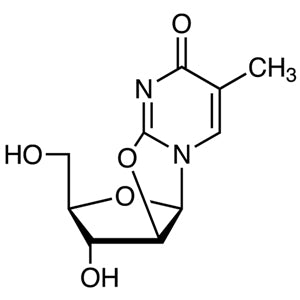
2,2'-O-Anhydro-5-methyluridine TCI A2431
Regular price Rp 795.900,00Regular price -
2'-O-(2-Methoxyethyl)-5-methyluridine TCI M3539
Regular price From Rp 2.068.500,00Regular price -
2'-O-Methyluridine TCI M2290
Regular price Rp 2.279.550,00Regular price -
5-Methyluridine TCI M1405
Regular price From Rp 452.550,00Regular price -
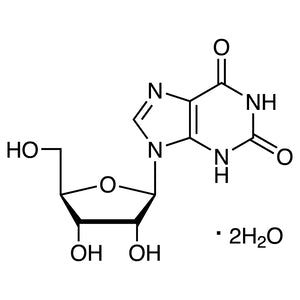
XanthosineDihydrate TCI X0008
Regular price Rp 1.115.100,00Regular price -
ValacyclovirHydrochloride TCI V0111
Regular price From Rp 2.094.750,00Regular price -
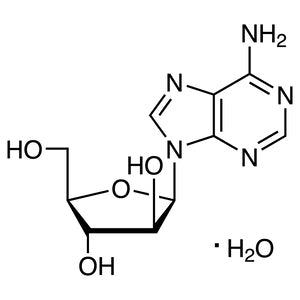
VidarabineMonohydrate TCI V0098
Regular price From Rp 3.658.200,00Regular price