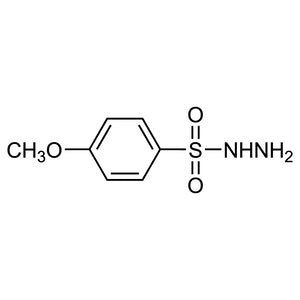
TCI M3845 is 4-Methoxybenzenesulfonohydrazide, an aromatic sulfonyl hydrazide bearing a methoxy group at the para position of the benzene ring. The sulfonyl hydrazide functionality makes this compound a versatile reagent in organic synthesis laboratories, since it readily condenses with aldehydes and ketones to form sulfonylhydrazones, while also serving as a precursor to a range of reactive species such as sulfonyl radicals, carbenes, and diazo compounds under the appropriate conditions. This flexibility of role is why the reagent appears so frequently in modern reaction methodology development.
The property that makes it a preferred choice is its relative stability as a solid that is easy to weigh out, compared with radical or diazo reagents that must be generated in situ and are hazardous if stored. The sulfonylhydrazones it produces can be directed toward Bamford–Stevens or Shapiro reactions to form alkenes, or used as carbene sources in metal-free cross-coupling reactions. The electron-donating methoxy group at the para position stabilizes the aromatic ring and influences how readily the sulfur–nitrogen bond is cleaved, so the reagent is often chosen when researchers wish to tune the rate of sulfonyl radical formation.
In Indonesian laboratories, this building block is typically encountered in university and institutional organic synthesis groups, where methodology development and the preparation of intermediates are routine activities. Because it is handled as a weighable solid rather than a species that must be prepared fresh before every experiment, it fits well into research settings where reagent preparation time is limited and where a stable, shelf-storable alternative to in situ generated reactive intermediates is preferred for day-to-day synthetic work.
Related TCI products
- Sulfonylhydrazone preparation — the sulfonyl hydrazide group condenses directly with aldehydes and ketones, giving researchers a straightforward route to sulfonylhydrazone intermediates without additional activating reagents.
- Bamford–Stevens and Shapiro alkene synthesis — sulfonylhydrazones derived from this reagent can be directed toward either transformation, making it a practical entry point for converting carbonyl compounds into alkenes.
- Carbene precursor chemistry — the reagent generates carbene species under suitable conditions, supporting metal-free cross-coupling reactions where transition metal residues in the product must be avoided entirely.
- Sulfonyl radical generation — the para methoxy substituent influences sulfur–nitrogen bond cleavage, allowing researchers to tune radical formation rates when developing or optimising radical reaction conditions.
- Reaction methodology development — its versatility as a single reagent that accesses radicals, carbenes, and diazo species makes it a recurring choice in exploratory synthetic methodology studies.
| Brand | TCI |
|---|---|
| CAS number | 1950-68-1 |
| Molecular formula | — |
| Purity | — |
| Category | Chemistry > Building Blocks > Non-Heterocyclic Building Blocks |
| Pack sizes | available in TCI catalogue pack sizes; please confirm the packaging option required |
| Physical form | solid, supplied in a weighable form |
| Storage | store in a closed container under conditions appropriate for sulfonyl hydrazide reagents |
- Chemical name: 4-Methoxybenzenesulfonohydrazide
Store the container tightly closed in a cool, dry, and well-ventilated area, away from heat sources, direct sunlight, and incompatible materials. Sulfonyl hydrazides should be kept in their original tightly sealed container or in a comparable chemically resistant closed container that prevents moisture ingress. Weigh and transfer the solid inside a fume hood using clean, dry spatulas, and avoid generating dust. Standard personal protective equipment — safety glasses, gloves, and a laboratory coat — should be worn throughout handling. Avoid contact with skin and eyes, do not inhale dust, and keep the container closed when not in use. Always consult the manufacturer's safety data sheet before first use and follow institutional procedures for the disposal of chemical waste.
—
Produk Terkait
-
N'-Isopropylidene-2-nitrobenzenesulfonohydrazide TCI I0777
Regular price From Rp 1.405.950,00Regular price -
AdipicDihydrazide TCI A0170
Regular price From Rp 505.050,00Regular price -
HydrazinecarbohydrazonohydrazideHydrochloride TCI T4080
Regular price From Rp 2.625.000,00Regular price -
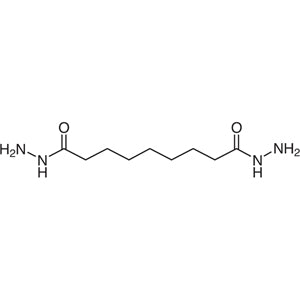
AzelaicDihydrazide TCI A0746
Regular price Rp 2.809.800,00Regular price -
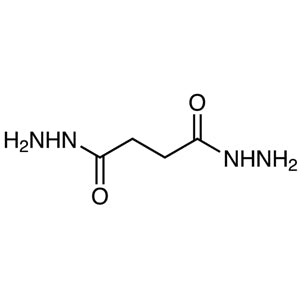
SuccinicDihydrazide TCI S0482
Regular price From Rp 743.400,00Regular price -
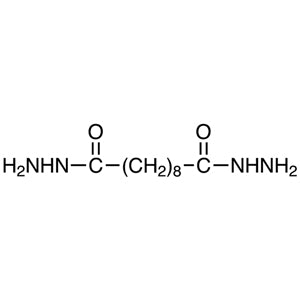
SebacicDihydrazide TCI S0224
Regular price From Rp 743.400,00Regular price -
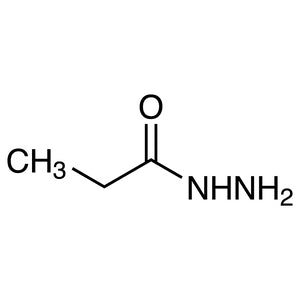
Propionohydrazide TCI P2905
Regular price From Rp 2.386.650,00Regular price -
n-Octanohydrazide TCI O0324
Regular price From Rp 689.850,00Regular price