n-Octanohydrazide is a chemical compound widely used as a foundational building block in organic synthesis. Its simple chemical structure plays a crucial role in the development of heterocyclic compounds and more complex carbon chain molecules. In laboratory settings, this compound serves as a key reagent for reactions involving hydrazide groups, making it indispensable for synthetic chemists. Its versatility allows it to be incorporated into a variety of chemical processes, supporting both research and educational activities in chemistry.
The reactivity and stability of n-Octanohydrazide make it a preferred choice for chemical synthesis. It exhibits chemical stability under controlled conditions but remains highly reactive to temperature, humidity, and specific catalysts. This reactivity enables precise control in chemical reactions, which is essential for achieving desired outcomes in laboratory experiments. Additionally, its hygroscopic nature requires careful handling to maintain its quality and effectiveness. These properties make it a reliable and essential material for advanced chemical applications.
In Indonesian laboratories, n-Octanohydrazide is commonly used by researchers and students in higher education institutions and research organizations. It supports a wide range of chemical experiments, from basic synthesis to more complex analytical procedures. Its availability and reliability make it a standard component in both academic and industrial chemical research environments in Indonesia.
- Organic synthesis: n-Octanohydrazide is ideal for creating complex organic molecules due to its hydrazide functionality, enabling the formation of heterocyclic structures.
- Analytical chemistry: Its reactivity allows for precise detection and quantification in analytical procedures, supporting accurate chemical analysis.
- Educational research: Used in teaching labs to demonstrate hydrazide-based reactions and their role in synthetic chemistry.
- Catalytic reactions: It serves as a reactant in catalytic systems where controlled reactivity is essential for efficient chemical transformations.
- Industrial chemical processes: Applied in the production of pharmaceuticals and specialty chemicals requiring hydrazide intermediates.
| Brand | TCI |
|---|---|
| CAS number | 6304-39-8 |
| Molecular formula | — |
| Purity | — |
| Category | Chemistry > Building Blocks > Non-Heterocyclic Building Blocks |
| Pack sizes | Available in various quantities to suit different laboratory needs |
| Physical form | Solid, typically in crystalline or powder form |
| Storage | Requires dry, cool, and well-ventilated storage conditions |
n-Octanohydrazide should be stored in a dry, cool, and well-ventilated area away from moisture and direct sunlight. It is hygroscopic and should be kept in airtight containers to prevent absorption of humidity, which can degrade its quality. Suitable storage containers include sealed glass or plastic vessels with desiccant packs. Due to its reactivity, it should be handled with care, using appropriate personal protective equipment. Avoid exposure to high temperatures and ensure proper ventilation during handling to minimize potential hazards. Regular monitoring of storage conditions is recommended to maintain the compound's integrity and effectiveness in laboratory applications.
—
Produk Terkait
-
AdipicDihydrazide TCI A0170
Regular price From Rp 505.050,00Regular price -
HydrazinecarbohydrazonohydrazideHydrochloride TCI T4080
Regular price From Rp 2.625.000,00Regular price -
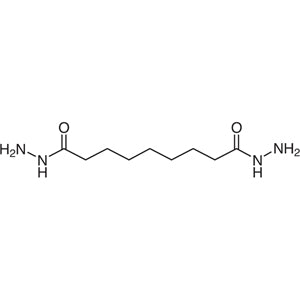
AzelaicDihydrazide TCI A0746
Regular price Rp 2.809.800,00Regular price -
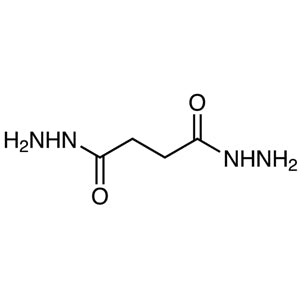
SuccinicDihydrazide TCI S0482
Regular price From Rp 743.400,00Regular price -
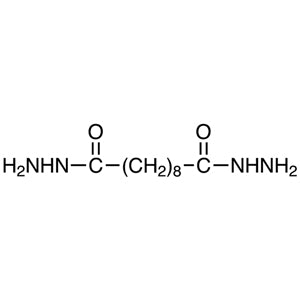
SebacicDihydrazide TCI S0224
Regular price From Rp 743.400,00Regular price -
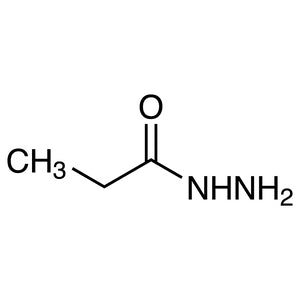
Propionohydrazide TCI P2905
Regular price From Rp 2.386.650,00Regular price -
OxalylDihydrazide TCI O0083
Regular price Rp 1.538.250,00Regular price -
MalonicAcidDihydrazide TCI M3206
Regular price From Rp 875.700,00Regular price