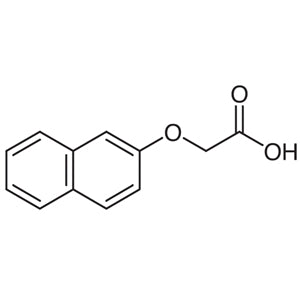
TCI N0045 2-Naphthyloxyacetic Acid, bearing CAS number 120-23-0, is an aromatic compound formed by joining a 2-naphthyloxy group to an acetic acid chain. It is frequently abbreviated as BNOA and is also known as beta-naphthoxyacetic acid. The compound is well recognised as a synthetic plant growth regulator that acts in a manner resembling auxin, which is why it is widely used in plant physiology research and tissue culture work. Beyond that role, its aromatic ether framework and carboxylic acid group make it a useful building block in organic synthesis for preparing esters, amides, and other functionalised derivatives.
The property that makes this compound a frequent choice is its stable auxin activity: it does not break down as readily as naturally occurring auxins, so its effect on plant tissue can persist longer within a single experimental treatment. The carboxylic acid group allows stock solutions to be prepared with the help of dilute base or a mild organic solvent, after which the solution can be diluted into the culture medium. Its crystalline solid form remains stable at room temperature when protected from moisture and light, and consistent purity matters because plant tissue responses are highly sensitive to concentration.
In Indonesian laboratories, this material is typically found in plant physiology and plant tissue culture work at universities, agricultural research institutes, and biotechnology units, as well as in synthetic organic chemistry laboratories that need a non-heterocyclic aromatic building block. It is generally weighed out in small quantities to prepare concentrated stock solutions that are then diluted into media, which suits laboratories running repeated treatment series over an extended research programme.
TCI brochures (PDF)
- Synthetic Auxin and Selective Binding to Modified Receptor 2025-05-26 · p. 2
- Plant Hormones 2025-01-30 · p. 1
- Agrochemical Ingredients for Research and Experimental Use 2026-01-08 · p. 7
- Plant Research Reagents 2026-02-24 · p. 13
- Reagents for Biological Research 2025-03-11 · p. 55
- Plant tissue culture media preparation — its auxin-like activity supports controlled work on plant tissue, and its resistance to breakdown helps the treatment effect persist through the culture period.
- Plant physiology research — the compound serves as a synthetic growth regulator whose behaviour resembles auxin, making it suitable for studies examining how plant tissue responds to defined regulator concentrations.
- Organic synthesis of esters — the carboxylic acid group provides a direct handle for esterification, while the naphthyloxy framework contributes the aromatic portion of the target molecule.
- Amide derivative preparation — the same carboxylic acid functionality allows coupling to amine partners, so the compound works well as a starting material for amide-containing structures.
- Functionalised derivative synthesis — as a non-heterocyclic aromatic building block, it offers both an aromatic ether framework and an acid group for further chemical elaboration in multi-step routes.
| Brand | TCI |
|---|---|
| CAS number | 120-23-0 |
| Molecular formula | — |
| Purity | — |
| Category | Chemistry > Building Blocks > Non-Heterocyclic Building Blocks |
| Pack sizes | available in standard TCI catalogue pack sizes; please confirm the size required when ordering |
| Physical form | crystalline solid |
| Storage | stable at room temperature when protected from moisture and light |
Store the material in its original tightly closed container at room temperature, kept away from moisture and direct light, since both can affect the stability of the crystalline solid over time. Use clean, dry spatulas and weighing vessels to avoid introducing water or contaminants into the bulk material, and reseal the container promptly after each use. Prepare stock solutions in suitable glass or chemically compatible labware, and label them clearly with the concentration and preparation date. Handle the powder in a well-ventilated area or fume hood using standard laboratory personal protective equipment, including gloves, safety glasses, and a laboratory coat, and avoid generating dust during weighing. Consult the supplier safety data sheet before first use.
—
Produk Terkait
-
1-NaphthyloxyaceticAcid TCI N0046
Regular price Rp 4.161.150,00Regular price -
BenzyloxyaceticAcid TCI B2876
Regular price From Rp 557.550,00Regular price -
4-BromophenoxyaceticAcid TCI B2746
Regular price From Rp 637.350,00Regular price -
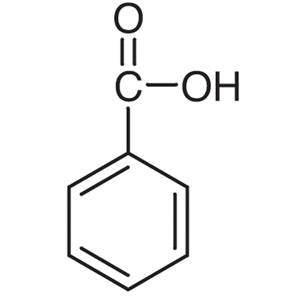
BenzoicAcid TCI B2635
Regular price From Rp 505.050,00Regular price -
2,4,6-TrichlorophenoxyaceticAcid TCI T1063
Regular price From Rp 3.232.950,00Regular price -
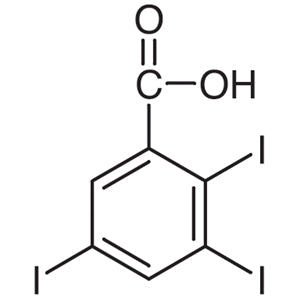
2,3,5-TriiodobenzoicAcid TCI T0451
Regular price From Rp 1.220.100,00Regular price -
1-NaphthaleneaceticAcid TCI N0005
Regular price From Rp 769.650,00Regular price -
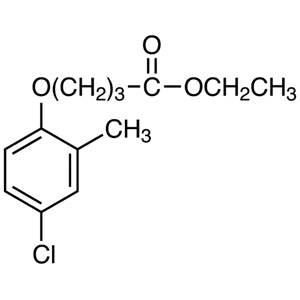
Ethyl4-(4-Chloro-2-methylphenoxy)butyrate TCI E1149
Regular price From Rp 2.359.350,00Regular price