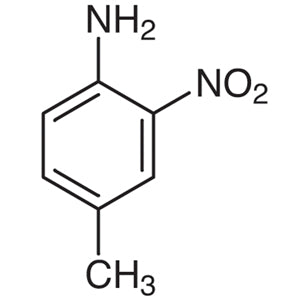
4-Methyl-2-nitroaniline is a versatile organic compound widely used in laboratory settings for its reactivity and structural adaptability. As a key building block in synthetic chemistry, it plays a crucial role in the development of complex molecules across various scientific disciplines. This compound is commonly utilized in both academic and industrial research for its ability to participate in a range of chemical transformations. Its presence in the laboratory supports the synthesis of pharmaceuticals, industrial chemicals, and functional compounds, making it an essential tool for chemists working on diverse projects.
The compound's aromatic structure, combined with the nitro and methyl groups, contributes to its reactivity and stability. These functional groups allow it to undergo substitution, reduction, and Friedel-Crafts reactions, enabling the creation of a wide array of derivatives. Its chemical simplicity and flexibility make it a preferred choice for researchers aiming to explore new synthetic pathways. The availability of this compound in solid form and practical packaging ensures ease of use and handling, supporting both small-scale experiments and larger research initiatives.
In Indonesian laboratories, 4-Methyl-2-nitroaniline is a staple in chemical research and development. It is frequently used in pure and applied chemistry studies, supporting tasks such as synthesis, characterization, and the development of new chemical products. Educational institutions and research organizations rely on this compound for its reliability and effectiveness in a variety of experimental contexts, reinforcing its importance in the scientific community.
- Organic synthesis applications benefit from the compound's reactivity and ability to participate in multiple reaction types, making it ideal for creating complex molecular structures.
- Pharmaceutical research utilizes this material due to its role in the synthesis of drug compounds and functional derivatives, supporting the development of new therapeutic agents.
- Industrial chemical production relies on 4-Methyl-2-nitroaniline as a foundational building block for the creation of various chemical products and materials.
- Analytical chemistry experiments use the compound for its stability and reactivity, allowing for accurate characterization and testing of other substances.
- Teaching laboratories incorporate this compound to demonstrate fundamental chemical reactions and synthetic techniques to students in chemistry courses.
| Brand | TCI |
|---|---|
| CAS number | 89-62-3 |
| Molecular formula | — |
| Purity | — |
| Category | Chemistry > Building Blocks > Non-Heterocyclic Building Blocks |
| Pack sizes | Available in various sizes suitable for laboratory use |
| Physical form | Solid |
| Storage | Store in a cool, dry place away from direct sunlight |
This compound should be stored in a cool, dry environment to maintain its chemical integrity and prevent degradation. It is recommended to use airtight containers to minimize exposure to moisture and air, which can affect its stability. Due to its chemical nature, it should be handled with appropriate personal protective equipment, including gloves and safety goggles, to ensure laboratory safety. Proper ventilation is necessary when working with this material to avoid inhalation of vapors. It is important to keep the compound away from incompatible substances to prevent any potential chemical reactions. Regular inspection of storage conditions ensures that the material remains in optimal condition for use in laboratory applications.
—
Produk Terkait
-
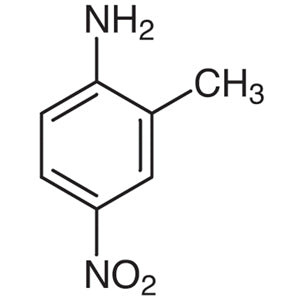
2-Methyl-4-nitroaniline TCI N0529
Regular price Rp 1.644.300,00Regular price -
2-Methyl-4-nitroaniline TCI N0116
Regular price From Rp 928.200,00Regular price -
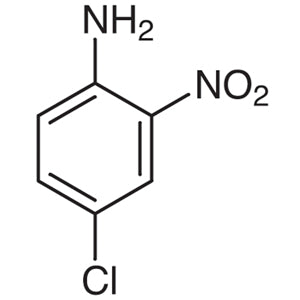
4-Chloro-2-nitroaniline TCI C0215
Regular price From Rp 505.050,00Regular price -
2-Iodo-4-nitroaniline TCI I0878
Regular price From Rp 1.246.350,00Regular price -
4-Bromo-3-nitroaniline TCI B4876
Regular price From Rp 637.350,00Regular price -
2-Bromo-4-nitroaniline TCI B4873
Regular price From Rp 1.220.100,00Regular price -
4-Bromo-2-methyl-6-nitroaniline TCI B3730
Regular price From Rp 717.150,00Regular price -
4-Bromo-2-nitroaniline TCI B3033
Regular price From Rp 689.850,00Regular price