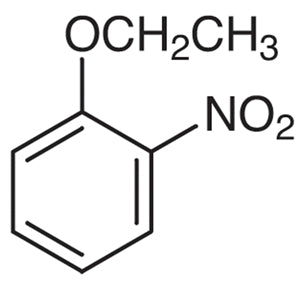
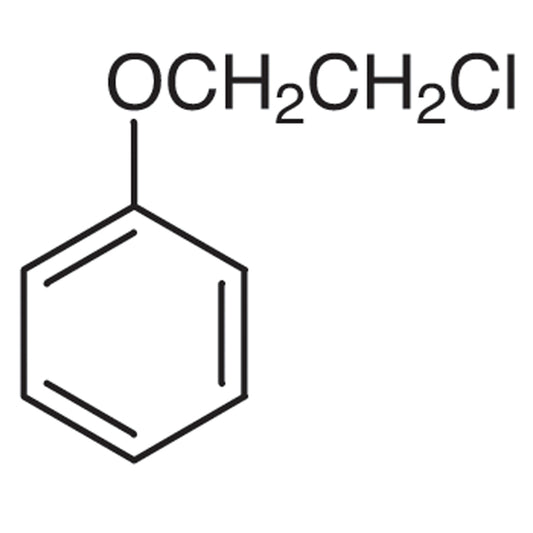
4-Nitrophenetole (TCI N0216) is a chemical compound widely used as a building block in various chemical reactions, particularly in the synthesis of aromatic and heterocyclic compounds. Its simple molecular structure plays a crucial role in the development of new compounds with applications in pharmaceuticals, materials science, and industrial chemistry. In the laboratory, this compound serves as a versatile reagent, often utilized in substitution, reduction, or oxidation reactions depending on the specific experimental conditions.
The chemical properties of 4-Nitrophenetole make it a preferred choice for researchers. It exhibits good solubility in organic solvents such as ethyl acetate and ethanol, facilitating dissolution and reaction processes. Its stability under certain conditions, combined with reactivity under specific circumstances like high temperatures or the presence of catalysts, allows it to participate in a wide range of complex chemical reactions. This versatility ensures reliable results in both academic and industrial research settings.
In Indonesian laboratories, 4-Nitrophenetole is commonly used in organic chemistry research, especially by higher education institutions and research organizations. Its ability to contribute to the synthesis of diverse compounds makes it an essential component in the study of new materials and drug development. Its availability and performance in various experimental conditions further support its widespread use in both teaching and research laboratories.
- Organic synthesis applications benefit from 4-Nitrophenetole due to its reactivity and solubility in organic solvents, enabling efficient reaction pathways.
- Pharmaceutical research utilizes this compound as a precursor for the development of new drugs, leveraging its structural versatility in compound synthesis.
- Material science experiments incorporate 4-Nitrophenetole to create novel materials with specific chemical properties, enhancing functional performance.
- Educational laboratories use 4-Nitrophenetole to teach fundamental chemical reactions and synthesis techniques to students.
- Industrial chemical processes rely on this compound for its role in producing intermediates used in various chemical manufacturing applications.
| Brand | TCI |
|---|---|
| CAS number | 100-29-8 |
| Molecular formula | — |
| Purity | — |
| Category | Chemistry > Building Blocks > Non-Heterocyclic Building Blocks |
| Pack sizes | — |
| Physical form | — |
| Storage | Store in a cool, dry place away from direct sunlight |
4-Nitrophenetole should be stored in a cool, dry place away from direct sunlight to maintain its chemical stability. It is recommended to use airtight containers to prevent exposure to moisture and air, which could affect its reactivity. In laboratory settings, it is important to handle this compound with care, using appropriate personal protective equipment such as gloves and safety goggles. Due to its reactivity under certain conditions, it should be stored separately from incompatible substances. Proper labeling of storage containers is essential to ensure safe handling and prevent accidental exposure. Always follow standard laboratory safety protocols when working with this compound to minimize risks.
—
Produk Terkait
-
2-Nitrophenetole TCI N0489
Regular price Rp 2.041.200,00Regular price -
beta-Chlorophenetole TCI C0240
Regular price From Rp 1.193.850,00Regular price -
4-Chlorophenetole TCI C0239
Regular price Rp 1.618.050,00Regular price -
2-Chlorophenetole TCI C0238
Regular price From Rp 2.625.000,00Regular price -
beta-Bromo-4-fluorophenetole TCI B4376
Regular price Rp 4.028.850,00Regular price -
4-Bromo-2,3-difluorophenetole TCI B3884
Regular price Rp 2.332.050,00Regular price -
4-Fluorophenetole TCI F0655
Regular price Rp 2.199.750,00Regular price -
2,3-Difluorophenetole TCI D3888
Regular price Rp 1.670.550,00Regular price