

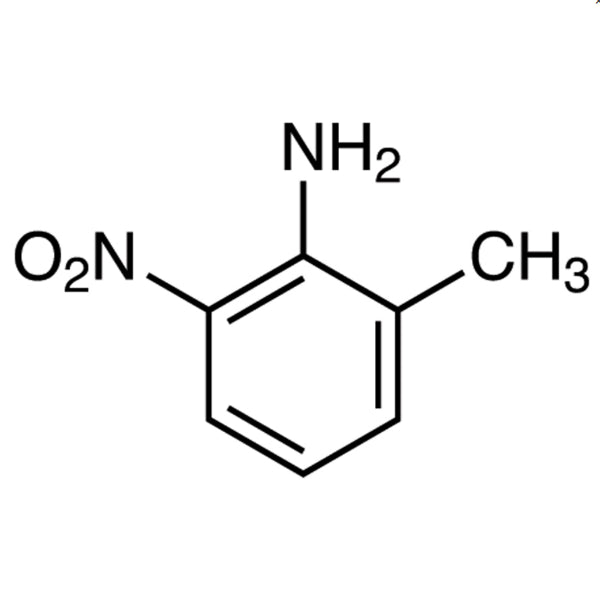
2-Methyl-6-nitroaniline is a chemical compound widely used as a foundational building block in the synthesis of complex molecules. This versatile reagent plays a crucial role in organic chemistry laboratories, where it serves as a key intermediate in the development of various compounds. Its presence is essential in the creation of heterocyclic structures and amino derivatives, making it a fundamental component in chemical research. Due to its stability and reactivity, it is a preferred choice for chemists seeking reliable and efficient synthetic pathways.
The compound exhibits favorable chemical properties that make it a preferred choice for laboratory use. It is chemically stable and reactive, allowing it to participate in a range of reactions such as reduction, substitution, and nucleophilic reactions. Its clear structure and ease of identification simplify analytical processes and ensure accurate experimental outcomes. Additionally, its resistance to degradation under typical laboratory conditions ensures consistency and reliability in long-term studies. These characteristics make it a trusted material for researchers aiming for precision and reproducibility.
In Indonesian laboratories, 2-Methyl-6-nitroaniline is commonly used in organic chemistry research, especially in the development of new compounds and the modification of existing ones. It is a staple in academic and industrial research settings, where its role in building complex molecular structures is highly valued. Its application spans across pharmaceutical and material science research, contributing to advancements in various scientific fields.
- Organic synthesis is a primary application where 2-Methyl-6-nitroaniline serves as a key intermediate in the creation of complex molecules and heterocyclic compounds.
- Pharmaceutical research benefits from its use in the development of new drugs and medicinal compounds due to its reactivity and structural versatility.
- Material science applications leverage its properties for the synthesis of functional materials and polymers with specific chemical characteristics.
- Analytical chemistry relies on its clear structure and stability for accurate identification and analysis in laboratory settings.
- Industrial chemical processes utilize it as a building block for the production of various chemical intermediates and specialty compounds.
| Brand | TCI |
|---|---|
| CAS number | 570-24-1 |
| Molecular formula | — |
| Purity | — |
| Category | Chemistry > Building Blocks > Non-Heterocyclic Building Blocks |
| Pack sizes | Available in various quantities as per standard laboratory supply |
| Physical form | Solid or liquid, depending on the specific product variant |
| Storage | Store in a cool, dry place away from direct sunlight and moisture |
This compound should be stored in a cool, dry environment, away from direct sunlight and moisture to maintain its stability and reactivity. It is recommended to use airtight containers to prevent exposure to air and contaminants. Due to its chemical nature, it should be handled with appropriate personal protective equipment, such as gloves and safety goggles, to ensure laboratory safety. Proper ventilation is essential when working with this material to minimize inhalation risks. It is important to keep it away from incompatible substances to avoid any potential chemical reactions. Regular inspection of storage conditions ensures the material remains in optimal condition for laboratory use.
—
Produk Terkait
-
2-Iodo-4-nitroaniline TCI I0878
Regular price From Rp 1.246.350,00Regular price -
4-Bromo-3-nitroaniline TCI B4876
Regular price From Rp 637.350,00Regular price -
2-Bromo-4-nitroaniline TCI B4873
Regular price From Rp 1.220.100,00Regular price -
4-Bromo-2-methyl-6-nitroaniline TCI B3730
Regular price From Rp 717.150,00Regular price -
4-Bromo-2-nitroaniline TCI B3033
Regular price From Rp 689.850,00Regular price -
2-Bromo-6-chloro-4-nitroaniline TCI B1771
Regular price Rp 477.750,00Regular price -
2-Bromo-4,6-dinitroaniline TCI B0814
Regular price From Rp 717.150,00Regular price -
2-Methyl-4-nitroaniline TCI N0529
Regular price Rp 1.644.300,00Regular price


