

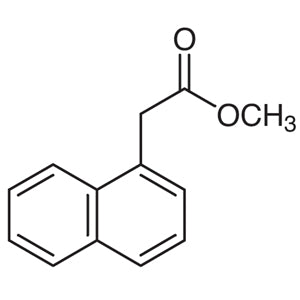
Methyl 1-Naphthaleneacetate is a chemical compound widely used in organic synthesis reactions within laboratory settings. It is a key building block in the field of chemistry, particularly in the development of complex organic molecules. This compound is valued for its structural versatility and its ability to participate in various chemical transformations. Its molecular structure consists of a naphthalene ring connected to an acetyl group, making it a valuable intermediate in the synthesis of pharmaceuticals and specialty chemicals. Due to its stability and predictable reactivity, it is a preferred choice for chemists working on diverse synthetic routes.
The compound exhibits chemical stability under normal conditions, which makes it reliable for use in controlled laboratory environments. Its high melting and boiling points ensure that it remains stable during storage and handling, reducing the risk of decomposition. These properties contribute to its widespread use in both academic and industrial research. Additionally, its ability to undergo substitution and condensation reactions enhances its utility in the creation of more complex chemical structures, making it a versatile reagent in organic chemistry.
In Indonesian laboratories, Methyl 1-Naphthaleneacetate is commonly used in organic chemistry research, especially in the synthesis of bioactive compounds. It is a key component in the development of pharmaceuticals and materials with specific functional properties. Its availability and reliability make it a staple in research institutions and chemical laboratories across Indonesia, supporting ongoing scientific innovation and discovery.
Related TCI products
- Organic synthesis is a primary application where this compound is used to create complex molecules with pharmaceutical and industrial applications.
- Pharmaceutical research benefits from its role in the synthesis of bioactive compounds, contributing to drug development efforts.
- Material science applications leverage its chemical structure to develop new polymers and specialty chemicals with unique properties.
- Analytical chemistry uses it as a reference standard for identifying and quantifying similar compounds in complex mixtures.
- Environmental studies incorporate it in the analysis of organic pollutants and their transformation in natural systems.
| Brand | TCI |
|---|---|
| CAS number | 2876-78-0 |
| Molecular formula | — |
| Purity | — |
| Category | Chemistry > Building Blocks > Non-Heterocyclic Building Blocks |
| Pack sizes | Available in various quantities as per standard laboratory supply |
| Physical form | Solid |
| Storage | Store in a dry, cool place away from direct sunlight and incompatible materials |
Methyl 1-Naphthaleneacetate should be stored in a dry, cool environment to maintain its chemical stability. It is recommended to keep it in airtight containers to prevent moisture absorption and contamination. Due to its high melting point, it remains solid under normal storage conditions. It should be stored away from incompatible substances such as strong oxidizing agents to avoid potential chemical reactions. Laboratory personnel should handle it with care, using appropriate personal protective equipment when necessary. Proper labeling and storage conditions ensure the compound remains safe and effective for use in research applications.
—
Produk Terkait
-
Ethyl1-Naphthaleneacetate TCI N0554
Regular price Rp 2.757.300,00Regular price -
2-NaphthaleneaceticAcid TCI N0352
Regular price From Rp 1.298.850,00Regular price -
1-NaphthaleneaceticAcid TCI N0005
Regular price From Rp 769.650,00Regular price -
7-Methoxy-1-naphthaleneaceticAcid TCI M2888
Regular price From Rp 689.850,00Regular price -
Sodium1-Naphthaleneacetate TCI N0007
Regular price From Rp 1.220.100,00Regular price -
Potassium1-Naphthaleneacetate TCI N0006
Regular price Rp 2.306.850,00Regular price -
Ethyl2-Cyclohexylideneacetate TCI C4083
Regular price From Rp 3.419.850,00Regular price -
MesityleneaceticAcid TCI M1218
Regular price Rp 2.704.800,00Regular price


