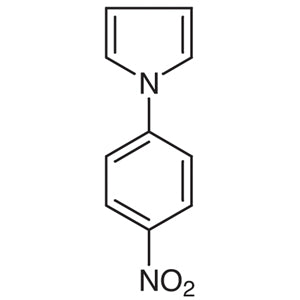
1-(4-Nitrophenyl)pyrrole (CAS 4533-42-0) is a heterocyclic compound made of a pyrrole ring whose nitrogen atom is bonded directly to a benzene ring that carries a nitro group in the para position. Among heterocyclic building blocks it is especially useful because it holds two reactive parts in one molecule: an electron-rich pyrrole ring and a nitro group that can be converted into an amine. Researchers use it as an intermediate for building more complex N-aryl pyrrole molecules, both in medicinal chemistry research and in organic materials work.
The main reason chemists choose this material is the electronic contrast within a single molecule. The pyrrole ring acts as the electron-donating part and the nitrophenyl group is electron-withdrawing, so the compound is of interest for studies of electronic and optical properties. The nitro group can be reduced to 4-(pyrrol-1-yl)aniline, which can then be acylated, diazotized, or used in coupling reactions. The carbon positions on the pyrrole ring remain open to electrophilic substitution, such as formylation or halogenation, which leads to a wide range of derivatives from one starting compound.
In Indonesian laboratories, this compound suits research groups working on heterocyclic synthesis, medicinal chemistry, and organic materials at universities and research institutions. It works well as a starting material in multistep synthesis projects, in student research on functional group transformations, and in exploratory work on donor–acceptor molecules. Because it comes from TCI, a brand widely used for research chemicals, researchers can expect consistent material from batch to batch when they repeat or scale up their synthetic routes.
Related TCI products
- Synthesis of N-aryl pyrrole derivatives: the pyrrole nitrogen is already bonded to an aryl ring, so this is a convenient starting point for more complex N-aryl pyrrole structures.
- Preparation of 4-(pyrrol-1-yl)aniline: reducing the para nitro group gives the corresponding aniline, which can then be acylated, diazotized, or coupled to extend the molecule.
- Electrophilic substitution on the pyrrole ring: the open carbon positions on the pyrrole ring can be formylated or halogenated, giving functionalized intermediates for further synthetic steps.
- Studies of electronic and optical properties: the donor pyrrole and acceptor nitrophenyl groups in one molecule make it a useful model compound for donor–acceptor behaviour.
- Medicinal chemistry and organic materials research: as a versatile heterocyclic intermediate, it supports scaffold building in drug discovery projects and the design of new organic functional materials.
| Brand | TCI (product code N0584) |
|---|---|
| CAS number | 4533-42-0 |
| Molecular formula | — |
| Purity | — |
| Category | Chemistry > Building Blocks > Heterocyclic Building Blocks |
| Pack sizes | as offered in the current TCI listing; please confirm the available sizes when ordering |
| Physical form | see the supplier's certificate of analysis and product label |
| Storage | keep tightly closed in a cool, dry, well-ventilated place, following the recommendations on the TCI label and safety data sheet |
Store 1-(4-Nitrophenyl)pyrrole in its original tightly sealed container, or in a clean, clearly labelled glass container, in a cool, dry place away from direct sunlight, heat sources, and strong oxidizing or reducing agents. Close the container promptly after each use to limit exposure to moisture and air. Handle the compound in a fume hood or a well-ventilated area and wear standard personal protective equipment, including safety glasses, chemical-resistant gloves, and a lab coat. Avoid breathing in dust or vapours and avoid contact with skin and eyes. Read the supplier's safety data sheet before first use for specific hazard, storage, and disposal information. Dispose of waste according to institutional and local regulations.
—
Produk Terkait
-
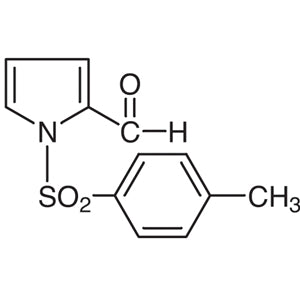
1-(p-Toluenesulfonyl)pyrrole-2-carboxaldehyde TCI T1607
Regular price Rp 4.320.750,00Regular priceRp 3.036.600,00Sale price Rp 4.320.750,00 -
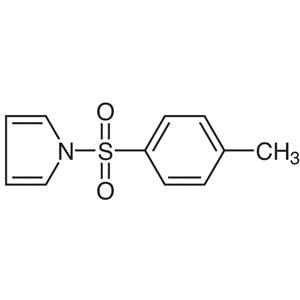
1-(p-Toluenesulfonyl)pyrrole TCI T1386
Regular price Rp 1.192.800,00Regular priceRp 849.450,00Sale price Rp 1.192.800,00 -
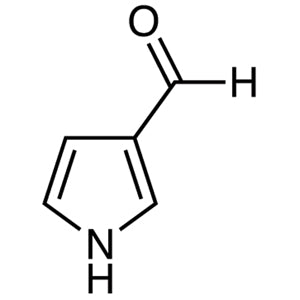
Pyrrole-3-carboxaldehyde TCI P2728
Regular price Rp 848.400,00Regular priceRp 609.000,00Sale price Rp 848.400,00 -
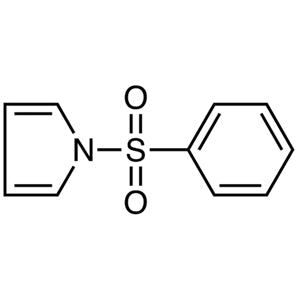
1-(Phenylsulfonyl)pyrrole TCI P2095
Regular price Rp 795.900,00Regular priceRp 572.250,00Sale price Rp 795.900,00 -
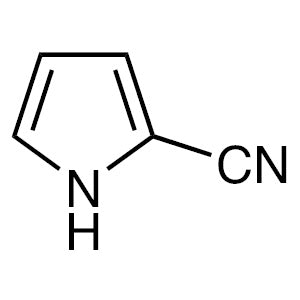
1H-Pyrrole-2-carbonitrile TCI P1926
Regular price Rp 1.405.950,00Regular priceRp 998.550,00Sale price Rp 1.405.950,00 -
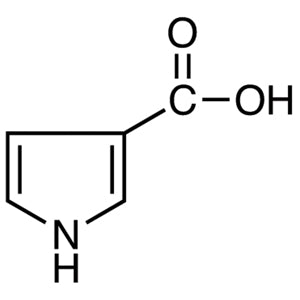
Pyrrole-3-carboxylicAcid TCI P1899
Regular price Rp 2.969.400,00Regular priceRp 2.091.600,00Sale price Rp 2.969.400,00 -
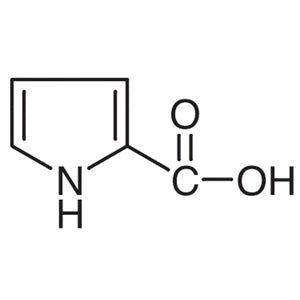
Pyrrole-2-carboxylicAcid TCI P1270
Regular price Rp 900.900,00Regular priceRp 645.750,00Sale price Rp 900.900,00 -
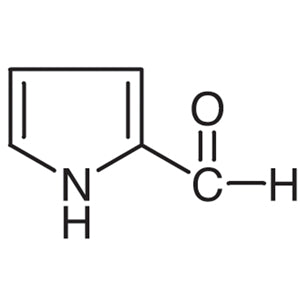
Pyrrole-2-carboxaldehyde TCI P1246
Regular price Rp 1.087.800,00Regular priceRp 775.950,00Sale price Rp 1.087.800,00