2-(4-Nitrophenyl)ethyl Bromide, also known as 4-nitrophenethyl bromide, is an aromatic compound made up of a benzene ring with a nitro group in the para position and an ethyl chain that ends in a bromine atom. In the laboratory it works as an alkylating agent: a reagent that attaches the 2-(4-nitrophenyl)ethyl group to other molecules through nucleophilic substitution. Researchers in organic and medicinal chemistry use it as a building block for phenethylamine derivatives, ethers, thioethers, and esters.
Chemists choose this compound because its two functional groups complement each other. The primary bromide is a good leaving group, so it reacts fairly readily with amines, phenols, thiols, and carboxylates. After alkylation, the nitro group can be reduced to an aromatic amine. That amine allows further changes such as acylation or coupling reactions. Under strongly basic conditions, however, the compound can undergo elimination to form 4-nitrostyrene, so reaction conditions should be chosen carefully to favour substitution over elimination.
In Indonesian laboratories, this compound is useful to organic synthesis research groups, medicinal chemistry teams working on new bioactive candidates, and university chemistry departments that run advanced synthesis projects. It fits multi-step routes where a nitroaryl-ethyl fragment is attached first and then converted to an amine for later work. AMI Scientific supplies this TCI reagent to research institutions, universities, and industrial R&D laboratories across Indonesia that need a reliable source of specialised building blocks.
Related TCI products
- N-alkylation of amines: the primary bromide reacts readily with primary and secondary amines, so it is well suited to making substituted 4-nitrophenethylamine derivatives for research.
- O-alkylation of phenols to form ethers: the good leaving group allows phenoxide nucleophiles to attach the 2-(4-nitrophenyl)ethyl group under controlled, mildly basic conditions.
- Preparation of thioethers from thiols: thiolate nucleophiles displace the bromide easily, giving sulfur-linked nitroaryl compounds for further study in organic and medicinal chemistry.
- Esterification with carboxylates: carboxylate salts can be alkylated with this reagent to give 2-(4-nitrophenyl)ethyl esters, which are useful intermediates in multi-step synthetic routes.
- Latent aromatic amine for later modification: after alkylation, the nitro group can be reduced to an aromatic amine, which can then be acylated or coupled to build more complex target molecules.
| Brand | TCI (product code N0591) |
|---|---|
| CAS number | 5339-26-4 |
| Molecular formula | — |
| Purity | — |
| Category | Chemistry > Building Blocks > Non-Heterocyclic Building Blocks |
| Pack sizes | see the pack size options on the product page |
| Physical form | see the manufacturer's certificate of analysis |
| Storage | follow the storage conditions on the TCI label and safety data sheet |
Keep this compound in its original tightly closed container, away from light, heat, and moisture. Store it in a cool, dry, well-ventilated chemical storage area, and follow the specific conditions on the TCI label and safety data sheet. Keep it away from strong bases, strong oxidising agents, and nucleophilic reagents, because contact with strong bases can cause elimination to 4-nitrostyrene. As an alkylating agent and organic bromide, it should be handled in a fume hood while wearing chemical-resistant gloves, safety goggles, and a lab coat. Avoid skin contact and do not breathe in dust or vapour. Clean up spills promptly, and dispose of waste according to institutional and local hazardous waste regulations.
—
Produk Terkait
-
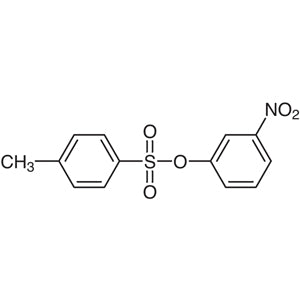
3-Nitrophenylp-Toluenesulfonate TCI T1210
Regular price Rp 4.611.600,00Regular price -
Bis(4-nitrophenyl)amine TCI B2960
Regular price From Rp 3.738.000,00Regular price -
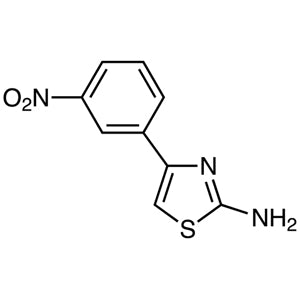
2-Amino-4-(3-nitrophenyl)thiazole TCI A3086
Regular price From Rp 664.650,00Regular price -
Tris(4-nitrophenyl)Phosphate TCI T1002
Regular price Rp 3.763.200,00Regular price -
4-NitrophenylButyrate TCI N1316
Regular price From Rp 1.988.700,00Regular price -
(E)-4-(4-Nitrophenyl)but-3-en-2-one TCI N1263
Regular price From Rp 1.988.700,00Regular price -
2-(4-Nitrophenyl)-1,3-dioxolane TCI N1228
Regular price From Rp 2.439.150,00Regular price -
2-(2-Nitrophenyl)propan-1-ol TCI N1133
Regular price Rp 5.539.800,00Regular price