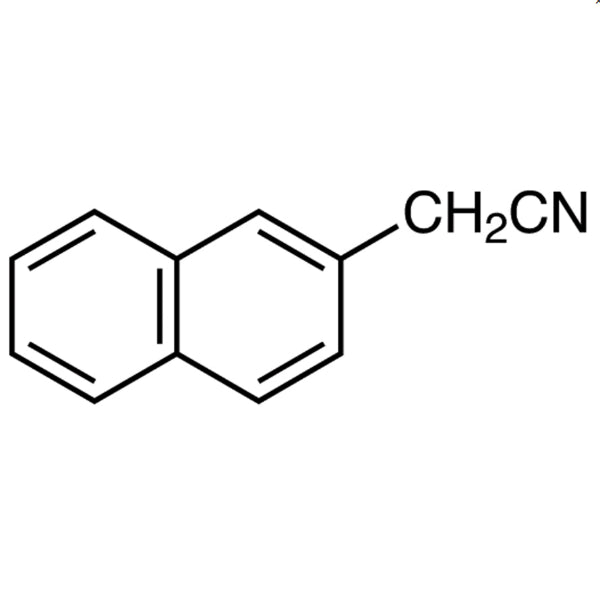
2-Naphthylacetonitrile from TCI is an aromatic nitrile. Its molecule consists of a naphthalene ring linked to a cyanomethyl group at the 2-position. As a non-heterocyclic building block, it is a starting point for synthesising naphthalene derivatives that carry a two-carbon side chain. Examples include 2-naphthylacetic acid, 2-(2-naphthyl)ethylamine and a range of alkylated compounds. Because its functional groups are so versatile, this material is commonly kept in synthetic organic chemistry and medicinal chemistry laboratories. There it serves as a dependable intermediate for building larger naphthalene-based structures.
Most of the compound's value comes from the nitrile group and the methylene group next to it. The nitrile can be hydrolysed to a carboxylic acid or an amide, reduced to a primary amine, or converted into heterocycles such as tetrazoles. The methylene group sits between the aromatic ring and the nitrile, which makes it fairly acidic. A base can deprotonate it, and the resulting carbanion can then react with electrophiles to form new carbon–carbon bonds. The naphthalene ring adds rigidity and lipophilicity. It also absorbs UV light, so reactions are easy to follow by TLC and HPLC.
In Indonesia, this material suits university organic chemistry laboratories that teach functional group transformations. A single substrate lets students see hydrolysis, reduction and alpha-alkylation in action. Research groups working on synthesis and medicinal chemistry can also use it as an intermediate when preparing naphthalene-containing target molecules. Its UV activity helps in teaching and research laboratories with standard TLC and HPLC equipment, because reaction progress can be checked quickly and reliably during routine synthetic work.
- Synthesis of 2-naphthylacetic acid: hydrolysing the nitrile group gives the corresponding carboxylic acid or amide, so this compound is a direct precursor for naphthylacetic acid derivatives.
- Preparation of 2-(2-naphthyl)ethylamine: reducing the nitrile gives a primary amine with a two-carbon chain, which is useful for building amine-containing naphthalene scaffolds in medicinal chemistry.
- Alpha-alkylation and carbon chain extension: the fairly acidic methylene group can be deprotonated with a base and reacted with electrophiles, which allows new carbon–carbon bonds and substituted derivatives to be built.
- Tetrazole and heterocycle formation: the nitrile group can be converted into heterocycles such as tetrazoles, giving access to naphthalene-substituted heterocyclic structures for synthetic and medicinal research.
- Teaching functional group transformations: one substrate shows hydrolysis, reduction and alkylation, and its UV-active naphthalene ring makes it easy to monitor student reactions by TLC or HPLC.
| Brand | TCI (product code N0874) |
|---|---|
| CAS number | 7498-57-9 |
| Molecular formula | — |
| Purity | — |
| Category | Chemistry > Building Blocks > Non-Heterocyclic Building Blocks |
| Pack sizes | Available in TCI's standard pack sizes; please contact AMI Scientific to confirm current options |
| Physical form | — |
| Storage | Keep tightly closed in a cool, dry, well-ventilated place; follow the manufacturer's label and SDS |
- Chemical class: Aromatic nitrile (naphthalene ring with a cyanomethyl group at the 2-position)
Keep 2-Naphthylacetonitrile in its original, tightly sealed manufacturer's container. Store it in a cool, dry, well-ventilated area away from heat, direct sunlight and moisture. Keep it separate from strong oxidising agents, strong acids and strong bases. Like other organic nitriles, it should only be handled by trained personnel. Wear suitable protective equipment, including a lab coat, chemical-resistant gloves and safety glasses. Work in a fume hood to avoid breathing in dust or vapour and to prevent skin and eye contact. Before use, read the Safety Data Sheet supplied by TCI. Dispose of waste according to local and institutional chemical waste regulations.
—
Produk Terkait
-
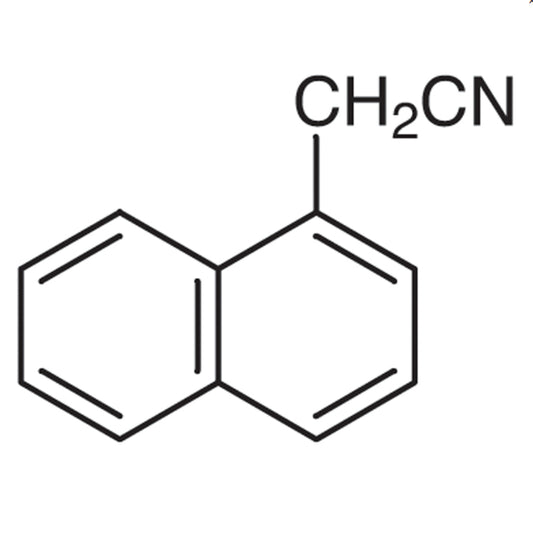
1-Naphthylacetonitrile TCI N0366
Regular price Rp 2.094.750,00Regular price -
7-Methoxy-1-naphthylacetonitrile TCI M2421
Regular price From Rp 769.650,00Regular price -
Phenylacetonitrile TCI P0128
Regular price From Rp 477.750,00Regular price -
4-Biphenylacetonitrile TCI B1545
Regular price From Rp 3.446.100,00Regular price -
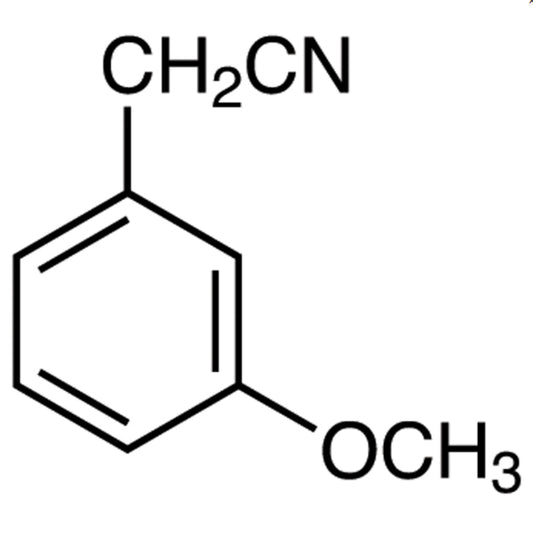
3-Methoxyphenylacetonitrile TCI M2331
Regular price From Rp 717.150,00Regular price -
4-Methoxyphenylacetonitrile TCI M0856
Regular price From Rp 823.200,00Regular price -
2-Methoxyphenylacetonitrile TCI M0855
Regular price Rp 875.700,00Regular price -
3,5-Dimethoxyphenylacetonitrile TCI D5186
Regular price From Rp 1.193.850,00Regular price