
![TCI N0943 53-59-8 beta-Nicotinamide Adenine Dinucleotide Phosphate [for Biochemical Research]](http://amiscientific.com/cdn/shop/files/TCI2510N0943_b8308a8a-0b17-45e7-95f2-9450efbf8af6.jpg?v=1792650808&width=1946)
![53-59-8 beta-Nicotinamide Adenine Dinucleotide Phosphate [for Biochemical Research] - AMI Scientific](http://amiscientific.com/cdn/shop/files/TCI2510N0943.jpg?v=1767130572&width=1946)
![TCI N0943 53-59-8 beta-Nicotinamide Adenine Dinucleotide Phosphate [for Biochemical Research]](http://amiscientific.com/cdn/shop/files/TCI2510N0943_b8308a8a-0b17-45e7-95f2-9450efbf8af6.jpg?v=1792650808&width=1445)
![53-59-8 beta-Nicotinamide Adenine Dinucleotide Phosphate [for Biochemical Research] - AMI Scientific](http://amiscientific.com/cdn/shop/files/TCI2510N0943.jpg?v=1767130572&width=1445)
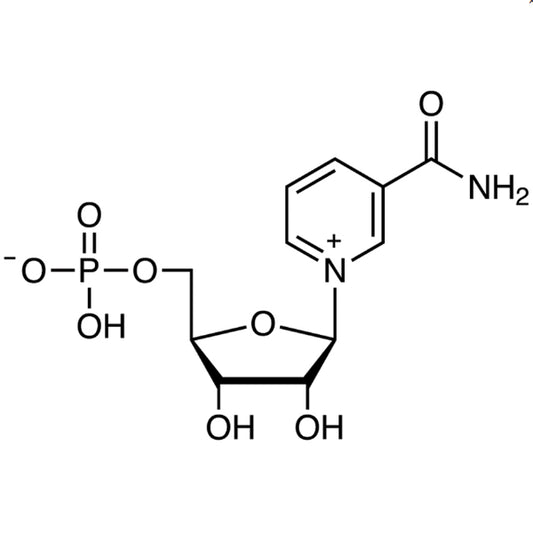
Beta-Nicotinamide Adenine Dinucleotide Phosphate (NADP) is a vital organic compound used extensively in biochemical research. It serves as a coenzyme and electron acceptor in numerous redox reactions, playing a critical role in metabolic pathways such as fatty acid and cholesterol synthesis. In laboratory settings, NADP is essential for studying enzyme mechanisms and metabolic processes, making it a cornerstone in biochemistry and molecular biology. Its presence is crucial for maintaining the accuracy and reproducibility of experimental results.
NADP is prized for its high purity and consistent quality, which ensure reliable performance in sensitive biochemical assays. It exhibits good solubility in water, making it easy to incorporate into reaction solutions. Its chemical stability under controlled conditions further enhances its utility, although it remains sensitive to oxidation and light exposure. These properties make it a preferred choice for researchers seeking dependable and reproducible results in their experiments.
In Indonesian laboratories, NADP is widely used in biochemistry research, particularly in academic institutions and research centers focused on cellular metabolism and enzyme studies. Its availability and reliability make it a standard reagent in both teaching and research laboratories, supporting a wide range of experimental protocols and analytical techniques.
TCI brochures (PDF)
- Vitamins for Research and Experimental Use 2025-06-27 · p. 3
- Nucleosides, Nucleotides, Nucleic Acids and Related Reagents 2026-03-23 · p. 7
- Reagents for Biological Research 2025-03-11 · p. 51
Related TCI products
- TCI T0521 2646-71-1 beta-Nicotinamide Adenine Dinucleotide Phosphate Tetrasodium Salt reduced form [for Biochemical Research]
- TCI D0920 606-68-8 beta-Nicotinamide Adenine Dinucleotide Disodium Salt, reduced form [for Biochemical Research]
- TCI D0919 53-84-9 beta-Nicotinamide Adenine Dinucleotide oxidized form [for Biochemical Research]
- TCI C0379 1184-16-3 beta-Nicotinamide Adenine Dinucleotide Phosphate Sodium Salt Hydrate, oxidized form [for Biochemical Research]
- TCI T2980 Thionicotinamide Adenine Dinucleotide Disodium Salt reduced form [for Biochemical Research]
- TCI T2979 4090-29-3 Thionicotinamide Adenine Dinucleotide oxidized form [for Biochemical Research]
- Enzyme Activity Assays: NADP is used to measure enzyme activity by acting as an electron acceptor in redox reactions, allowing for the quantification of enzymatic reactions in metabolic pathways.
- Cellular Metabolism Studies: It plays a key role in studying metabolic processes such as lipid synthesis, where it serves as a cofactor in enzymatic reactions essential for biosynthesis.
- Biochemical Research: NADP is essential for investigating redox reactions and metabolic pathways, providing a stable and reliable coenzyme for various biochemical experiments.
- Enzyme Inhibition Studies: It is used as a substrate to evaluate the effects of enzyme inhibitors on metabolic reactions, helping researchers understand enzyme function and regulation.
- Spectrophotometric Analysis: NADP's ability to participate in redox reactions makes it suitable for spectrophotometric methods to monitor changes in absorbance during biochemical processes.
| Brand | TCI |
|---|---|
| CAS number | 53-59-8 |
| Molecular formula | — |
| Purity | — |
| Category | Life Science > Biochemicals and Reagents > Enzymes, Enzyme Inhibitors, Enzyme Substrates |
| Pack sizes | Available in various quantities as per standard laboratory reagent packaging |
| Physical form | Powder or crystalline solid |
| Storage | Store in a cool, dark place away from light and moisture |
NADP should be stored in a cool, dark environment to prevent degradation due to light exposure. It is recommended to keep it in airtight containers to minimize moisture contact, which can affect its stability. Due to its sensitivity to oxidation, it should be handled with care and stored in a dry, well-ventilated area. Laboratory personnel should wear appropriate personal protective equipment when handling NADP to ensure safety. Regular monitoring of storage conditions is essential to maintain its quality and effectiveness in research applications. Proper storage ensures that NADP remains a reliable and consistent reagent for biochemical experiments.
—
Product Categories
- Biochemicals and ReagentsEnzymes, Enzyme Inhibitors, Enzyme SubstratesCofactors [Biochemicals]
- Biochemicals and ReagentsNucleosides, Nucleotides, Oligonucleotides
- Biochemicals and ReagentsNucleosides, Nucleotides, OligonucleotidesNAD(P)(H) and Analogs
- Biochemicals and ReagentsNucleosides, Nucleotides, OligonucleotidesCoenzymes
- Biochemicals and ReagentsNucleosides, Nucleotides, OligonucleotidesOxidoreductase Coenzymes [Nucleosides, Nucleotides, Oligonucleotides]
- Biochemicals and ReagentsVitamins and Related CompoundsVitamin Related Compounds
- Cell BiologyMetabolomicsEnzymatic Kits for the Quantitation of Nutrients and Metabolites
- Cell BiologyMetabolomicsMetabolic Pathways
- Cell BiologyNutrition ResearchVitamins [Nutrition Research]
Produk Terkait
-
beta-NicotinamideAdenineDinucleotidePhosphateTetrasodiumSaltreducedform[forBiochemicalResearch] TCI T0521
Regular price Rp 4.636.800,00Regular priceRp 3.258.150,00Sale price Rp 4.636.800,00 -
beta-NicotinamideAdenineDinucleotideDisodiumSalt,reducedform[forBiochemicalResearch] TCI D0920
Regular price From Rp 717.150,00Regular priceRp 516.600,00Sale price From Rp 717.150,00 -
beta-NicotinamideAdenineDinucleotideoxidizedform[forBiochemicalResearch] TCI D0919
Regular price From Rp 2.173.500,00Regular priceRp 1.535.100,00Sale price From Rp 2.173.500,00 -
beta-NicotinamideAdenineDinucleotidePhosphateSodiumSaltHydrate,oxidizedform[forBiochemicalResearch] TCI C0379
Regular price From Rp 1.246.350,00Regular priceRp 887.250,00Sale price From Rp 1.246.350,00 -
ThionicotinamideAdenineDinucleotideDisodiumSaltreducedform[forBiochemicalResearch] TCI T2980
Regular price Rp 8.797.950,00Regular priceRp 6.167.700,00Sale price Rp 8.797.950,00 -
ThionicotinamideAdenineDinucleotideoxidizedform[forBiochemicalResearch] TCI T2979
Regular price Rp 7.207.200,00Regular priceRp 5.055.750,00Sale price Rp 7.207.200,00 -
beta-NicotinamideMononucleotide TCI N1123
Regular price From Rp 2.173.500,00Regular priceRp 1.535.100,00Sale price From Rp 2.173.500,00 -
Disodiumbeta-GlycerophosphatePentahydrate[forBiochemicalResearch] TCI D3964
Regular price From Rp 795.900,00Regular priceRp 572.250,00Sale price From Rp 795.900,00
![TCI T0521 2646-71-1 beta-Nicotinamide Adenine Dinucleotide Phosphate Tetrasodium Salt reduced form [for Biochemical Research]](http://amiscientific.com/cdn/shop/files/TCI2510T0521_897fba8b-4492-4470-9002-174cb1682ebb.jpg?v=1792655604&width=533)
![2646-71-1 beta-Nicotinamide Adenine Dinucleotide Phosphate Tetrasodium Salt reduced form [for Biochemical Research] - AMI Scientific](http://amiscientific.com/cdn/shop/files/TCI2510T0521.jpg?v=1767140161&width=533)
![TCI D0920 606-68-8 beta-Nicotinamide Adenine Dinucleotide Disodium Salt, reduced form [for Biochemical Research]](http://amiscientific.com/cdn/shop/files/tci2510d092020580-struktur-1000.png?v=1792636565&width=533)
![TCI D0919 53-84-9 beta-Nicotinamide Adenine Dinucleotide oxidized form [for Biochemical Research]](http://amiscientific.com/cdn/shop/files/tci2510d091920578-struktur-1000.png?v=1792636562&width=533)
![TCI C0379 1184-16-3 beta-Nicotinamide Adenine Dinucleotide Phosphate Sodium Salt Hydrate, oxidized form [for Biochemical Research]](http://amiscientific.com/cdn/shop/files/tci2510c037914465-struktur-1000.png?v=1792630083&width=533)
![TCI T2980 Thionicotinamide Adenine Dinucleotide Disodium Salt reduced form [for Biochemical Research]](http://amiscientific.com/cdn/shop/files/TCI2510T2980_6cf2a10a-28bf-4414-9027-53cd7495e97a.jpg?v=1792663833&width=533)
![Thionicotinamide Adenine Dinucleotide Disodium Salt reduced form [for Biochemical Research] - AMI Scientific](http://amiscientific.com/cdn/shop/files/TCI2510T2980.jpg?v=1767143593&width=533)
![TCI T2979 4090-29-3 Thionicotinamide Adenine Dinucleotide oxidized form [for Biochemical Research]](http://amiscientific.com/cdn/shop/files/TCI2510T2979_8920ab5a-ebaa-4e85-a366-459e74b6a0a8.jpg?v=1792663831&width=533)
![4090-29-3 Thionicotinamide Adenine Dinucleotide oxidized form [for Biochemical Research] - AMI Scientific](http://amiscientific.com/cdn/shop/files/TCI2510T2979.jpg?v=1767143588&width=533)

![TCI D3964 13408-09-8 Disodium beta-Glycerophosphate Pentahydrate [for Biochemical Research]](http://amiscientific.com/cdn/shop/files/TCI2510D3964_6a61d661-293a-454f-913d-e28e8fe0bc47.jpg?v=1792638998&width=533)
![Disodium beta-Glycerophosphate Pentahydrate [for Biochemical Research] (CAS 13408-09-8) - TCI D3964 - AMI Scientific](http://amiscientific.com/cdn/shop/files/TCI2510D3964.jpg?v=1769141935&width=533)