


n-Octane from TCI (product code O0022) is a straight-chain alkane with eight carbon atoms. It is one of the simplest saturated hydrocarbons and one of the most widely used in the laboratory. It works as a nonpolar solvent, as a reference compound in hydrocarbon analysis, and as a starting material for many physicochemical studies. It is listed as a building block, but in many laboratories its main role is as a solvent and a standard. Its identity and behaviour are already very well characterised, which makes it a dependable choice in routine work.
Several properties make n-octane a preferred choice. Its polarity is very low, and it is relatively inert, so it rarely interferes with the solutes or reactions it is used with. Its boiling point is higher than that of hexane or heptane, so it evaporates more slowly during handling. This gives more working time and steadier concentrations in open procedures. Because it does not mix with water, it is often used as the organic phase in partition and extraction studies. Its simple, well-defined structure also makes it an ideal model compound for studies of combustion, adsorption and hydrocarbon behaviour in fuels.
In Indonesia, n-octane is used by analytical chemistry laboratories and oil and gas laboratories. It is also used by chemical and mechanical engineering departments at universities and by energy research centres that study fuels and hydrocarbon systems. Teaching laboratories value it as a clear example of a saturated hydrocarbon. Research groups use it in solvent-based procedures, reference measurements and model studies where a pure, well-understood alkane is needed to get results that can be reproduced and compared.
Related TCI products
- TCI O0118 111-65-9 n-Octane [for Spectrophotometry]
- TCI S0280 111-65-9 n-Octane [Standard Material for GC]
- TCI O0717 185-70-6 1-Oxaspiro[2.5]octane
- TCI O0151 111-65-9 n-Octane [for HPLC Solvent]
- TCI M1978 1378825-86-5 3-Methyl-3-(2-oxopropyl)-2,4,7-trioxabicyclo[3.3.0]octane
- TCI D6472 885270-84-8 tert-Butyl 2,6-Diazaspiro[3.4]octane-2-carboxylate
- Nonpolar solvent: its very low polarity and relative chemical inertness let it dissolve nonpolar substances without taking part in the chemistry being studied.
- Reference compound in hydrocarbon analysis: its identity and behaviour are well known, so it serves as a dependable standard when identifying and comparing hydrocarbons in analytical work.
- Organic phase in partition and extraction studies: it does not mix with water, so it forms a clear, separate organic layer for partition and liquid-liquid extraction experiments.
- Model compound for combustion and fuel research: its simple straight-chain structure makes it a representative hydrocarbon for studying combustion and how hydrocarbons behave in fuels.
- Adsorption and physicochemical studies: as a pure, well-defined saturated alkane it gives a consistent reference system for adsorption experiments and other basic physicochemical investigations.
| Brand | TCI (product code O0022) |
|---|---|
| CAS number | 111-65-9 |
| Molecular formula | — |
| Purity | — |
| Category | Chemistry > Building Blocks > Non-Heterocyclic Building Blocks |
| Pack sizes | available in the pack sizes listed on the product page |
| Physical form | liquid |
| Storage | keep in a tightly closed container in a cool, well-ventilated place away from sources of ignition |
n-Octane is a flammable hydrocarbon liquid. Store it in a cool, dry, well-ventilated area away from heat, sparks, open flames and strong oxidising agents. Keep it in its original tightly sealed container, or in a compatible glass or metal container that is clearly labelled, to limit evaporation and prevent contamination. Handle it in a fume hood or a well-ventilated area and avoid breathing the vapour. Wear suitable gloves, safety glasses and a laboratory coat. Ground equipment when transferring larger volumes, keep spill absorbents nearby, and follow the Safety Data Sheet and local rules for the disposal of flammable organic waste.
—
Produk Terkait
-
n-Octane[forSpectrophotometry] TCI O0118
Regular price Rp 3.419.850,00Regular priceRp 2.390.850,00Sale price Rp 3.419.850,00 -
n-Octane[StandardMaterialforGC] TCI S0280
Regular price Rp 1.724.100,00Regular priceRp 1.205.400,00Sale price Rp 1.724.100,00 -
1-Oxaspiro[2.5]octane TCI O0717
Regular price Rp 8.322.300,00Regular priceRp 5.819.100,00Sale price Rp 8.322.300,00 -
n-Octane[forHPLCSolvent] TCI O0151
Regular price Rp 13.752.900,00Regular priceRp 9.616.950,00Sale price Rp 13.752.900,00 -
3-Methyl-3-(2-oxopropyl)-2,4,7-trioxabicyclo[3.3.0]octane TCI M1978
Regular price Rp 5.087.250,00Regular priceRp 3.573.150,00Sale price Rp 5.087.250,00 -
tert-Butyl2,6-Diazaspiro[3.4]octane-2-carboxylate TCI D6472
Regular price From Rp 2.702.700,00Regular priceRp 1.905.750,00Sale price From Rp 2.702.700,00 -
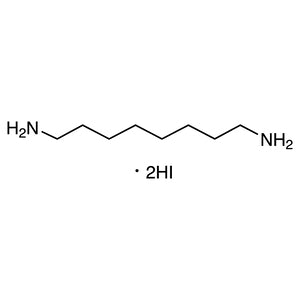
Octane-1,8-diamineDihydroiodide TCI D6069
Regular price From Rp 2.359.350,00Regular priceRp 1.649.550,00Sale price From Rp 2.359.350,00 -
1,4-Diazabicyclo[2.2.2]octaneDihydrochloride TCI D5251
Regular price From Rp 1.961.400,00Regular priceRp 1.387.050,00Sale price From Rp 1.961.400,00
![TCI O0118 111-65-9 n-Octane [for Spectrophotometry]](http://amiscientific.com/cdn/shop/files/TCI2510O0118_45b3d0ff-408b-4f03-8e92-8533537925d1.jpg?v=1792651188&width=533)
![111-65-9 n-Octane [for Spectrophotometry] - AMI Scientific](http://amiscientific.com/cdn/shop/files/TCI2510O0118.jpg?v=1767131405&width=533)
![TCI S0280 111-65-9 n-Octane [Standard Material for GC]](http://amiscientific.com/cdn/shop/files/TCI2510S0280_8d96de8d-937f-4be5-a092-0a3f22f2aa03.jpg?v=1792654830&width=533)
![111-65-9 n-Octane [Standard Material for GC] - AMI Scientific](http://amiscientific.com/cdn/shop/files/TCI2510S0280.jpg?v=1767138590&width=533)
![185-70-6 1-Oxaspiro[2.5]octane - AMI Scientific](http://amiscientific.com/cdn/shop/files/TCI2510O0717.jpg?v=1767132316&width=533)
![TCI O0151 111-65-9 n-Octane [for HPLC Solvent]](http://amiscientific.com/cdn/shop/files/TCI2510O0151_86b6914b-68f2-4337-902d-7107d1df98de.jpg?v=1792651235&width=533)
![111-65-9 n-Octane [for HPLC Solvent] - AMI Scientific](http://amiscientific.com/cdn/shop/files/TCI2510O0151.jpg?v=1767131492&width=533)
![TCI M1978 1378825-86-5 3-Methyl-3-(2-oxopropyl)-2,4,7-trioxabicyclo[3.3.0]octane](http://amiscientific.com/cdn/shop/files/TCI2510M1978_8adbd30d-75ea-4239-b956-3dfc5655550e.jpg?v=1792648470&width=533)
![1378825-86-5 3-Methyl-3-(2-oxopropyl)-2,4,7-trioxabicyclo[3.3.0]octane - AMI Scientific](http://amiscientific.com/cdn/shop/files/TCI2510M1978.jpg?v=1767125853&width=533)
![TCI D6472 885270-84-8 tert-Butyl 2,6-Diazaspiro[3.4]octane-2-carboxylate](http://amiscientific.com/cdn/shop/files/TCI2510D6472_b2744745-1a19-4f65-b950-18e83fa19c85.jpg?v=1792640558&width=533)
![tert-Butyl 2,6-Diazaspiro[3.4]octane-2-carboxylate (CAS 885270-84-8) - TCI D6472 - AMI Scientific](http://amiscientific.com/cdn/shop/files/TCI2510D6472.jpg?v=1767110253&width=533)

![TCI D5251 49563-87-3 1,4-Diazabicyclo[2.2.2]octane Dihydrochloride](http://amiscientific.com/cdn/shop/files/TCI2510D5251_74307886-4d3a-4a0f-9634-837d1ac88025.jpg?v=1792639836&width=533)
![1,4-Diazabicyclo[2.2.2]octane Dihydrochloride (CAS 49563-87-3) - TCI D5251 - AMI Scientific](http://amiscientific.com/cdn/shop/files/TCI2510D5251.jpg?v=1767108553&width=533)