

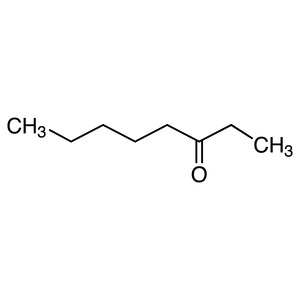
3-Octanone is an organic compound widely utilized in various chemical reactions within laboratory settings. As a key building block in organic chemistry, it plays a crucial role in the synthesis of complex molecules. Its versatile nature makes it a valuable tool for researchers and students alike, enabling the creation of a wide range of chemical compounds. This compound is particularly favored for its reactivity and stability, which allow it to participate effectively in multiple reaction types. Its presence in laboratory workflows supports both educational and research activities, contributing to the advancement of chemical knowledge.
One of the main reasons 3-Octanone is preferred is its chemical properties, including solubility in organic solvents such as ethyl acetate and chloroform. These characteristics make it easy to dissolve and incorporate into different experimental setups. Additionally, its relatively high boiling and melting points facilitate handling during heating and cooling processes in the lab. The compound's stability and reactivity ensure that it remains a reliable and efficient material for a variety of chemical applications, enhancing the efficiency of laboratory procedures.
In Indonesian laboratories, 3-Octanone is commonly used in organic chemistry research. It is a popular choice among students, researchers, and educational institutions due to its availability and ease of use. Its application supports both academic and industrial research, contributing to the development of new chemical compounds and scientific innovations. The compound's reliability and practicality make it a staple in many laboratory environments across Indonesia.
- Organic synthesis reactions benefit from 3-Octanone due to its reactivity and stability, enabling the formation of complex molecules through various chemical pathways.
- It is ideal for Grignard reactions, where its carbonyl group can react with organomagnesium compounds to form new carbon-carbon bonds.
- 3-Octanone is frequently used in Friedel-Crafts reactions, where it serves as a reactant in the formation of aromatic compounds under catalytic conditions.
- Its solubility in organic solvents makes it suitable for use in chromatographic techniques, aiding in the separation and purification of chemical compounds.
- In substitution reactions, 3-Octanone provides a stable platform for the introduction of functional groups, enhancing the versatility of synthetic pathways.
| Brand | TCI |
|---|---|
| CAS number | 106-68-3 |
| Molecular formula | — |
| Purity | — |
| Category | Chemistry > Building Blocks > Non-Heterocyclic Building Blocks |
| Pack sizes | Available in various sizes as per supplier specifications |
| Physical form | Liquid |
| Storage | Store in a cool, dry place away from direct sunlight |
3-Octanone should be stored in a cool, dry place, away from direct sunlight and sources of heat. It is recommended to keep the compound in tightly sealed containers to prevent evaporation and contamination. Due to its flammable nature, it should be stored in a well-ventilated area, away from incompatible materials such as strong oxidizers. Laboratory personnel should handle it with care, using appropriate personal protective equipment such as gloves and safety goggles. Proper labeling of containers is essential to ensure safe handling and prevent accidental exposure. Regular monitoring of storage conditions ensures the compound remains stable and safe for use in laboratory applications.
—
Produk Terkait
-
4-Octanone TCI O0218
Regular price Rp 3.367.350,00Regular price -
2-Octanone TCI O0038
Regular price From Rp 505.050,00Regular price -
5-Methyl-2-octanone TCI M0278
Regular price Rp 2.254.350,00Regular price -
trans-2-Pentenal TCI P1790
Regular price From Rp 1.140.300,00Regular price -
3-Nonanone TCI N0253
Regular price Rp 4.506.600,00Regular price -
2-Methylbutyraldehyde TCI M0166
Regular price Rp 557.550,00Regular price -
trans-2-Hexenal TCI H0345
Regular price From Rp 1.035.300,00Regular price -
3-Ethyltoluene TCI E0185
Regular price From Rp 1.644.300,00Regular price


