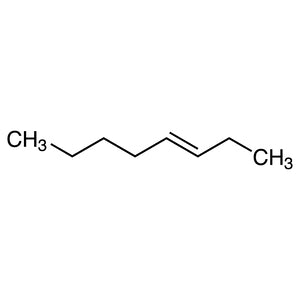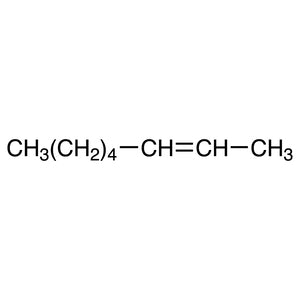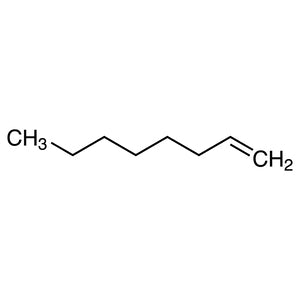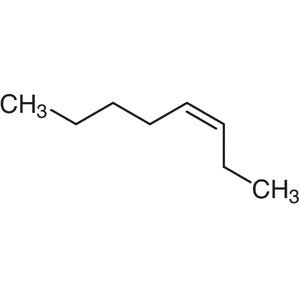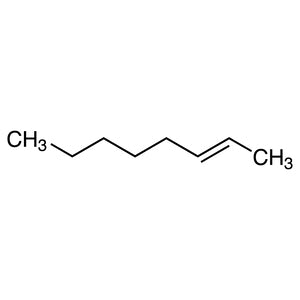
Trans-2-Octene is a chemical compound classified under non-heterocyclic building blocks, playing a crucial role in organic synthesis. It serves as a foundational material for the creation of more complex chemical structures, making it indispensable in laboratory settings. Its simple molecular structure enables it to participate in various chemical reactions, including addition and polymerization processes. This versatility allows researchers to explore new chemical pathways and develop innovative compounds. Trans-2-Octene is widely used in both academic and industrial research due to its reliability and effectiveness in chemical reactions.
Trans-2-Octene is valued for its chemical stability and reactivity under specific conditions. These properties make it a preferred choice for a wide range of experimental applications. It is a colorless liquid, which simplifies handling and storage, and its physical form facilitates easy mixing and integration into different reaction systems. The compound’s ability to maintain its integrity during synthesis processes ensures consistent results, making it a trusted material for scientists. Its non-hazardous nature also contributes to its popularity in laboratory environments.
In Indonesian laboratories, Trans-2-Octene is commonly used in organic chemistry, pharmaceutical research, and material science. Its availability in the local market supports ongoing scientific investigations and industrial applications. Researchers rely on this compound for developing new products and advancing chemical knowledge. Its widespread use underscores its importance in both educational and applied research settings.
- Organic synthesis applications benefit from Trans-2-Octene's ability to participate in addition and polymerization reactions, enabling the creation of complex molecular structures.
- Pharmaceutical research utilizes this compound as a building block for synthesizing various drug compounds, supporting the development of new therapeutic agents.
- Material science experiments rely on Trans-2-Octene for creating polymers and other advanced materials, contributing to the development of new industrial products.
- Educational laboratories use Trans-2-Octene to teach fundamental chemical reaction mechanisms and molecular structure concepts to students.
- Industrial chemical production incorporates this compound in the manufacturing of specialty chemicals, enhancing the efficiency of chemical processes.
| Brand | TCI |
|---|---|
| CAS number | 13389-42-9 |
| Molecular formula | — |
| Purity | — |
| Category | Chemistry > Building Blocks > Non-Heterocyclic Building Blocks |
| Pack sizes | Available in various sizes as per standard laboratory supply specifications |
| Physical form | Colorless liquid |
| Storage | Store in a cool, dry place away from direct sunlight and incompatible materials |
Trans-2-Octene should be stored in a cool, dry environment, away from direct sunlight and sources of heat. It is recommended to keep the compound in a tightly sealed container to prevent evaporation and contamination. Suitable containers include glass or high-density polyethylene (HDPE) bottles, which provide chemical resistance and ensure the integrity of the substance. In laboratory settings, it is important to handle the compound with care, using appropriate personal protective equipment such as gloves and safety goggles. Proper ventilation should be maintained when working with this material to minimize exposure. Regular inspection of storage conditions and container integrity is essential to ensure safe and effective use.
—
Produk Terkait
-
trans-4-Octene TCI O0136
Regular price From Rp 848.400,00Regular price -
trans-3-Octene TCI O0134
Regular price From Rp 1.220.100,00Regular price -
2-Octene(cis-andtrans-mixture) TCI O0042
Regular price From Rp 1.220.100,00Regular price -
1-Octene TCI O0251
Regular price Rp 2.518.950,00Regular price -
cis-4-Octene TCI O0135
Regular price From Rp 689.850,00Regular price -
cis-3-Octene TCI O0133
Regular price Rp 12.614.700,00Regular price -
1-Octene TCI O0041
Regular price From Rp 477.750,00Regular price -
1,3-Pentadiene(cis-andtrans-mixture)(stabilizedwithTBC) TCI P1841
Regular price Rp 10.229.100,00Regular price