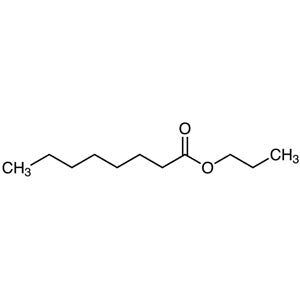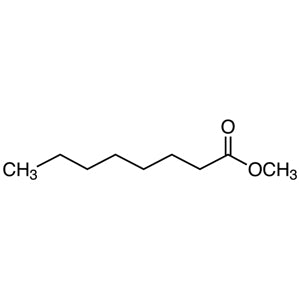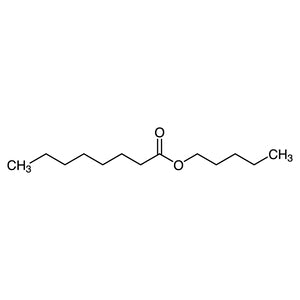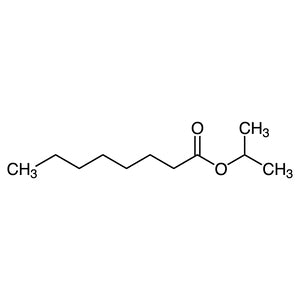
Isopropyl n-Octanoate from TCI is an ester of octanoic acid, a saturated eight-carbon medium-chain fatty acid, and isopropanol. It is a medium-chain fatty ester that researchers often study in fragrance science, cosmetics, and analytical chemistry. In the laboratory, isopropyl n-octanoate serves as a non-heterocyclic building block, a reference compound for fatty ester analysis, and a model substrate for hydrolysis and transesterification studies. Its structure is simple and well defined, so it works well as a comparison standard in both synthetic and analytical work.
Researchers choose this compound because it pairs a lipophilic acyl chain with a branched isopropyl group. The branching makes it more resistant to hydrolysis than comparable esters of primary alcohols. Esters of this type are usually liquids without a sharp odour, and they mix easily with oils and organic solvents. For this reason, isopropyl esters of fatty acids are widely studied as emollients and carrier solvents in formulations. In analytical work, its moderate volatility makes it easy to detect by gas chromatography, which helps with method development and routine identification.
In Indonesia, Isopropyl n-Octanoate is relevant to cosmetic and personal care research laboratories, food and fragrance analysis laboratories, and university chemistry departments that work on ester synthesis and reactivity. Formulation scientists can use it to study emollient behaviour and solvent compatibility. Analytical chemists can use it as a well-characterised fatty ester standard. In teaching and research settings, it is a practical model compound for showing esterification, hydrolysis, and transesterification reactions under controlled laboratory conditions.
- Non-heterocyclic building block: its simple, well-defined ester structure makes it a dependable starting material or intermediate for synthetic work that needs a medium-chain lipophilic acyl fragment.
- Reference standard for fatty ester analysis: its moderate volatility and clear structure make it easy to detect and identify by gas chromatography, so it is useful for calibration and method comparison.
- Model compound for hydrolysis studies: the branched isopropyl group resists hydrolysis more than esters of primary alcohols do, which lets researchers study how steric effects change ester stability and reaction rates.
- Transesterification research: as a well-characterised fatty acid ester, it is a convenient substrate for exploring catalysts, reaction conditions, and product distribution in exchange reactions between esters and alcohols.
- Emollient and carrier solvent studies: it mixes easily with oils and organic solvents, so cosmetic and personal care laboratories can use it to evaluate the behaviour of fatty isopropyl esters in formulations.
| Brand | TCI (product code O0157) |
|---|---|
| CAS number | 5458-59-3 |
| Molecular formula | — |
| Purity | — |
| Category | Chemistry > Building Blocks > Non-Heterocyclic Building Blocks |
| Pack sizes | as offered in the TCI catalogue listing for this product |
| Physical form | fatty esters of this type are usually liquids; check the supplier documentation for this product |
| Storage | keep tightly sealed in a cool, dry, well-ventilated place, following the supplier's safety data sheet |
Keep Isopropyl n-Octanoate in its original, tightly closed container or in a compatible chemical-resistant glass container. Store it in a cool, dry, well-ventilated area away from heat, open flames, direct sunlight, and strong oxidising agents. Because esters can slowly hydrolyse when exposed to moisture, especially with acids or bases present, keep containers sealed when not in use. Handle the compound in a fume hood or well-ventilated workspace, and wear suitable gloves, safety glasses, and a laboratory coat. Avoid contact with skin and eyes and avoid breathing in vapours. Always check the supplier's safety data sheet for specific hazard, first aid, and disposal information, and dispose of waste according to local regulations.
—
Produk Terkait
-
Propyln-Octanoate TCI P2113
Regular price Rp 2.016.000,00Regular price -
Methyln-Octanoate TCI O0033
Regular price From Rp 505.050,00Regular price -
Isobutyln-Octanoate TCI O0032
Regular price From Rp 1.140.300,00Regular price -
Isoamyln-Octanoate(contains2-Methylbutyln-Octanoate) TCI O0031
Regular price Rp 637.350,00Regular price -
Ethyln-Octanoate TCI O0030
Regular price From Rp 505.050,00Regular price -
Butyln-Octanoate TCI O0029
Regular price Rp 1.008.000,00Regular price -
Amyln-Octanoate TCI O0028
Regular price From Rp 505.050,00Regular price -
HexylOctanoate TCI H1926
Regular price Rp 1.565.550,00Regular price