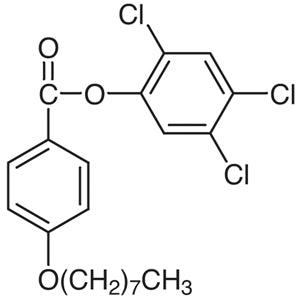
2,4,5-Trichlorophenyl 4-n-Octyloxybenzoate is a chemical compound widely used in laboratory settings for various chemical experiments and scientific research. It belongs to the category of non-heterocyclic building blocks, making it a versatile component in the synthesis of more complex chemical structures. This compound is commonly employed as a starting material in the production of bioactive compounds or industrial chemicals, playing a crucial role in the development of new pharmaceuticals and chemical products. Its presence in laboratory workflows highlights its importance in both academic and industrial research environments.
The compound’s molecular structure, consisting of a long hydrocarbon chain and chloro groups, provides it with reactive and stable properties. These characteristics make it suitable for chemical reactions requiring controlled reactivity and specific solubility properties. Its consistent chemical and physical properties also facilitate its processing and application under various laboratory conditions. This reliability ensures that it remains a preferred choice for researchers aiming to achieve precise and reproducible results.
In Indonesian laboratories, 2,4,5-Trichlorophenyl 4-n-Octyloxybenzoate is frequently used in chemical, pharmaceutical, and environmental research. Its stability and availability make it a relevant material for local research needs. It supports a wide range of experimental applications, contributing to the advancement of scientific knowledge in various fields. Its role in laboratory research underscores its importance as a fundamental building block in chemical synthesis.
Related TCI products
- Bioactive Compound Synthesis: This compound is ideal for synthesizing bioactive molecules due to its reactive functional groups and solubility properties.
- Pharmaceutical Research: It is used in drug development to create compounds with specific biological activities and therapeutic potential.
- Environmental Toxicology Studies: Its chemical stability allows it to be used in assessing the toxicological effects of synthetic compounds on ecosystems.
- Organic Chemistry Experiments: Its molecular structure makes it a valuable tool for studying reaction mechanisms and synthetic pathways.
- Industrial Chemical Production: It serves as a precursor for the manufacture of various industrial chemicals requiring controlled reactivity and solubility.
| Brand | TCI |
|---|---|
| CAS number | 79404-93-6 |
| Molecular formula | — |
| Purity | — |
| Category | Chemistry > Building Blocks > Non-Heterocyclic Building Blocks |
| Pack sizes | Available in standard laboratory quantities |
| Physical form | Solid or liquid, depending on formulation |
| Storage | Store in a cool, dry place away from light and incompatible substances |
This compound should be stored in a cool, dry environment, away from direct sunlight and sources of heat. It is recommended to use tightly sealed containers to prevent exposure to moisture and air. Due to its chemical nature, it should be kept away from incompatible materials such as strong acids or bases. Proper ventilation is essential when handling the compound to minimize inhalation risks. Laboratory personnel should wear appropriate personal protective equipment, including gloves and safety goggles, to ensure safe handling. Regular monitoring of storage conditions is advised to maintain the compound’s stability and effectiveness in research applications.
—
Produk Terkait
-
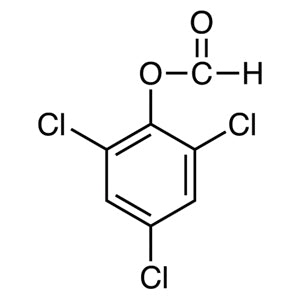
2,4,6-TrichlorophenylFormate TCI T3121
Regular price From Rp 769.650,00Regular price -
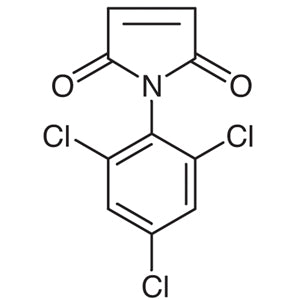
N-(2,4,6-Trichlorophenyl)maleimide TCI T1987
Regular price Rp 3.525.900,00Regular price -
4-n-Octyloxybenzaldehyde TCI O0116
Regular price Rp 5.300.400,00Regular price -
4-Heptyloxybenzaldehyde TCI H0238
Regular price Rp 4.479.300,00Regular price -
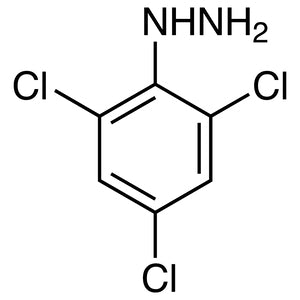
(2,4,6-Trichlorophenyl)hydrazine TCI T4137
Regular price Rp 2.359.350,00Regular price -
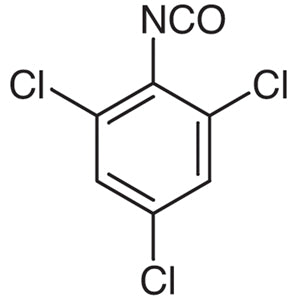
2,4,6-TrichlorophenylIsocyanate TCI I0565
Regular price From Rp 1.008.000,00Regular price -
2-BenzyloxybenzoicAcid TCI B4766
Regular price From Rp 1.326.150,00Regular price -
3-Benzyloxybenzaldehyde TCI B2400
Regular price Rp 1.856.400,00Regular price