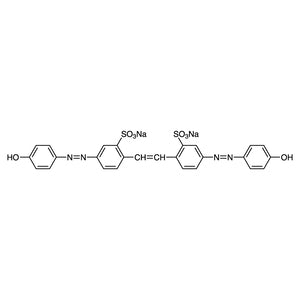
Oxonol Yellow K is a chemical dye widely used in laboratory settings for its ability to act as a visual indicator in various chemical reactions. This compound is commonly employed in research and experimental applications where the detection of specific chemical changes is necessary. Its role as a stain and dye makes it particularly useful in qualitative analysis, where color changes are critical for identifying substances or monitoring reaction progress. Oxonol Yellow K is a versatile tool in both academic and industrial laboratories, supporting a range of analytical procedures.
One of the key attributes that make Oxonol Yellow K a preferred choice is its bright yellow color, which provides a clear and easily observable signal during experiments. This vivid hue enhances the accuracy of visual assessments, making it ideal for applications where subtle color shifts are important. Additionally, the compound exhibits stability under certain conditions, ensuring reliable performance across multiple uses. Its non-toxic and non-hazardous nature in normal usage further contributes to its safety profile, making it suitable for a wide range of laboratory environments.
In Indonesian laboratories, Oxonol Yellow K is frequently utilized in chemical research, sample analysis, and educational settings. It is particularly relevant for institutions such as universities, research centers, and high schools that require reliable and safe chemical reagents for both simple and complex experiments. The availability in a 25-gram package makes it convenient for routine laboratory use, supporting consistent and reproducible results.
- Chemical Analysis: Oxonol Yellow K is used for identifying compounds through color changes during reactions, offering a clear visual signal for qualitative testing.
- Educational Experiments: It supports teaching in high schools and universities, providing a safe and visible means for students to observe chemical reactions.
- Sample Testing: The dye is employed in laboratory testing to detect specific substances, aiding in the analysis of unknown materials.
- Research Applications: It is a valuable tool in research settings for monitoring reaction progress and identifying chemical transformations.
- Quality Control: Oxonol Yellow K assists in assessing the purity of substances by indicating the presence of specific compounds during testing.
| Brand | TCI |
|---|---|
| CAS number | 82407-55-4 |
| Molecular formula | — |
| Purity | — |
| Category | Chemistry > Stains and Dyes (for Research and Experimental Use) > Stains and Dyes (Other) (for Research and Experimental Use) |
| Pack sizes | 25 grams |
| Physical form | Powder or solid (as per standard product form) |
| Storage | Store in a cool, dry place away from direct sunlight. |
Oxonol Yellow K should be stored in a cool, dry place, away from direct sunlight and moisture to maintain its stability and effectiveness. It is recommended to use airtight containers to prevent contamination and degradation. Since it is non-toxic and non-hazardous under normal conditions, general laboratory precautions such as proper labeling and safe handling practices are sufficient. Avoid exposure to extreme temperatures or humidity to ensure the product remains in optimal condition for use. Always follow standard laboratory safety procedures when handling any chemical substance, even if it is considered safe for routine use.
—
Produk Terkait
-
Bis(1,3-dibutylbarbituricAcid)TrimethineOxonol TCI B5593
Regular price From Rp 2.174.550,00Regular price -
AlizarinYellowGG TCI A0578
Regular price Rp 1.618.050,00Regular price -
PinakryptolYellow TCI P0439
Regular price Rp 1.988.700,00Regular price -
DirectYellow26 TCI D1473
Regular price Rp 2.174.550,00Regular price -
BrilliantYellow TCI B0783
Regular price Rp 4.320.750,00Regular price -
BasicYellow1 TCI T0558
Regular price Rp 2.094.750,00Regular price -
DirectYellow44 TCI S0143
Regular price Rp 1.405.950,00Regular price -
FoodYellowNo.4AluminumLake TCI F0178
Regular price Rp 2.809.800,00Regular price