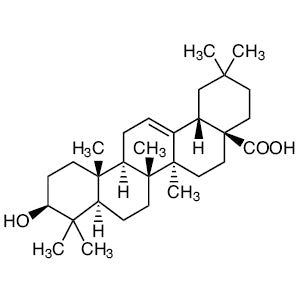
Oleanolic Acid (508-02-1) is a naturally occurring compound derived from various plant sources, known for its complex chemical structure. It plays a crucial role in biochemical and pharmacological research, enabling scientists to investigate its biological activities, including antioxidant, anti-inflammatory, and antitumor properties. In the laboratory, this compound serves as a key reagent for the development of pharmaceuticals, toxicity testing, and studies on pharmacological effects across different organ systems. Its versatility makes it an essential component in both academic and industrial research settings.
Oleanolic Acid is prized for its chemical stability and solubility in organic solvents such as ethyl acetate and ethanol. Its strong binding affinity to proteins makes it suitable for applications like receptor binding assays and molecular interaction studies. Additionally, its non-toxic nature and relative safety in controlled environments make it a preferred choice for researchers seeking reliable and consistent results. These properties ensure its widespread use in both basic and applied research.
In Indonesian laboratories, Oleanolic Acid is widely utilized in public health and pharmaceutical research. Research institutions and universities frequently employ this compound to study natural active compounds and develop environmentally friendly pharmaceutical products. Its availability and effectiveness make it a valuable resource for advancing scientific knowledge and innovation in the region.
TCI brochures (PDF)
- Terpenes 2025-09-22 · p. 9
- Phytochemicals 2025-12-17 · p. 7
- Biochemical Research: Oleanolic Acid is used to study its antioxidant and anti-inflammatory properties, aiding in the development of therapeutic agents.
- Pharmacological Testing: It is employed in toxicity assessments and drug development to evaluate its effects on various biological systems.
- Molecular Interaction Studies: Its strong protein-binding ability makes it ideal for receptor binding assays and molecular docking experiments.
- Natural Product Analysis: Researchers use it to investigate the bioactive components of plant-derived compounds for pharmaceutical applications.
- Environmental Toxicology: It is used to assess the impact of natural compounds on ecosystems and human health in environmental studies.
| Brand | TCI |
|---|---|
| CAS number | 508-02-1 |
| Molecular formula | — |
| Purity | — |
| Category | Life Science > Biochemicals and Reagents > Crude Medicine Ingredients for Research and Experimental Use |
| Pack sizes | Available in various quantities as per standard laboratory requirements |
| Physical form | Solid powder |
| Storage | Store in a cool, dry place away from direct sunlight |
Oleanolic Acid should be stored in a cool, dry environment to maintain its chemical stability and prevent degradation. It is recommended to use airtight containers to minimize exposure to moisture and air, which could affect its purity and effectiveness. Since it is a solid powder, it should be handled with care to avoid inhalation or contact with skin. In laboratory settings, it is important to follow standard safety protocols, such as using gloves and safety goggles when handling the compound. Proper storage conditions ensure the material remains viable for research applications and maintains its integrity over time.
—
Product Categories
- Biochemicals and ReagentsCrude Medicine Ingredients for Research and Experimental Use
- Biochemicals and ReagentsTerpenesTriterpenes
- Cell BiologyCancer ResearchCancer Metabolism
- Cell BiologyCancer ResearchChemopreventive Agents [Cancer Research]
- Cell BiologyCancer Research
- Cell BiologyNutrition ResearchPhytochemicals
- Pharmaceutical Development and Drug Discovery ResearchCrude Medicine Ingredients for Research and Experimental Use
Produk Terkait
-
UrsolicAcid TCI U0065
Regular price From Rp 1.856.400,00Regular price -
QuercetinHydrate TCI P0042
Regular price Rp 1.326.150,00Regular price -
BetulinicAcid TCI B2836
Regular price From Rp 1.670.550,00Regular price -
Limonin TCI L0258
Regular price From Rp 3.683.400,00Regular price -
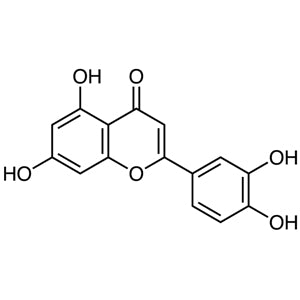
3',4',5,7-Tetrahydroxyflavone TCI T2682
Regular price From Rp 1.565.550,00Regular price -
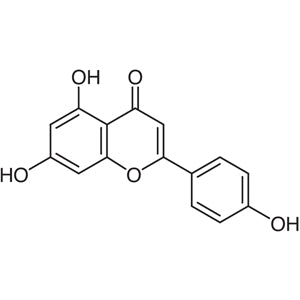
Apigenin TCI A1514
Regular price Rp 5.778.150,00Regular price -
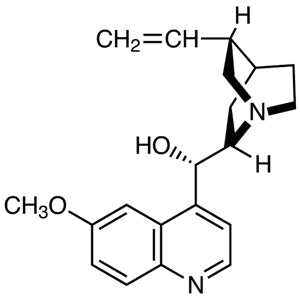
Quinidine TCI Q0006
Regular price From Rp 1.485.750,00Regular price -
Squalene TCI H0097
Regular price From Rp 505.050,00Regular price