

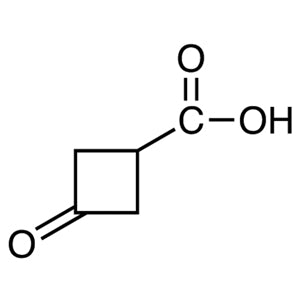
3-Oxocyclobutanecarboxylic Acid is a chemical compound widely used in laboratory settings for the synthesis of complex molecules. As a building block in organic chemistry, it serves as a fundamental component in the creation of both heterocyclic and non-heterocyclic compounds. Its versatility makes it an essential tool for chemists working on a variety of synthetic pathways. This compound is particularly valuable in reactions that require precise structural manipulation, allowing researchers to build more complex molecular frameworks with controlled modifications.
The chemical properties of 3-Oxocyclobutanecarboxylic Acid, including its solubility in organic solvents and stability under various reaction conditions, make it a preferred choice for laboratory applications. Its molecular structure enables it to participate in key reactions such as esterification, amidation, and substitution. These characteristics ensure that it remains a reliable and efficient reagent in synthetic chemistry. Additionally, its predictable behavior in different chemical environments enhances its utility in both academic and industrial research settings.
In Indonesian laboratories, 3-Oxocyclobutanecarboxylic Acid is commonly used in organic chemistry research. It plays a crucial role in the development of new compounds and the modification of molecular structures. Researchers in Indonesia rely on this compound for its consistency and effectiveness in chemical synthesis, supporting advancements in pharmaceutical and materials science. Its application in local laboratories underscores its importance in the broader scientific community.
Related TCI products
- Organic synthesis research utilizes this compound for constructing complex molecular frameworks due to its structural versatility and reactivity.
- Pharmaceutical development benefits from its role in the synthesis of novel compounds with potential therapeutic applications.
- Chemical modification studies rely on its ability to undergo various reactions, allowing for the creation of diverse molecular structures.
- Academic laboratories use it as a fundamental building block in teaching and research, enhancing understanding of synthetic pathways.
- Industrial chemical processes incorporate it for the production of specialty chemicals requiring precise structural control.
| Brand | TCI |
|---|---|
| CAS number | 23761-23-1 |
| Molecular formula | — |
| Purity | — |
| Category | Chemistry > Building Blocks > Non-Heterocyclic Building Blocks |
| Pack sizes | Available in various quantities as per standard laboratory supply formats |
| Physical form | Solid, typically in crystalline or powder form |
| Storage | Store in a cool, dry place away from direct sunlight and moisture |
3-Oxocyclobutanecarboxylic Acid should be stored in a cool, dry environment to maintain its chemical integrity. It is recommended to keep it in airtight containers to prevent exposure to moisture and air, which could affect its stability. The compound is generally non-hazardous under normal laboratory conditions but should be handled with care to avoid direct contact with skin or inhalation of vapors. Proper ventilation is advised when working with this material to ensure a safe laboratory environment. It is important to follow standard chemical handling protocols to maintain safety and preserve the compound's effectiveness in research applications.
—
Produk Terkait
-
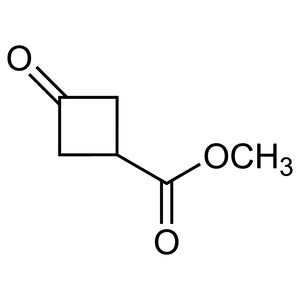
Methyl3-Oxocyclobutanecarboxylate TCI M3909
Regular price From Rp 848.400,00Regular price -
MethylCyclobutanecarboxylate TCI M2884
Regular price From Rp 1.431.150,00Regular price -
EthylCyclobutanecarboxylate TCI E0931
Regular price From Rp 689.850,00Regular price -
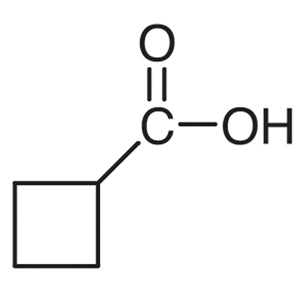
CyclobutanecarboxylicAcid TCI C0888
Regular price From Rp 1.644.300,00Regular price -
Ethyl1-Bromocyclobutanecarboxylate TCI E1245
Regular price From Rp 1.193.850,00Regular price -
Cyclobutanecarbaldehyde TCI C3757
Regular price From Rp 1.565.550,00Regular price -
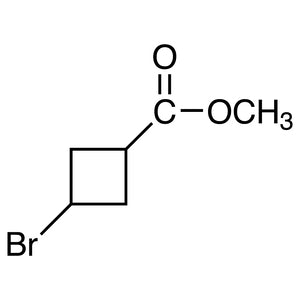
Methyl3-Bromocyclobutane-1-carboxylate(cis-andtrans-mixture) TCI M3616
Regular price From Rp 2.650.200,00Regular price -
Tetramethyl-1,3-cyclobutanedione[PrecursortoDimethylKetene] TCI D0258
Regular price From Rp 610.050,00Regular price




![Tetramethyl-1,3-cyclobutanedione [Precursor to Dimethyl Ketene] (CAS 933-52-8) - TCI D0258 - AMI Scientific](http://amiscientific.com/cdn/shop/files/TCI2510D0258.jpg?v=1767101066&width=533)