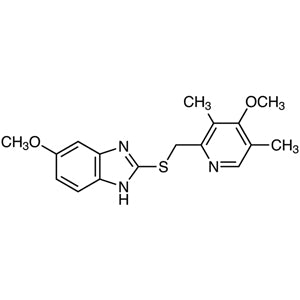
Omeprazole Sulfide TCI O0437 is a chemical compound widely used in pharmaceutical research and biochemical experiments. As a derivative of omeprazole, a well-known proton pump inhibitor, it plays a crucial role in the study of gastric acid suppression and digestive disorders. In the laboratory, it serves as a key reagent for the synthesis of other compounds and for evaluating biological activities. Its presence in research settings allows scientists to explore the mechanisms of drug action and potential side effects. This compound is particularly valuable in experimental studies that require high precision and controlled conditions.
Omeprazole Sulfide is preferred due to its chemical stability under specific conditions, making it reliable for consistent results in experiments. However, it is sensitive to moisture and air exposure, which necessitates careful handling and storage. Its complex molecular structure enables researchers to investigate various pharmacological properties and interactions. The compound’s versatility in different experimental setups makes it a go-to choice for scientists working on drug development and bioavailability studies. Its availability in various packaging options also supports flexibility in experimental design and scale.
In Indonesian laboratories, Omeprazole Sulfide is commonly used in pharmacological and pharmacokinetic research. It is also integral to the development of new drugs and the study of drug side effects. Researchers in Indonesia frequently utilize this compound for toxicity testing and enzyme activity assays. Its role in advancing pharmaceutical science is significant, especially in the context of local research initiatives and academic institutions.
TCI brochures (PDF)
- Pharmaceutical Ingredients for Research and Experimental Use 2026-03-09 · p. 47
- Pharmacological research utilizes Omeprazole Sulfide to study the mechanisms of proton pump inhibitors and their impact on gastric acid secretion.
- Pharmacokinetic studies benefit from this compound as it aids in analyzing drug absorption, distribution, metabolism, and excretion.
- Drug development projects often incorporate Omeprazole Sulfide for the synthesis of novel compounds and the evaluation of their therapeutic potential.
- Toxicity testing relies on this reagent to assess the safety and potential side effects of new pharmaceutical formulations.
- Enzyme activity assays use Omeprazole Sulfide to investigate the interaction between drugs and digestive enzymes in the gastrointestinal tract.
| Brand | TCI |
|---|---|
| CAS number | 73590-85-9 |
| Molecular formula | — |
| Purity | — |
| Category | Life Science > Biochemicals and Reagents > Pharmaceutical Research Reagents |
| Pack sizes | Available in various packaging options to suit different experimental needs |
| Physical form | Solid (as per standard chemical reagent specifications) |
| Storage | Requires protection from moisture and air exposure |
Omeprazole Sulfide should be stored in a cool, dry place away from direct sunlight and sources of moisture. It is recommended to use airtight containers to prevent exposure to air, which can degrade the compound. Due to its sensitivity, it is essential to handle the material with care, using appropriate personal protective equipment such as gloves and safety goggles. In laboratory settings, it should be kept in a designated chemical storage area that is accessible only to authorized personnel. Regular monitoring of storage conditions is advised to ensure the compound remains in optimal condition for experimental use.
—
Product Categories
- Biochemicals and ReagentsPharmaceutical Research Reagents (for Experimental Use)Pharmaceutical Research Reagents (Others)
- Cell BiologyCancer ResearchAntitumor Agents for Research
- Cell BiologyCancer ResearchChemopreventive Agents [Cancer Research]
- Cell BiologyCancer Research
- Pharmaceutical Development and Drug Discovery ResearchPharmaceutical Research Reagents (for Experimental Use)Pharmaceutical Research Reagents (Others)
Produk Terkait
-
AmiodaroneHydrochloride TCI A2530
Regular price From Rp 1.485.750,00Regular price -
Cimetidine TCI C1252
Regular price Rp 2.809.800,00Regular priceRp 1.980.300,00Sale price Rp 2.809.800,00 -
VerapamilHydrochloride TCI V0118
Regular price Rp 1.618.050,00Regular priceRp 1.146.600,00Sale price Rp 1.618.050,00 -
Sulfinpyrazone TCI U0114
Regular price Rp 2.121.000,00Regular priceRp 1.498.350,00Sale price Rp 2.121.000,00 -
Ritonavir TCI R0116
Regular price Rp 2.121.000,00Regular priceRp 1.498.350,00Sale price Rp 2.121.000,00 -
PropafenoneHydrochloride TCI P2301
Regular price Rp 1.881.600,00Regular priceRp 1.331.400,00Sale price Rp 1.881.600,00 -
Melatonin TCI M1105
Regular price Rp 1.988.700,00Regular priceRp 1.405.950,00Sale price Rp 1.988.700,00 -
Ketoconazole TCI K0045
Regular price Rp 1.881.600,00Regular priceRp 1.331.400,00Sale price Rp 1.881.600,00