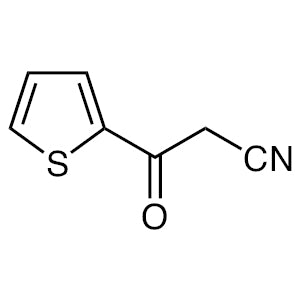
3-Oxo-3-(2-thienyl)propanenitrile is a chemical compound widely used in organic synthesis reactions within laboratory settings. As a heterocyclic building block, it plays a crucial role in the development of complex molecular structures. Its unique chemical structure, featuring a thiophene ring connected to a propanenitrile chain, makes it a versatile reagent for various synthetic pathways. This compound is particularly valuable in the creation of bioactive molecules, including pharmaceuticals and industrial chemicals. Its presence in laboratory workflows supports the advancement of chemical research and innovation.
The compound’s stability under specific conditions and its reactivity in multiple chemical reactions make it a preferred choice for synthetic chemists. It is capable of participating in nitrile reactions, substitution reactions, and cyclization processes, allowing for structural modifications through the use of various reagents. These properties enable it to be adaptable to different reaction conditions, ensuring consistent and reliable results. Its reactivity and functional group versatility contribute to its widespread use in both academic and industrial research environments.
In Indonesian laboratories, 3-Oxo-3-(2-thienyl)propanenitrile is commonly utilized in organic chemistry research, especially in pharmacology and the synthesis of active compounds. It is a key component in studies aimed at developing new drugs and chemical materials. Researchers and academic institutions in Indonesia rely on this compound for its reliability and effectiveness in complex synthetic processes. Its role in advancing scientific discovery is well recognized in the local scientific community.
TCI brochures (PDF)
- Thiophenes 2026-06-29 · p. 8
Related TCI products
- Organic synthesis is a key application where this compound is used to build complex molecular structures due to its heterocyclic framework and reactivity.
- Pharmaceutical research benefits from its role in the development of bioactive compounds, as it can be modified to create various drug candidates.
- Industrial chemical production utilizes this compound for the synthesis of active ingredients used in various chemical products and formulations.
- Academic research in chemistry and pharmacology relies on this compound for its versatility in creating new compounds and studying reaction mechanisms.
- Drug discovery programs incorporate this compound as a building block to explore potential therapeutic agents and molecular targets.
| Brand | TCI |
|---|---|
| CAS number | 33898-90-7 |
| Molecular formula | — |
| Purity | — |
| Category | Chemistry > Building Blocks > Heterocyclic Building Blocks |
| Pack sizes | Available in various quantities as per standard laboratory supply |
| Physical form | Solid or liquid, depending on the specific formulation |
| Storage | Store in a cool, dry place away from direct light and moisture |
This compound should be stored in a cool, dry environment, away from direct sunlight and sources of heat. It is recommended to use airtight containers to prevent moisture absorption and contamination. Proper labeling of storage containers is essential to ensure safe handling and prevent accidental exposure. In laboratory settings, it is important to follow standard safety protocols, including the use of personal protective equipment such as gloves and safety goggles. The compound should be kept in a well-ventilated area to minimize inhalation risks. Regular monitoring of storage conditions ensures the compound remains stable and suitable for use in chemical reactions.
—
Produk Terkait
-
2-(2-Thienyl)ethylp-Toluenesulfonate TCI T3064
Regular price From Rp 477.750,00Regular price -
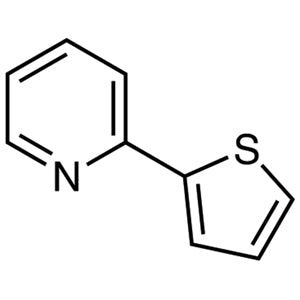
2-(2-Thienyl)pyridine TCI T2936
Regular price From Rp 2.227.050,00Regular price -
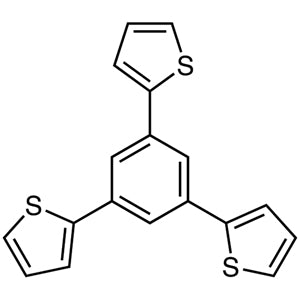
1,3,5-Tri(2-thienyl)benzene TCI T2866
Regular price From Rp 2.650.200,00Regular price -
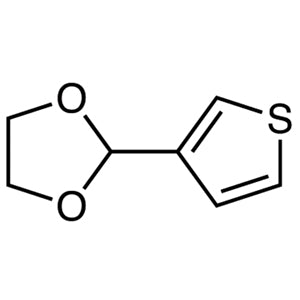
2-(3-Thienyl)-1,3-dioxolane TCI T2623
Regular price Rp 2.625.000,00Regular price -
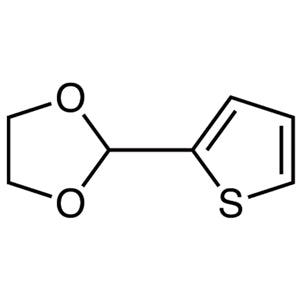
2-(2-Thienyl)-1,3-dioxolane TCI T2049
Regular price From Rp 3.260.250,00Regular price -
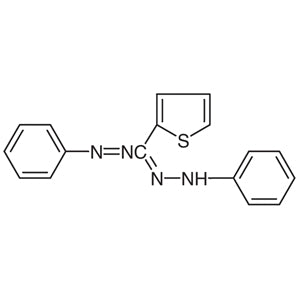
1,5-Diphenyl-3-(2-thienyl)formazan TCI B0326
Regular price Rp 1.273.650,00Regular price -
2,3-Diphenyl-5-(2-thienyl)tetrazoliumChloride TCI B0325
Regular price From Rp 1.696.800,00Regular price -
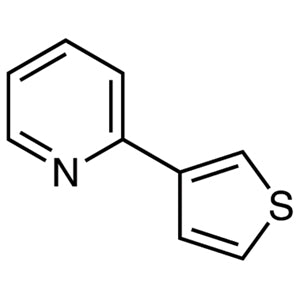
2-(3-Thienyl)pyridine TCI T1151
Regular price Rp 4.718.700,00Regular price