2-(3-Thienyl)pyridine is a heteroaryl compound that links a pyridine ring at its two-position to a thiophene ring at its three-position. This heterocyclic biaryl structure combines the basic nitrogen atom of pyridine with the sulfur atom of thiophene in a single molecule. TCI product T1151 is used in the laboratory as a synthetic building block and as a cyclometalating ligand in organometallic chemistry research, particularly for researchers studying metal complexes with specific photophysical properties.
What makes this compound attractive is the way its two rings work together. The pyridine nitrogen can coordinate to a metal centre, while a carbon on the thiophene ring can form a carbon-metal bond through C-H activation. This pattern is typical of cyclometalating ligands for transition metal complexes, such as those studied for their luminescence. The thiophene unit also contributes electron conjugation, which can influence how the resulting molecule absorbs and emits light. For this reason, the compound is a common choice when exploring optoelectronic materials and sensors.
In Indonesian laboratories, this material suits research groups in inorganic chemistry, organometallic chemistry and materials science that need a heteroaryl ligand in small quantities. The 1 g pack size is appropriate for exploratory research, where a compact amount allows ligand design, complex synthesis and preliminary photophysical screening to be carried out before any larger scale work is planned. It is supplied by AMI Scientific as part of its range of heterocyclic building blocks.
TCI brochures (PDF)
- Thiophenes 2026-06-29 · p. 6
Related TCI products
- Cyclometalating ligand synthesis: the pyridine nitrogen binds a metal while the thiophene carbon undergoes C-H activation, which makes this compound well suited to forming cyclometalated transition metal complexes.
- Organometallic chemistry research: researchers can use this heteroaryl ligand to prepare and study new metal complexes, since its nitrogen and sulfur-containing biaryl framework offers a distinctive coordination environment.
- Photophysical studies of metal complexes: the conjugated thiophene ring can influence light absorption and emission, so the compound is useful for investigating the luminescence behaviour of the complexes it forms.
- Optoelectronic material exploration: the conjugated heterocyclic structure makes this building block a reasonable starting point for groups exploring new materials whose electronic and optical properties depend on ligand design.
- Heterocyclic synthetic building block: the combination of pyridine and thiophene rings in one molecule lets synthetic chemists incorporate a biaryl heterocycle into larger target structures during small-scale research.
| Brand | TCI |
|---|---|
| CAS number | 21298-55-5 |
| Molecular formula | — |
| Purity | — |
| Category | Chemistry > Building Blocks > Heterocyclic Building Blocks |
| Pack sizes | 1 g |
| Physical form | — |
| Storage | keep in a tightly closed container and follow the guidance on the supplier label and safety data sheet |
- Product code: T1151
Store 2-(3-Thienyl)pyridine in its original, tightly closed container, kept in a cool, dry and well-ventilated place away from direct sunlight, heat sources and incompatible materials such as strong oxidizers. Always follow the storage instructions on the supplier label and in the safety data sheet. Handle the material in a fume hood or well-ventilated area, and wear appropriate personal protective equipment, including safety glasses, gloves and a laboratory coat. Avoid inhalation, skin contact and eye contact. Because the pack is small, weigh out only what is needed, reseal the container promptly, and dispose of waste according to local regulations and your institution's chemical safety procedures.
—
Produk Terkait
-
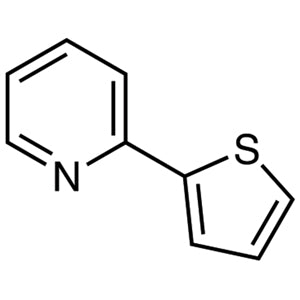
2-(2-Thienyl)pyridine TCI T2936
Regular price From Rp 2.279.550,00Regular priceRp 1.609.650,00Sale price From Rp 2.279.550,00 -
2-(2-Thienyl)ethylp-Toluenesulfonate TCI T3064
Regular price From Rp 530.250,00Regular priceRp 386.400,00Sale price From Rp 530.250,00 -
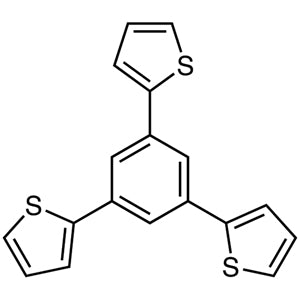
1,3,5-Tri(2-thienyl)benzene TCI T2866
Regular price From Rp 2.702.700,00Regular priceRp 1.905.750,00Sale price From Rp 2.702.700,00 -
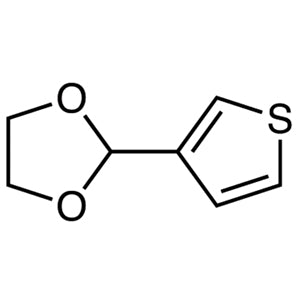
2-(3-Thienyl)-1,3-dioxolane TCI T2623
Regular price Rp 2.677.500,00Regular priceRp 1.887.900,00Sale price Rp 2.677.500,00 -
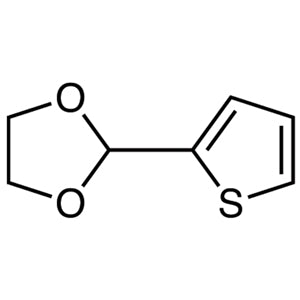
2-(2-Thienyl)-1,3-dioxolane TCI T2049
Regular price From Rp 3.312.750,00Regular priceRp 2.332.050,00Sale price From Rp 3.312.750,00 -
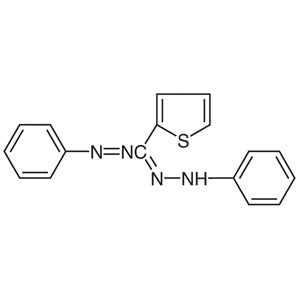
1,5-Diphenyl-3-(2-thienyl)formazan TCI B0326
Regular price Rp 1.326.150,00Regular priceRp 942.900,00Sale price Rp 1.326.150,00 -
2,3-Diphenyl-5-(2-thienyl)tetrazoliumChloride TCI B0325
Regular price From Rp 1.749.300,00Regular priceRp 1.239.000,00Sale price From Rp 1.749.300,00 -
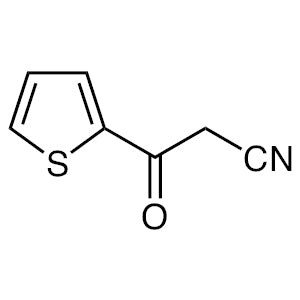
3-Oxo-3-(2-thienyl)propanenitrile TCI O0571
Regular price Rp 2.147.250,00Regular priceRp 1.517.250,00Sale price Rp 2.147.250,00