2,3-Diphenyl-5-(2-thienyl)tetrazolium Chloride is a chemical compound widely used in laboratory settings for the synthesis of heterocyclic compounds. This reagent plays a crucial role in organic chemistry by serving as a versatile building block for the creation of complex molecular structures. Its ability to participate in various chemical reactions makes it an essential component in the development of pharmaceutical and industrial compounds. Due to its chemical stability and reactivity, it is frequently employed in research and development processes across multiple scientific disciplines.
The compound is known for its chemical stability and high reactivity, which contribute to its effectiveness in chemical reactions. It acts as an electron donor, enabling efficient and selective reactions. The presence of a tetrazolium ring in its structure enhances its utility in redox reactions and substitution processes. These properties make it a preferred choice for researchers aiming to synthesize bioactive compounds and explore new chemical pathways. Its versatility in different reaction types supports its application in both academic and industrial research environments.
In Indonesian laboratories, 2,3-Diphenyl-5-(2-thienyl)tetrazolium Chloride is commonly used in the synthesis of bioactive compounds and pharmaceuticals. Its role in the development of new drugs and chemical agents is significant, especially in the fields of organic chemistry and pharmacology. Researchers in Indonesia rely on this compound for its reliability and effectiveness in complex chemical processes, making it a valuable resource in both academic and industrial research settings.
TCI brochures (PDF)
- Thiophenes 2026-06-29 · p. 7
Related TCI products
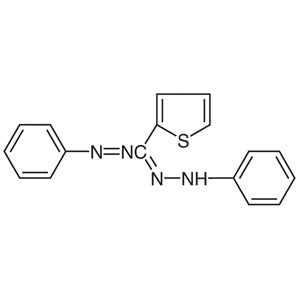
- TCI B0326 135984-01-9 1,5-Diphenyl-3-(2-thienyl)formazan
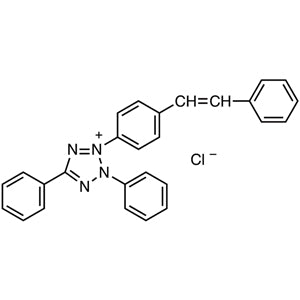
- TCI D0915 24387-36-8 2,5-Diphenyl-3-(4-styrylphenyl)tetrazolium Chloride
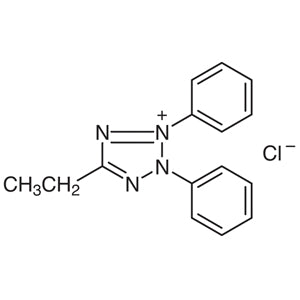
- TCI B0319 66138-05-4 2,3-Diphenyl-5-ethyltetrazolium Chloride
- TCI B0313 6275-01-0 2,3-Diphenyl-5-methyltetrazolium Chloride
- TCI B0295 2118-40-3 2,3-Diphenyl-5-carboxytetrazolium Chloride
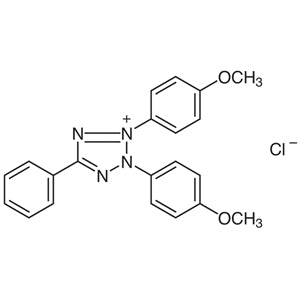
- TCI B1056 104497-79-2 2,3-Bis(4-methoxyphenyl)-5-phenyltetrazolium Chloride
- Synthesis of heterocyclic compounds for the development of new pharmaceuticals due to its structural versatility and reactivity.
- Redox reactions in the study of chemical mechanisms because of its electron-donating properties and stability.
- Research in organic chemistry for the creation of complex molecular structures that require precise chemical transformations.
- Development of bioactive compounds in pharmacological studies due to its ability to participate in substitution and redox reactions.
- Industrial chemical synthesis where stability and reactivity are essential for efficient and selective chemical processes.
| Brand | TCI |
|---|---|
| CAS number | 38800-20-3 |
| Molecular formula | — |
| Purity | — |
| Category | Chemistry > Building Blocks > Heterocyclic Building Blocks |
| Pack sizes | — |
| Physical form | — |
| Storage | Store in a cool, dry place away from light and moisture |
This compound should be stored in a cool, dry place, away from light and moisture to maintain its chemical stability. It is recommended to use airtight containers to prevent exposure to humidity and air. Due to its reactivity, it should be handled with care, using appropriate personal protective equipment such as gloves and safety goggles. It is important to ensure that the storage area is well-ventilated to minimize any potential risks associated with its chemical properties. Avoid contact with incompatible materials to prevent unwanted chemical reactions. Proper labeling and storage conditions are essential for maintaining the integrity and safety of the compound in a laboratory environment.
—
Produk Terkait
-
1,5-Diphenyl-3-(2-thienyl)formazan TCI B0326
Regular price Rp 1.326.150,00Regular priceRp 942.900,00Sale price Rp 1.326.150,00 -
2,5-Diphenyl-3-(4-styrylphenyl)tetrazoliumChloride TCI D0915
Regular price Rp 2.702.700,00Regular priceRp 1.905.750,00Sale price Rp 2.702.700,00 -
2,3-Diphenyl-5-ethyltetrazoliumChloride TCI B0319
Regular price Rp 1.538.250,00Regular priceRp 1.090.950,00Sale price Rp 1.538.250,00 -
2,3-Diphenyl-5-methyltetrazoliumChloride TCI B0313
Regular price Rp 1.881.600,00Regular priceRp 1.331.400,00Sale price Rp 1.881.600,00 -
2,3-Diphenyl-5-carboxytetrazoliumChloride TCI B0295
Regular price Rp 1.538.250,00Regular priceRp 1.090.950,00Sale price Rp 1.538.250,00 -
2,3-Bis(4-methoxyphenyl)-5-phenyltetrazoliumChloride TCI B1056
Regular price Rp 6.651.750,00Regular priceRp 4.667.250,00Sale price Rp 6.651.750,00 -
2,3-Bis(4-nitrophenyl)-5-phenyltetrazoliumChloride TCI B1047
Regular price Rp 3.498.600,00Regular priceRp 2.462.250,00Sale price Rp 3.498.600,00 -
2-(2-Benzothiazolyl)-3,5-diphenyltetrazoliumBromide TCI B0333
Regular price Rp 1.431.150,00Regular priceRp 1.016.400,00Sale price Rp 1.431.150,00