2,3-Diphenyl-5-carboxytetrazolium Chloride (DCCTC) is a chemical compound widely used in laboratory settings for its versatility in chemical reactions and analytical processes. As a heterocyclic building block, it plays a crucial role in organic synthesis, particularly in reduction and substitution reactions. Its unique structure, featuring a tetrazole ring linked to a carboxyl group and two phenyl groups, makes it a valuable reagent in the development of complex molecular structures. DCCTC is commonly employed in bioassay testing and redox reactions due to its ability to participate in electron transfer processes.
The compound's stability under certain conditions enhances its usability in long-term storage and repeated experimentation. Its chemical structure allows for the synthesis of compounds with specific pharmacological or biological activities, making it a preferred choice for researchers. The compound's reactivity and structural complexity enable it to be a key component in the creation of pharmaceuticals and bioactive molecules. Its reliability in chemical reactions contributes to its widespread application in both academic and industrial research environments.
In Indonesian laboratories, DCCTC is utilized in scientific research and chemical product development. It is commonly found in academic institutions and research centers where organic synthesis and bioassay testing are conducted. The compound's role in these settings highlights its importance in advancing chemical and biological studies within the country's scientific community.
Related TCI products
- TCI B0325 38800-20-3 2,3-Diphenyl-5-(2-thienyl)tetrazolium Chloride
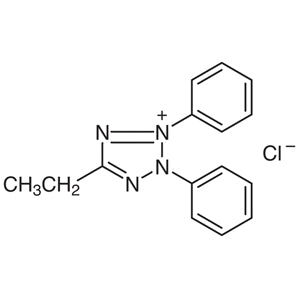
- TCI B0319 66138-05-4 2,3-Diphenyl-5-ethyltetrazolium Chloride
- TCI B0313 6275-01-0 2,3-Diphenyl-5-methyltetrazolium Chloride
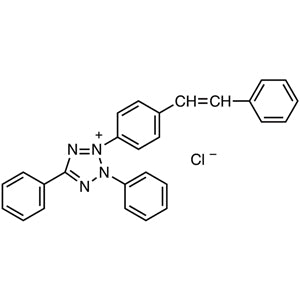
- TCI D0915 24387-36-8 2,5-Diphenyl-3-(4-styrylphenyl)tetrazolium Chloride
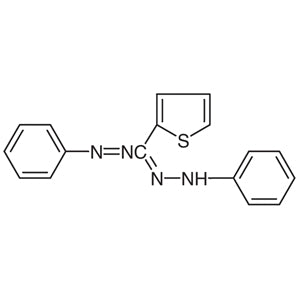
- TCI B0326 135984-01-9 1,5-Diphenyl-3-(2-thienyl)formazan
- TCI N1139 16152-10-6 4-(1-Naphthyl)-3,5-diphenyl-1,2,4-triazole
- Bioassay testing benefits from DCCTC's ability to participate in redox reactions, making it ideal for evaluating biological activity in cell cultures.
- Organic synthesis relies on DCCTC's structural complexity to create compounds with specific pharmacological properties, supporting drug development efforts.
- Redox reaction studies utilize DCCTC's electron transfer capabilities, enabling the analysis of oxidation states in chemical processes.
- Chemical research applications leverage DCCTC's stability and reactivity to develop new compounds with targeted biological functions.
- Analytical chemistry procedures use DCCTC as a reagent for detecting and quantifying specific chemical species in complex mixtures.
| Brand | TCI |
|---|---|
| CAS number | 2118-40-3 |
| Molecular formula | — |
| Purity | — |
| Category | Chemistry > Building Blocks > Heterocyclic Building Blocks |
| Pack sizes | Available in various quantities as per supplier specifications |
| Physical form | Solid powder |
| Storage | Store in a cool, dry place away from light and moisture |
DCCTC should be stored in a cool, dry environment to maintain its chemical stability and prevent degradation. It is recommended to keep the compound in airtight containers to minimize exposure to moisture and air, which can affect its reactivity. Proper labeling of storage containers is essential to ensure safe handling and prevent accidental use. Laboratory personnel should wear appropriate personal protective equipment, such as gloves and safety goggles, when handling DCCTC to avoid direct contact. The compound should be stored away from incompatible materials to ensure safety in the laboratory setting. Regular monitoring of storage conditions will help maintain the integrity of the compound for extended use in research applications.
—
Produk Terkait
-
2,3-Diphenyl-5-(2-thienyl)tetrazoliumChloride TCI B0325
Regular price Rp 1.749.300,00Regular priceRp 1.239.000,00Sale price Rp 1.749.300,00 -
2,3-Diphenyl-5-ethyltetrazoliumChloride TCI B0319
Regular price Rp 1.538.250,00Regular priceRp 1.090.950,00Sale price Rp 1.538.250,00 -
2,3-Diphenyl-5-methyltetrazoliumChloride TCI B0313
Regular price Rp 1.881.600,00Regular priceRp 1.331.400,00Sale price Rp 1.881.600,00 -
2,5-Diphenyl-3-(4-styrylphenyl)tetrazoliumChloride TCI D0915
Regular price Rp 2.702.700,00Regular priceRp 1.905.750,00Sale price Rp 2.702.700,00 -
1,5-Diphenyl-3-(2-thienyl)formazan TCI B0326
Regular price Rp 1.326.150,00Regular priceRp 942.900,00Sale price Rp 1.326.150,00 -
4-(1-Naphthyl)-3,5-diphenyl-1,2,4-triazole TCI N1139
Regular price Rp 1.431.150,00Regular priceRp 1.016.400,00Sale price Rp 1.431.150,00 -
2-(4-Methoxyphenyl)-4,5-diphenyl-1H-imidazole TCI M3900
Regular price Rp 3.895.500,00Regular priceRp 2.739.450,00Sale price Rp 3.895.500,00 -
1,3-Diphenyl-1H-pyrazole-4-carbaldehyde TCI D6398
Regular price Rp 1.140.300,00Regular priceRp 812.700,00Sale price Rp 1.140.300,00