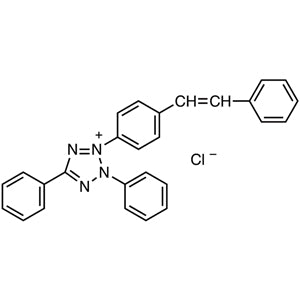
2,5-Diphenyl-3-(4-styrylphenyl)tetrazolium Chloride (DTT) is a chemical compound widely used in laboratory settings for its versatility in chemical reactions and analytical applications. This compound is particularly valuable in biochemical and organic synthesis processes due to its unique heterocyclic structure. It plays a crucial role in studies related to enzyme activity and complex reaction mechanisms, making it an essential tool for researchers in various scientific fields. DTT is commonly employed in assays that require precise chemical interactions, contributing to the advancement of both fundamental and applied research.
DTT is known for its high reactivity and stability under controlled conditions, which makes it a preferred choice in laboratory environments. Its sensitivity to temperature and humidity requires careful handling, but this also ensures that it can be used effectively in applications where environmental control is critical. The compound’s ability to participate in redox reactions enhances its utility in analytical chemistry, particularly in enzyme assays and toxicity testing. Its chemical properties allow it to be a reliable reagent in experiments that demand accuracy and reproducibility.
In Indonesian laboratories, DTT is extensively used in chemical, pharmaceutical, and molecular biology research. It is a key component in studies involving enzyme activity, toxicity testing, and organic compound analysis. Due to its specificity and reactivity, DTT is a preferred material for applications that require high precision and accuracy. Its widespread use in academic and industrial research highlights its importance in the scientific community.
Related TCI products
- TCI B0325 38800-20-3 2,3-Diphenyl-5-(2-thienyl)tetrazolium Chloride
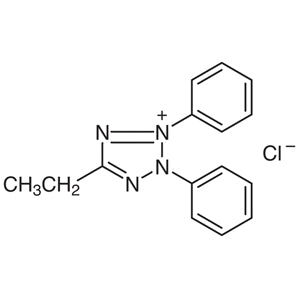
- TCI B0319 66138-05-4 2,3-Diphenyl-5-ethyltetrazolium Chloride
- TCI B0313 6275-01-0 2,3-Diphenyl-5-methyltetrazolium Chloride
- TCI B0295 2118-40-3 2,3-Diphenyl-5-carboxytetrazolium Chloride
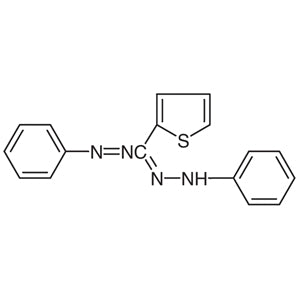
- TCI B0326 135984-01-9 1,5-Diphenyl-3-(2-thienyl)formazan
- TCI N1139 16152-10-6 4-(1-Naphthyl)-3,5-diphenyl-1,2,4-triazole
- Enzyme Activity Assays: DTT is ideal for measuring enzyme activity due to its ability to participate in redox reactions, providing accurate and reproducible results.
- Toxicity Testing: The compound's reactivity makes it suitable for assessing the toxicity of various substances in biological systems.
- Organic Compound Analysis: DTT's unique structure allows it to be used in the identification and analysis of organic compounds in complex mixtures.
- Biochemical Research: Its role in redox reactions supports studies on metabolic pathways and biochemical mechanisms.
- Molecular Biology Studies: DTT is used in experiments that require precise chemical interactions, such as DNA and protein analysis.
| Brand | TCI |
|---|---|
| CAS number | 24387-36-8 |
| Molecular formula | — |
| Purity | — |
| Category | Chemistry > Building Blocks > Heterocyclic Building Blocks |
| Pack sizes | Available in various quantities as per supplier specifications |
| Physical form | Solid powder |
| Storage | Store in a cool, dry place away from light and moisture |
DTT should be stored in a cool, dry place away from light and moisture to maintain its chemical stability. It is recommended to use airtight containers to prevent exposure to humidity and air, which can affect its reactivity. Laboratory personnel should handle the compound with care, using appropriate personal protective equipment such as gloves and safety goggles. Due to its sensitivity, it is important to avoid temperature fluctuations and ensure that storage conditions remain consistent. Regular monitoring of storage conditions is advised to ensure the compound remains suitable for use in analytical and research applications.
—
Produk Terkait
-
2,3-Diphenyl-5-(2-thienyl)tetrazoliumChloride TCI B0325
Regular price From Rp 1.696.800,00Regular price -
2,3-Diphenyl-5-ethyltetrazoliumChloride TCI B0319
Regular price Rp 1.485.750,00Regular price -
2,3-Diphenyl-5-methyltetrazoliumChloride TCI B0313
Regular price Rp 1.829.100,00Regular price -
2,3-Diphenyl-5-carboxytetrazoliumChloride TCI B0295
Regular price Rp 1.485.750,00Regular price -
1,5-Diphenyl-3-(2-thienyl)formazan TCI B0326
Regular price Rp 1.273.650,00Regular price -
4-(1-Naphthyl)-3,5-diphenyl-1,2,4-triazole TCI N1139
Regular price Rp 1.431.150,00Regular priceRp 1.016.400,00Sale price Rp 1.431.150,00 -
2-(4-Methoxyphenyl)-4,5-diphenyl-1H-imidazole TCI M3900
Regular price Rp 3.895.500,00Regular priceRp 2.739.450,00Sale price Rp 3.895.500,00 -
1,3-Diphenyl-1H-pyrazole-4-carbaldehyde TCI D6398
Regular price From Rp 1.087.800,00Regular price