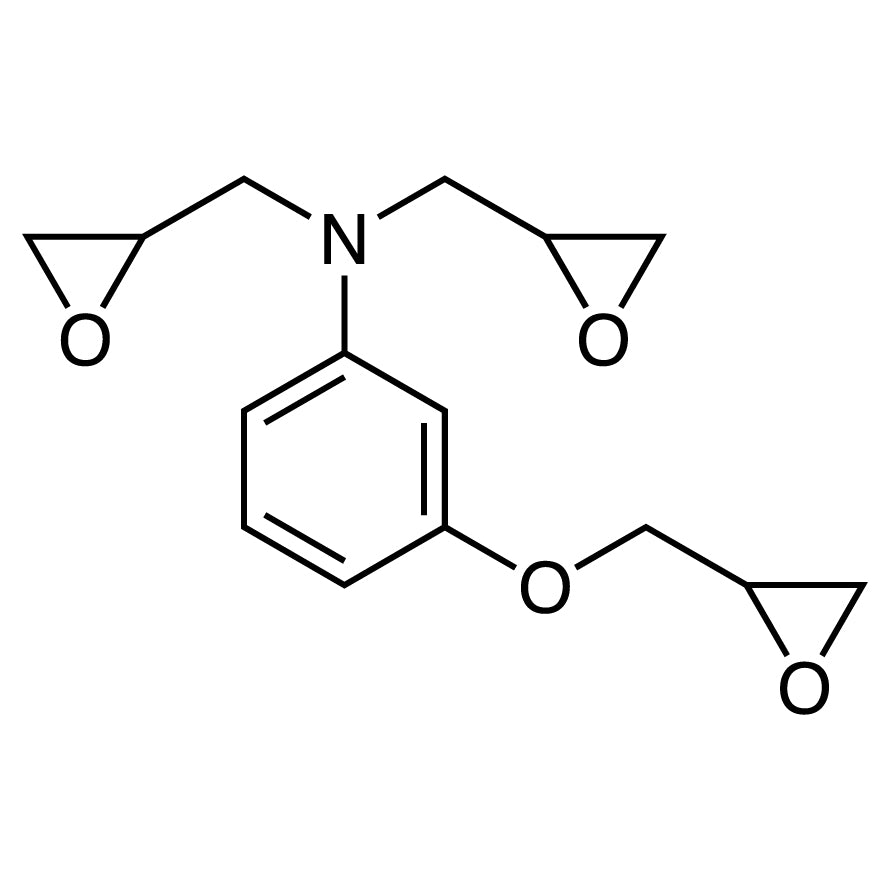
3-(Oxiran-2-ylmethoxy)-N,N-bis(oxiran-2-ylmethyl)aniline is a complex chemical compound widely used in laboratory settings for various chemical reactions, particularly in polymer and macromolecule synthesis. This material plays a crucial role in the development of advanced materials due to its unique molecular structure containing epoxy groups. These groups enable crosslinking reactions, which are essential for creating polymers with specific mechanical and chemical properties. Its versatility makes it a valuable reagent in both academic and industrial research environments.
The reactivity of this compound stems from its epoxy groups, which readily participate in reactions with amines, hydroxyls, and carboxylic acids. This reactivity, combined with its ability to form crosslinked networks, makes it a preferred choice for synthesizing polymers with enhanced mechanical strength, thermal stability, and electrical properties. Its chemical behavior is highly predictable, allowing researchers to tailor its applications in material science with precision.
In Indonesian laboratories, this compound is commonly used in polymer research, especially in the development of new materials for engineering, medical, and electronic applications. Its stability under controlled conditions ensures reliable results, making it a key component in advanced material synthesis projects.
Related TCI products
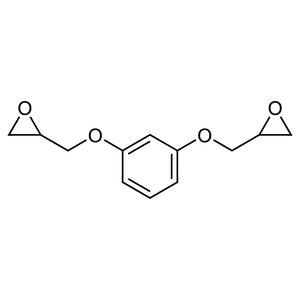
- TCI R0324 101-90-6 1,3-Bis(oxiran-2-ylmethoxy)benzene
- TCI O0693 119692-59-0 4-(Oxiran-2-ylmethoxy)butyl Acrylate (stabilized with MEHQ)
- TCI H0571 16096-31-4 1,6-Bis(oxiran-2-ylmethoxy)hexane
- TCI V0195 106-87-6 3-(Oxiran-2-yl)-7-oxabicyclo[410]heptane (mixture of isomers)
- TCI B5815 3130-19-6 Bis(7-oxabicyclo[4.1.0]heptan-3-ylmethyl) Adipate
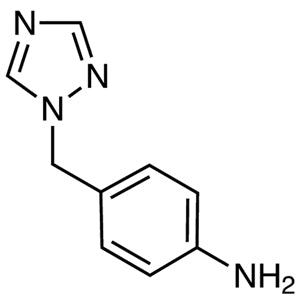
- TCI A2148 119192-10-8 4-(1,2,4-Triazol-1-ylmethyl)aniline
- Polymer synthesis for creating high-performance materials with tailored mechanical and thermal properties.
- Development of crosslinked polymers used in medical devices and electronic components due to its reactivity and structural versatility.
- Research in advanced material science for applications in engineering, where specific chemical resistance and durability are required.
- Formulation of specialty coatings and adhesives that benefit from the compound's ability to form strong chemical bonds.
- Investigation of new composite materials that require precise control over molecular structure and crosslinking density.
| Brand | TCI |
|---|---|
| CAS number | 71604-74-5 |
| Molecular formula | — |
| Purity | — |
| Category | Materials Science > Polymer/Macromolecule Reagents > Monomers |
| Pack sizes | Available in various quantities as per standard laboratory supply |
| Physical form | Liquid |
| Storage | Store in a cool, dry place away from direct sunlight and incompatible materials |
This compound should be stored in a cool, dry environment, away from direct sunlight and sources of heat. It is recommended to use airtight containers made of materials that are chemically inert to prevent degradation. Due to its reactive nature, it should be handled with care, using appropriate personal protective equipment such as gloves and safety goggles. It is important to ensure good ventilation when working with this material to avoid inhalation of vapors. Avoid contact with incompatible substances, such as strong acids or bases, to prevent unwanted reactions. Proper labeling and storage conditions are essential to maintain the integrity and safety of the compound in the laboratory.
—
Product Categories
Produk Terkait
-
1,3-Bis(oxiran-2-ylmethoxy)benzene TCI R0324
Regular price From Rp 1.220.100,00Regular price -
4-(Oxiran-2-ylmethoxy)butylAcrylate(stabilizedwithMEHQ) TCI O0693
Regular price From Rp 2.359.350,00Regular price -
1,6-Bis(oxiran-2-ylmethoxy)hexane TCI H0571
Regular price From Rp 1.193.850,00Regular price -
3-(Oxiran-2-yl)-7-oxabicyclo[410]heptane(mixtureofisomers) TCI V0195
Regular price From Rp 3.870.300,00Regular price -
Bis(7-oxabicyclo[4.1.0]heptan-3-ylmethyl)Adipate TCI B5815
Regular price From Rp 1.326.150,00Regular price -
4-(1,2,4-Triazol-1-ylmethyl)aniline TCI A2148
Regular price From Rp 477.750,00Regular price -
4,4,5,5-Tetramethyl-2-(naphthalen-1-ylmethyl)-1,3,2-dioxaborolane TCI T3626
Regular price Rp 5.724.600,00Regular price -
Tributyl(1,3-dioxolan-2-ylmethyl)phosphoniumBromide TCI T2718
Regular price Rp 4.081.350,00Regular price


![106-87-6 3-(Oxiran-2-yl)-7-oxabicyclo[4.1.0]heptane (mixture of isomers) - AMI Scientific](http://amiscientific.com/cdn/shop/files/TCI2510V0195.jpg?v=1767145750&width=533)
![Bis(7-oxabicyclo[4.1.0]heptan-3-ylmethyl) Adipate (CAS 3130-19-6) - TCI B5815 - AMI Scientific](http://amiscientific.com/cdn/shop/files/TCI2510B5815.jpg?v=1771058932&width=533)